IMG_8883.JPG


IMG_8882.JPG


IMG_8320.JPG


IMG_8742-0.JPG

‘WISE WHY’S Y’s: The Griot’s Song/Djeli Ya” By Amiri Baraka


9780883780473I bought this not long after Amiri Baraka passed away, read the first few poems, but when I put it down, neglected to pick it back up again. Well, I did pick it back up again and I am better for it.

Let’s just get this out of the way. Amiri Baraka/LeRoi Jones is a difficult, problematic, and prickly figure. LeRoi Jones was deeply involved in the poetic circles in and around New York City, apparently had lovers of both sexes. As Amiri Baraka, he was angry and militant and, I’m afraid, made more than a few anti-gay remarks. But he was also still LeRoi Jones, in that he was deeply influenced by the major currents of the twentieth century, especially the New York School, the Black Arts Movement, and (like another revolutionary poet, Aime Cesaire) Surrealism. Baraka was also much more political and a major figure in building black political power in Newark, New Jersey.

WISE WHY’S Y’s is deeply political, unyielding, and is weighed on heavily by the history (and, therefore, the legacy) of slavery.

We are bullets into
              tomorrow
    We are Changerers

these limpid blue
that packed sky
(the lost key of
              which
        like my own
        dry frenzy

is part of the hatred
     that’s good
          for us.

That’s from a poem entitled #20 Borders (Incest) Obsession and is intended to be read with musical accompaniment. He actually lists a bunch of tunes to go with the poems (John Coltrane comes up a lot). Because bop and post-bop jazz is the rhythm to these poems, they are often jagged. There is often rhyme, but without a rhyme scene, reflecting the work of jazz musicians like Ornette Coleman and Dizzy Gillespie.

In another poem is this stanza:

                                    (Not Sociology & Social Democratic
                                                     political
                                                    Bohemianism)

I know that he’s mocking the shallow, meaningless political talk of white, coffeeshop revolutionaries… but good lord, don’t you want to be a ‘political Bohemian?’ I hate myself for thinking that, because Baraka is also right to criticize the wordy, windy impotence of ‘slacktivism’ and other such skin deep dissent.

Happy Haydn


Last Thursday was a pretty awful day. And it was capped off by a hellish commute. But near the end, I was listening to WETA (our local classical station) and the final movement of Haydn’s Trumpet Concerto in E Flat Major came on. Actually, the host had announced it earlier and I was waiting (not patiently for it).

If you heard a few bars of it, you’d immediately recognize it. Haydn will never be considered the greatest composer, but damn if that concerto doesn’t immediately lift one’s spirits. I once heard that Haydn only wrote one concerto in a minor key. He’s not a melancholy guy (even though he wrote some funeral Masses). His love of the music of the common man always comes through (Copland could have learned something from him) and there is something about so much of his music that just makes you feel better.

That finale to the trumpet concerto almost made up for the thirteen odd hours that preceded it.

‘La Boheme’ At The Kennedy Center


OPOSALa-boheme_400x400It’s hard to go terribly wrong with La Bohème. And to their credit, the Washington National Opera did not. They had two casts, but I checked a friend of mine who sings in the WNO (mostly small roles and the chorus) and he assured me that it was a case of an ‘A’ cast and  ‘B’ cast. And certainly, the folks I saw were pretty good. No one stood out in massive way (the way Abdrazakov did in Don Giovanni a few years ago), but everyone excellent. And while one thinks of a couple of the arias, really, La Bohème is an ensemble drama, so that’s just fine.

And yes, I cried. A moment, when Mimi is lying in bed and Rodolfo and all her friends are about – it was actually a moment of silence. And that was when I lost it. All the music building up this incredible sadness and regret and when it pauses, the floodgates open. The magic of Puccini, to take such a melodramatic plot, which is, on its own, too nonsensical to cause tears, and build this incredibly romantic, longing music around it.


IMG_8319.JPG


IMG_8738.JPG

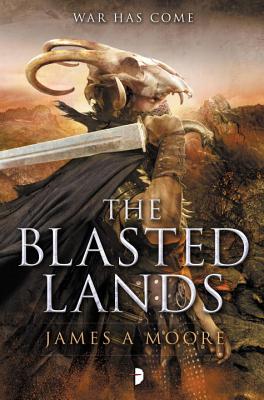
‘The Blasted Lands’ By James A. Moore


9780857663924I had enjoyed its predecessor, The Seven Forges, greatly. Like that one, this was enjoyable beyond the quality of its writing. Moore has a flair for tension in his plots and still has little in the way of vivid descriptions. This one has a few more, though. Apparently, Moore is primarily known as a horror writer and there is a touch of body horror in this book, so maybe that’s why his descriptive powers seem a bit (just a bit) stronger.

But honestly, I needed more. The previous book very much read as a cliffhanger, so even if this is a trilogy (or more), the second book needed to add some more. I understand the need to leave the audience wanting more, but there needed to be a bit less foreshadowing and bit more ‘stuff happening’ here. Some more things resembling some kind of resolution, while still leaving plenty o’ tension and suspense for the third book.

Which, by the way, I will read. Moore seems pretty prolific, so I don’t expect to have to wait long.