IMG_7834.JPG

Poetry East


Poetry East is a magnificent journal! A throwback of high culture and, as often as not, high modernism. It trucks heavily in translations and, if fault is to be found, it is that it can resemble a sort of poetry-centric Lapham’s Quarterly. I first came across it in a Barnes & Noble in the Christiana Mall in Delaware whilst on my way back from New Jersey.

The theme and title of this issue is Paris, but that’s not entirely an accurate one. It’s really about surrealism in the twenties and thirties, as well as surrealism’s antecedents. And really, that should be ‘Surrealism,’ capital ‘S.’ Not Surrealism as a modified adjective, but as a capital noun – Breton, et al.

Within are Surrealists and their close cousins: Appolinaire, Eluard, Dali, Soupault, Man Ray. Also, antecedents like Baudelaire. Also, for some reason, Proust and Huysmans.

I do love Eluard, in particular. As a little thing that stuck out for me, Eluard’s poems were transposed with a little essay by Dali and also reproductions of some of his works. The Dali essay mentioned Gala, who was had been Eluard’s wife, before leaving him for Dali. So, there’s that.

/home/wpcom/public_html/wp-content/blogs.dir/378/2301340/files/2014/12/img_1992.jpg

Article On The Providence Athenaeum


I can’t tell you what a joy it was to visit the Providence Athenaeum. It truly is a secular temple. You want to live there.

I saw this article on how it is bringing people together over the love of learning and literature and now I just want to go back. Seriously. I would move to Providence just for the Athenaeum. It also has a great museum (part of the Rhode Island School of Design), a liberal culture, and fantastic bookstores.

So, don’t be afraid to take a trip out there.

untitled


IMG_7832.JPG


IMG_9608.JPG

IMG_9610.JPG

IMG_9609.JPG

‘The Fellowship Of The Ring’


I was seized by a desire to re-watch Fellowship of the Ring for the first time in some years. Possibility out of a sense of disappointment with how Peter Jackson has taken my beloved children’s book, The Hobbit, and made it unnecessarily epic in scale.

There is a wonderful book of historiography called Inventing the Middle Ages. It is a series of portraits of prominent medievalists and how they combined to shape our idea of the what the middle ages was. Was it a time of darkness? Of surprising richness? Was it a time of kings? Or of commoners.

Among the portraits was one of J.R.R. Tolkien. It acknowledged his work in translating and examining Anglo-Saxon epics like The Pearl and The Green Knight. But it also looked at Middle Earth and how it captured a very important aspect of the time, which was the great journeys taken by so many ‘little people’ – commoners and peasants – over great distances. Pilgrimages across continents and journeys like the Crusades even.

While not mentioned, for me, also, it was a differing idea of love. Courtly love was a later invention, something from the middle ages, but not from the early middle ages that Tolkien studied. Love was the love between friends.

My mother and I have differing favorite moments from the first movie, but with similar meaning.

Mine is early in the movie, when Frodo tells Merry and Pippin that he has to get to the town of Bree, after it has become clear that something big, bad, and scary is nearby and hunting them. Merry’s response is to say, ‘Right – Buckleberry Ferry.’

He doesn’t ask why or what the heck is going on. He responds in instant solidarity to a fellow ‘little person’ who is being threatened by the big forces of the world. He never asks himself if he will help or how much help he will offer – only what the best thing for his fellow man (well, Hobbit).

My mother likes towards the end, when Frodo tells Sam, ‘I’m going alone,’ and Sam replies, ‘I know you are and I’m going with you.’ Again, the absolute solidarity of ordinary people to accomplish great, yet little noticed things in the face of world changing events they can barely understand and hardly even see.

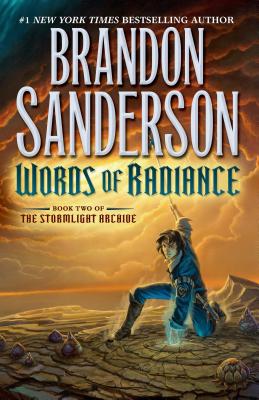
‘Words Of Radiance’ By Brandon Sanderson


There are some warning signs. Sanderson is adding too many characters who get their own third person limited chapters. It’s not George R.R. Martin levels, but it’s also not being used the same way. Martin uses the massive scope of the characters to illustrate the gray morality of the world (yes, Jamie crippled Bran, but Jamie did it to protect his own children and the people he loves, which is surely understandable, if not exculpatory), but this is epic fantasy that is much more black and white – which is not a criticism, but part of the genre. As a result, the accumulation of characters starts to feel more like clutter.

I’m still not sure about Sanderson’s insistence of unique magic systems (and if a key part of it is going to be faerie like creatures called ‘spren,’ you can’t make some of them evil and expect me to frightened of them if they’re still going to be called ‘spren;’ too close to ‘sprite’). It’s impressive world building, in one sense. In another sense, sometimes it’s okay to write, ‘the wizard raised his wand and then something cool happened.’ It’s magic. I don’t expect it to be science. He did reduce the number of key locations, so the new ecosystem he build for his world didn’t throw me off as much.

Like it’s predecessor, The Way of Kings, Words of Radiance culminates in a big ol’ action set piece. Unfortunately, it’s not as cool as the one its predecessor ended with. He also likes to load players up with suffering, but I just finished reading Balzac, so I read and I think – that’s not suffering! You want some mystery, pick up a book by a nineteenth century French novelist! Balzac! Hugo! Zola! And in the meantime, bring it on – pile on some misery on those barely suffering bastards, Sanderson!

But… despite all my criticism. I liked it. He’s a good writer. He’s caught me. I’m going to be excited to read the next book in the series. Sanderson, you win.Words of Radiance

Gautier & Balzac


I am something less than halfway through Theophile Gautier’s Selected Lyrics and just finished a poem entitled The Loft. It somewhat celebrates and somewhat more punctures the romance of la vie boheme of the poet, artist, or musician.

One stanza struck me because of how exactly it mirrored part of the corrupting journey of Lucien from Balzac’s Lost Illusions:

Long since, the poet, seeing how
Tired he grows of rhyme’s fleeting call,
Has turned gazette reporter now
And more from loft to entresol.


IMG_9467.JPG


IMG_9466.JPG