IMG_9391.JPG


2015/01/img_3836.jpg

Information Overload


In Paris alone fifty books are published daily without counting the newspapers. It is a monstrous orgy. We shall emerge from it quite mad.

– Anatole France

Finished ‘Tinker Tailor Soldier Spy’


Last Thursday, we watched the final two episodes of the 1979 BBC miniseries, Tinker Tailor Soldier Spy.

It was a disappointingly small crowd that made it to the final one and through all three nights of it. I loved being able to see it again and the expectation of Thursday nights and Alec Guiness’ avuncular depiction of George Smiley.

I asked the fellow who had organized all this if he would be attempting to show Smiley’s People at a later date. While noncommittal, he left it open as a possibility (‘I have it,’ he said – meaning the DVDs).

I supposed that I could have just tracked down and ordered DVDs myself, but the experience of watching it on a larger screen and with a group and making it an ‘event’ was undeniably part of the pleasure.

Another Thing (Maybe) That Jeb Has Romney To Thank For


Marco Rubio wants to be president. Really wants. He’s been dreaming about running in 2016 since his GOP star took off in 2010. Also, he knows that he’ll be entirely too bald to run in 2020 as anything other than an incumbent… so this it really. It’s now or never.

But Jeb.

Jeb, Jeb, Jeb.

A certain younger and supposedly smarter brother of a former failed president had recently made his own aspirations known. And you can be sure that this suddenly dried up a lot of home state money for poor old Rubio.

But then Mitt suddenly took all the wonderful momentum that had magically appeared when Jeb went public.

I’m wondering is Rubio didn’t see a tiny opening for him to lay some groundwork when that happened?

‘The Albertine Workout’ By Anne Carson


The Albertine WorkoutThe Albertine Workout is really more of a chapbook than a traditional book, a saddle stapled booklet.

Some sort of official description calls it:

The Albertine Workout contains fifty-nine paragraphs, with appendices, summarizing Anne Carson s research on Albertine, the principal love interest of Marcel in Proust s A la recherche du temps perdu.

I actually read it as a sort of poem. Or rather, like much of Carson’s work, a mixture of sui generis and something else. The way her The Economy of the Unlost is an academic work on the poets Simonides and Paul Celan, yet is also sui generis, to me, The Albertine Workout is poetry/sui generis.

There. I just used ‘sui generis’ more times in a single, short paragraph than I did in the entirety of the year of our Lord, two thousand and fourteen.

But it is fifty-nine paragraphs of about Albertine. Her sexuality (lesbian? bisexual?), her unattainability, her lack of desirability after attainment, her presence only being felt when her presence is an absence. The paragraphs are numbered and it leads my mind to Wittgenstein’s ordered of the Tractatus Logico-Philosophicus, which, insofar as I understood it, which is not much, is also about a certain unattainability and unknowability.

And yes, damn it, it is poetry. At least, if you have half a mind to read it that way, it is. And I read just assuming it was poetry. So, there it is – a classic case study of reader expectations and reader subjectivity. We’ll discuss author intentionality some other time.


IMG_0566.JPG

How To Tell If You Are In A High Fantasy Novel


The Elders would like a word with you.

The Ritual is about to begin.

Something that has not happened in a thousand years is happening.

You are going to the City. There is only one City. It is only said with a capital C. No one needs to bother saying the name of the City. It is the City.

Certain members of the Council are displeased with your family’s recent actions.

A bard is providing occasional comic relief; no one hired or invited him and his method of earning a living is unclear.

The High Priest is not to be trusted.

Someone is eating an apple mockingly.

There is one body of water. It is called the Sea. The Great Sea, if you are feeling fancy.

You live in a region with no major exports, no centralized government, no banking system, a mysteriously maintained network of roads, and little to no job training for anyone who is not a farmer.

You have red hair. You wear it in a braid. Your father was a simple man, and you don’t remember much about him – he died when you were so young – but you remember his strong hands, as he fished or carpentered or whatever it was that he used to do with them.

You’re going to have to hurry, or you’re going to miss the Fair – and you never miss the Fair.

There is trouble at the Citadel.

Your full name has at least one apostrophe in it.

It is the first page, and you are already late for something. Your mother affectionately chides you as you gulp down a few spoonfuls of porridge; she will be dead by page forty-two.

There are two religions in your entire universe. One is a thinly veiled version of Islam. It is only practiced by villains. The other is “being a Viking.” You are a Viking.

There are new ways in the land that threaten the Old Way. Your grandmother secretly practices the Old Way, as do all of the people of the hills.

The real trouble began the day you arrived at court. Every last nobleman hides a viper in his smile. How you long for the purity of life in your village, which is currently on fire or something.

Read more at http://the-toast.net/2015/01/23/tell-high-fantasy-novel/#MXFsfbUQkHXkR1Te.99

‘Books Do Furnish A Room’ By Anthony Powell (Book Ten, Dance To The Music Of Time)


Fourth MovementI know this is a great work because of how sad I felt when I finished Books Do Furnish a Room, knowing how close I am to the end.

World War II is over, but the scars are everywhere. Buildings not yet repaired and the list of people who have died.

Nicholas Jenkins encounters two former authority figures from his school boy and college days (Le Bas and Sillery, respectively). Le Bas, especially, is a reminder of the folks who were lost in World War II. He was a figure of fun in the first book, but he is quite mournful here. He remembers far more of the boys than Jenkins expected and knows more about the sad fate of many than Jenkins.

I was reminded of a story from the Italo Calvino book, Invisible Cities. Marco Polo tells Kublai Khan about city that seems populated by the faces of people he knew, but who died. This leads Polo to consider two possibilities: one, that he is already dead (and the dead are not happy); two, that he has reached a point in his life where he now knows more people who have died than are alive and his mind can no longer process new people, so places the faces of the dead on every person he meets.

There is a bit about English reviews – in this case, a fictional one called Fission that Jenkins and Widmerpool are involved with. It was apropos because I am also reading a non-fiction book about the reviews, reviewers, and critics who shaped English literary, starting in 1800.

It seemed strange that Widmerpool (now a member of Parliament – oddly, a fellow traveler) should have married the sexually voracious, sexually compelling, magnetic Pamela Flitton. But an old reminder of early days popper up, the community/anarchist/radical Gypsy. Widmerpool and Gypsy had an affair some seven books back (Gypsy even had an abortion). And there was a loud and extravagantly personalitied widower, too, that Widmerpool almost married. He likes these big (psychically speaking), destructive women.

Incidentally, it is revealed that Pamela ran off with a writer (and then ran away from him; presumably back to Widmerpool) and that she and Widmerpool (according to second hand account from her) only had sex a few times and then gave up. Which matches my impression of the man as awkwardly asexual – there was incident with his fiancée, when he asked for advice and decided he should try to have sex with her before they got married (believing that’s what she wanted – not that he was wrong; author made it clear she was a decidedly sexual being), so he sneaked into her room when everyone was staying at someone’s huge country house (this is England, after all) and while the details were not available, there was loud female laughter, Widmerpool leaving the house abruptly and a swift end to the engagement.

I am almost hesitant to read the next book because I don’t want this to end.

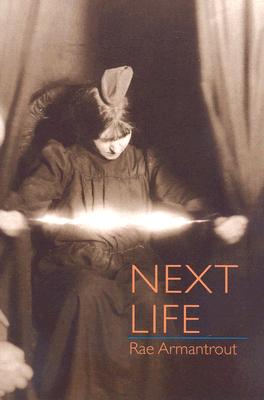
‘Next Life’ By Rae Armantrout


Next LifeRae Armantrout reminds me of Kay Ryan. Maybe it should be the other way, but I read Kay Ryan first, so there you have it.

Armantrout is more intensive, sadder, more melancholy, more interior, and maybe more urban. I’m not sure about that last one. It’s not that Armantrout writes about cities and Ryan writes so much about nature or the country, but Armantrout’s ‘voices’ are not of people living close to nature. I don’t know. Anti-pastoral voices, perhaps?

Her short, abrupt lines and abrupt (though never jarring) enjambments and brief, tangentially connected stanzas convey a voice trying to pierce through the overwhelming haze of sensory overload. Not a uniquely contemporary sensory overload (‘curse the internet and television for their incessant distractions!’). No, this is more ancient, though still modern. Think Freud’s Civilization and Its Discontents.

The poems are implicitly political in their critique of society, though she stumbles when becoming explicitly political. There is a poem that ends by drawing a metaphorically comparison between a cat licking himself and Fox News and, yeah, it’s funny and I can’t say it’s wrong, but all it does it paper over a certain triteness and a too, too direct manner. Armantrout excels at obliqueness.

Similarly, a prose poem loses the effects she achieves elsewhere and never convinces me that this particular poem had to be a prose poem. A prose poem must have a reason for being what it is. I’m not saying a reason that can explained in words, but like obscenity, I know it when I see it. And I don’t see it.

She is an amazing poet. I’m looking forward to having her sign it when she comes to read the Folger Shakespeare Library next month.