Happy Birthday, Lovecraft; Or, Screw You, Lovecraft, You Horrible Racist


A bust of H.P. Lovecraft at the Providence Athenaeum
Lovecraft has always been a little problematical, with his pulpy origins and outrageous racism, yet weirdly compelling stories.

A while back, I dived into a big collection of his work, re-reading At the Mountains of Madness and The Shadow Out of Time.

Mountains is great, exciting yarn or explorers going further and further into the ruins of pre-human (and, as it turns out, of non-earthly origin) civilization, but Shadow is one of Lovecraft’s best. Comparatively long, it feels like it drags, but not in a bad way. In a piling on sort of way, where the accumulation of slow building unease and paranoia becomes nearly unbearable.

But what are to think of him? I can’t say. Should I stop reading him because of his not just slight racism, like the doddering grandfather who makes uncomfortable remarks about the Japanese and World War II every time there’s a kung fu movie on TV (he really can’t tell the difference between Chinese and Japanese), but thought the Asian girl you brought home was adorable, but rather full on Mississippi Burning-style racism? Maybe, but I won’t. Does that make me a bad person? A hypocritical person? I don’t know.

The Arm Of The Starfish


No, I didn’t just read The Arm of the Starfish, by Madeleine L’Engle (of Wrinkle in Time fame).

But I did just read this essay from the Los Angeles Review of Books about L’Engle’s non-Wrinkle novels.

Not too long, I was trying to remember the name of this book I read as kid. I remembered that it had something to do with starfish research (and the ability of the starfish to regrow titular arms). Mostly, I (half) remembered this beautiful description of a somewhat villainous character, who was fat, with thin limbs and the effect was of a spider. I can’t remember the exact phrasing, but it stuck with me.

So then I read that essay and realized that the book was The Arm of the StarfishDon’t be surprised if I get it from the library and re-read it.

Apparently, in a weird way, it’s a sequel to the Wrinkle in Time trilogy, with two secondary, but important characters being the same as two vital characters in that trilogy. I don’t recall their spiritual/metaphysical adventures being referenced, so I’m guessing it was more of a reference point for the author than anything a reader really needs to know. Or maybe it is. If I re-read it, I’ll let you know.

Within A Budding Grove


Earlier, I’d mentioned hints of Albertine’s coming appearance that I hadn’t picked up on the first time I read Within a Budding Grove, but she does appear in the last third or so of the book, though is only named in the last fifth of the novel.

Damn you, Proust, you understand me too well. Reading Within a Budding Grove is like reliving all your adolescent, pre-adolescent, and early college crushes in excruciating detail. First his early crush on Gilberte, the daughter of Swann and Odette, who has no time for the 9780394711829lovesick narrator (who has not yet been named, but will, down the road, be identified as a fellow named ‘Marcel,’ which I’m sure is just a coincidence). Then his more platonic crush on Odette (or, I guess I should now say, Mlle. Swann). In between, though the narrator quickly tamps down such bits of information, lest they interfere with his image of her, lets secondary characters bring up memories of Swann’s earlier pain from the Swann in Love section of Swann’s Way. A sort of Pretty Woman: Ten Years Later. When a man like Swann, marries his courtesan, his whole life will be marked by the knowledge that many of the men in his wider social circle will have effectively once paid his wife for sexual favors at some point in his past.
Later, he goes to Balbec and while it’s not phrased as such, he’s desperate for a girlfriend. He sees girls on the beach and on the boardwalk and invents stories about them, imagines which ones might have glanced at him and might secretly like him (and he, naturally, starts to desire those in turn). He finally meets Albertine, one of a group of girls he sees with comparative frequency and finally engineers a meeting. But he’s not sure she likes him, so sometimes his attentions focus on one of her friends. And then, when she invites him into her room and she’s in her nightgown and he tries to kiss her… she pulls the cord (it’s in a hotel) to summon someone. While there is certainly a whole other novel to be found in what Albertine was thinking, I certainly understand what poor Marcel was thinking and how horrible confused he was.

All the fantasies of confused and sometimes thwarted desire are mapped in precise and painful detail. It’s cringeworthy to read his imagined future events (letter he will receive, meetings he will have – with his responses to these not yet happened, never going to happen incidences prepared to the level of how to dot the ‘i’s) and remember that, god yes, you were once that young and ignorant and embarrassing.

Hemingway En Havana


Hemingway

I’ve read it suggested that Hemingway’s decline can be traced to the Cuban embargo, which denied him access to a spiritual home. Be that as it may, I’m reminded of a contemporary art exhibit I saw years (1999?) in Lyon, France. There was a ladder you climbed onto a platform (the whole resembled a bunk bed from below) and there was a glass table in the shape of the island of Cuba. A recorded voice, in French, saying something like “Hello, Mr Hemingway, how are you?”

‘Call Of The Herald’


I read a surprising amount of Brian Rathbone’s Call of the Herald on my Nook while I was in Thailand before realizing that it was better to stop wasting my time than finish it just for the sake of finishing it. I’d bought it on spec because it was cheap and I thought I remembered reading something good about somewhere.

Well, either I misremembered or else whoever said good thing about it was horribly mistaken.

First of all, I’m pretty sure this is actually YA fiction. Nothing else can justify to the thinly drawn, bland characterizations and lack of a well imagined setting.

So, evil invaders into a peaceful land, blah blah blah, local girl develops super awesome magical powers, blah blah, and I don’t know what next because I didn’t finish it and I don’t care.

Colonel Ty Sedule, Head Of The Department Of History At West Point, Explains That YES, THE CIVIL WAR WAS FOUGHT OVER SLAVERY AND YES, THE SOUTH SECEDED TO DEFEND SLAVERY


Civil War

‘The End Of The Tour’


A friend and I saw it at the E Street Cinema in downtown (by the way, thank you for taking over the briefly defunct West End Cinema; that was a great place and I hope you keep its DIY, underground aesthetic).

Naturally, before the movie, we talked about David Foster Wallace. I’d read Infinite Jest when it first came out, mostly while working the graveyard shift at a gas station. Later, I read the essays in A Supposedly Fun Thing I’ll Never Do Again. A couple of essays published in magazines that I cam across, but that was it for my Wallace reading. And, of course, he had a big influence. But.

I told my friend that I still occasionally picked up A Supposedly Fun Thing I’ll Never Do Again, but it that exactly true? When was the last time I did that? A year? A decade?

He had such a powerful impact on the psyche, but he wasn’t someone I went back to. Certainly, I’m unlikely to read Infinite Jest again, as much because of the time commitment as anything else. But, then again, I’m re-reading Proust. In terms of word count, that’s a bigger commitment.

I’m not sure that Wallace is a ‘young man’s writer,’ but it seems that’s what he was for me.

On another note, the movie has a nice My Dinner with Andre quality, though not half as awesome as My Dinner with Andre because that movie never gets old (rest in peace, Andre Gregory).

Bridge Over The River Kwae


Actually, I learned that it should be pronounced ‘Kwae’ or ‘Kway.’ A ‘kwai’ is not a river, but a water buffalo. Apparently.

the actual bridge over the Kwae River

Good looking people on the  bridge
Good looking people on the bridge

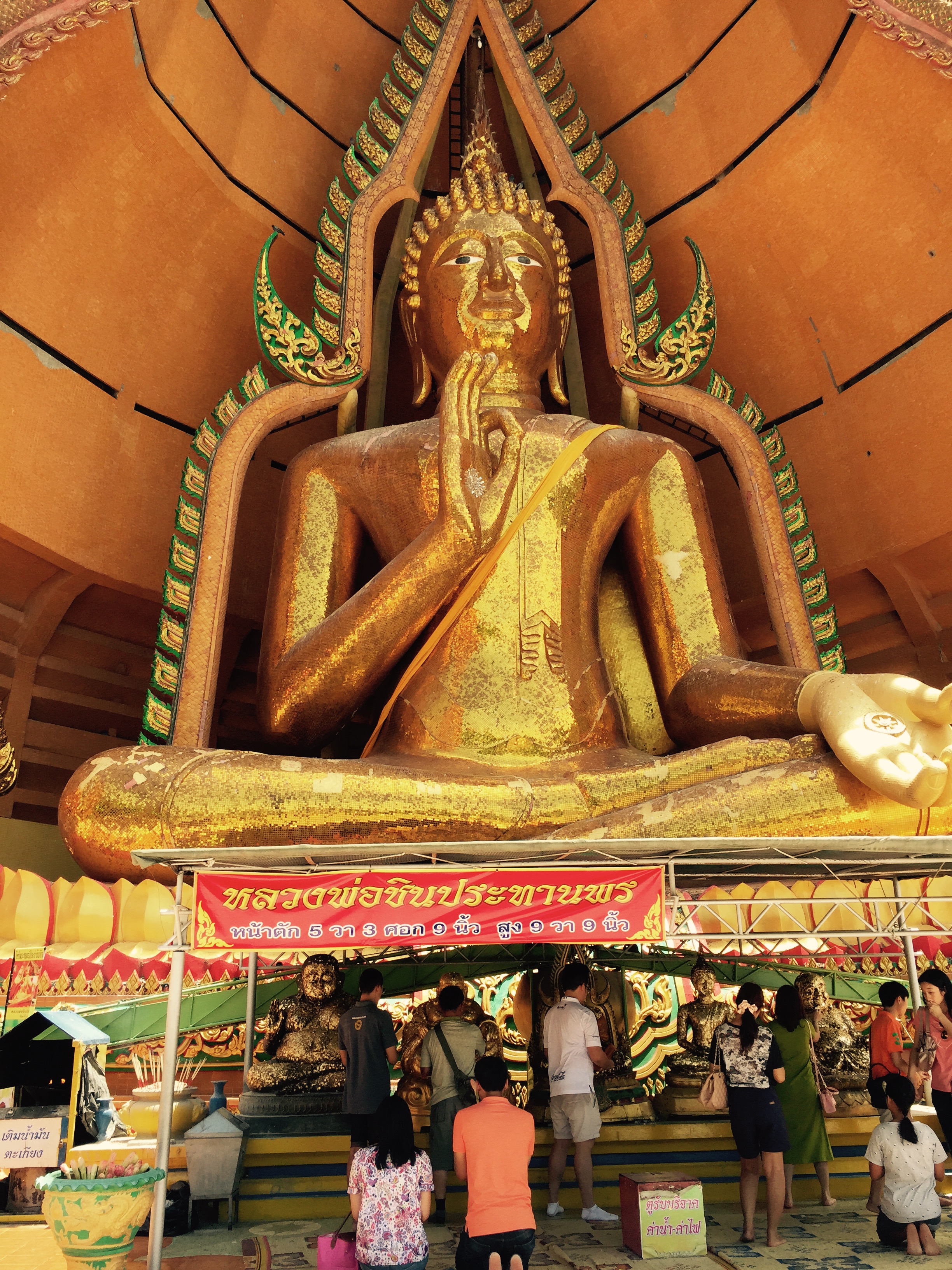
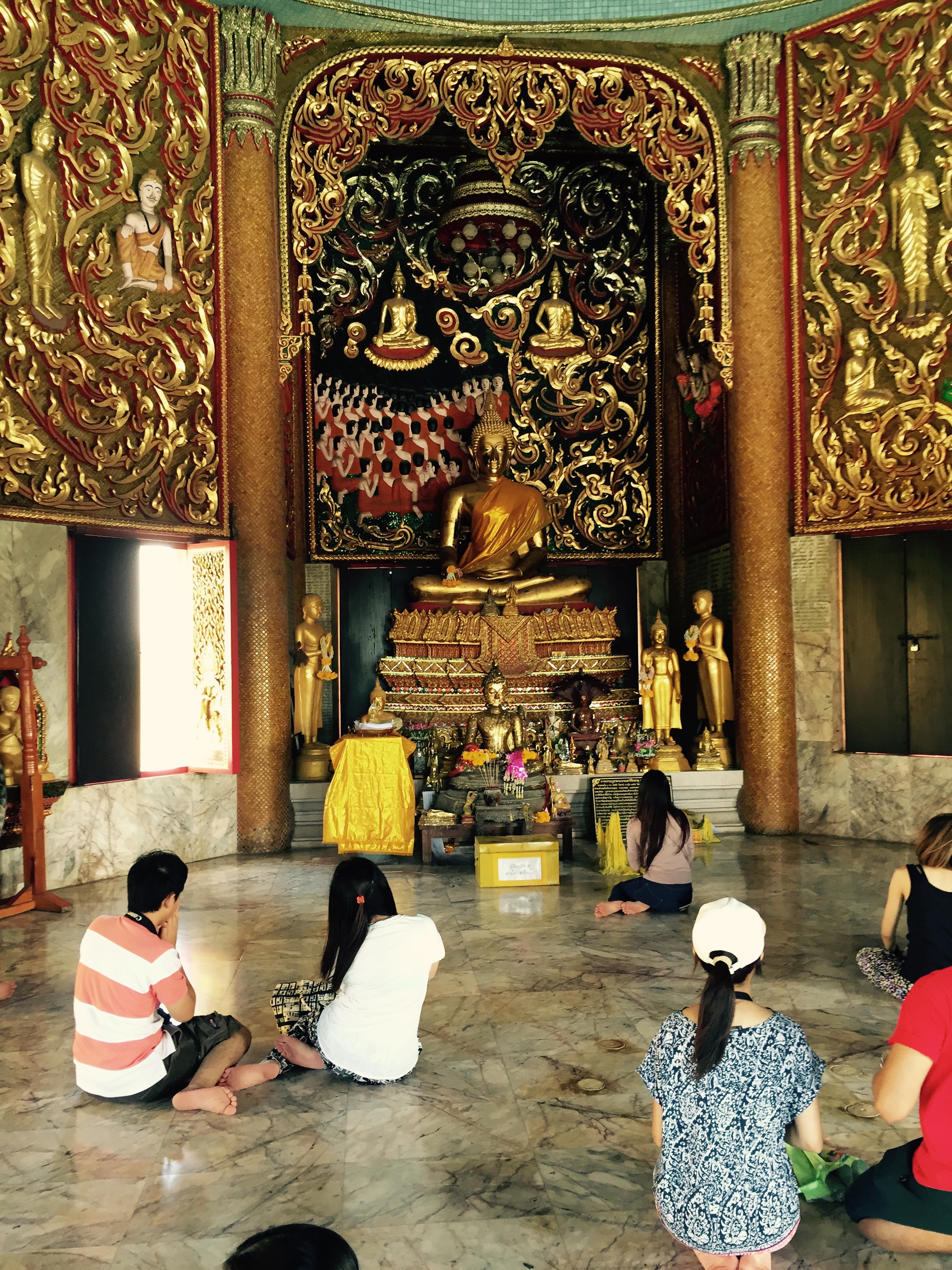
a famous 'wat' or temple near the bridge
a famous ‘wat’ or temple near the bridge
FullSizeRender (14) FullSizeRender (13) FullSizeRender (12) FullSizeRender (11) FullSizeRender (7) FullSizeRender (5) FullSizeRender (4) FullSizeRender (3) FullSizeRender (2) FullSizeRender (1)

A venerable monk sits in front of the mummified body of a famed, centuries old holy monk (I sought advice before taking this picture to make sure it wouldn't be inappropriate)
A venerable monk sits in front of the mummified body of a famed, centuries old holy monk (I sought advice before taking this picture to make sure it wouldn’t be inappropriate)

One of three cemeteries containing the bodies of the Commonwealth (including Australian) and Dutch soldiers who died constructing the bridge. Many were clearly young because the messages on the headstones were rarely from wives, but from parents, because they were too young to have even gotten married.

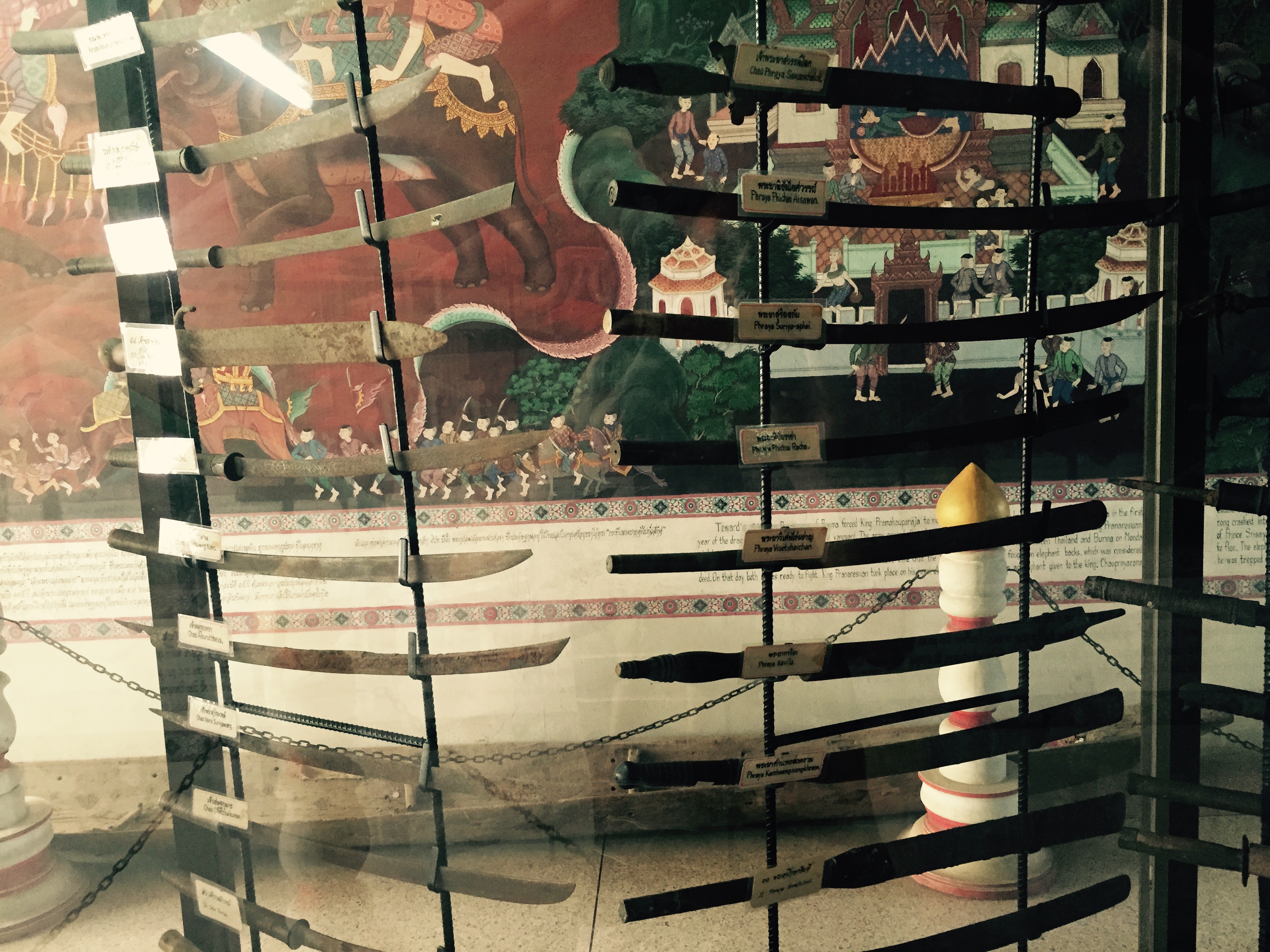
A bunch of swords on display in a nearby museum

‘Sorry, Tree’ By Eileen Myles


Sorry, Tree

I’ve long admired Myles for her essays and poems in magazines and for her role as an poetry advocate/agitator and as a prominent (leading? I don’t know enough to say) figure in queer literature.

But, I’d never before read one of her books. Until now.

First of all, she’s very good. It reads quickly, but I actually read through the book a couple of times because it warrants it (and because it’s a quick read; let’s be honest, I’m not going to casually read War and Peace a second time without a lot thought about the investment I’m making in the project).

A wonderful melancholy thread runs throughout the short (though not broken) lines. A sense of loss of identity from trading New York for California. A fear of drifting from others or of not being able to connect with others like we feel we ought to… sometimes the ‘other’ seems to be a romantic partner (at least once, it’s explicit in that regard), but that also feels relatively unimportant. It is the dissociation that is important. She frequently writes in an almost ‘tough guy’ vernacular, but undercuts it at every turn.

So, very good.

Albertine


One of the pleasures or re-reading Remembrance of Things Past is meeting again scenes which stuck in the mind, but right now, I am fixated on a name that I forgot appeared so early: Albertine.

Less than two hundred pages into the second book, Within a Budding Grove, her name is twice mentioned as the niece of acquaintance of the narrator’s parents. It must her, surely? The Albertine, la prisonniere.