Seeing His Holiness At The Capitol


I wasn’t one of the handful inside the Capitol, but was one of the ticketed folks on the West Lawn of the Capitol. We waited (the gates opened at five am – though I was not there nearly so early) for him to arrive and watched his speech on the jumbotrons (bless you, Pope Francis for spending so much time on the need to abolish the death penalty!).

When he came out, he was a vaguely anthropoid shape, dressed in white on a distant balcony. The experience was not physical closeness, nor even the presence of the Pontiff, which could have just as easily been experienced with far more clarity on a television (and perhaps more enthusiasm; it wasn’t the most rabid crowd I’d ever been in). Rather it was knowing that this was an important moment and you were there. Like the days when we have gone to the White House, such as when Osama Bin Laden was killed or Obama re-elected, when we went not to change history, because history was already changed, but to be there, at a symbolically important location, at a symbolically important time when something important (and good) was happening. Such things are important, personally.
Midweek Staff Meeting: Telecommuting


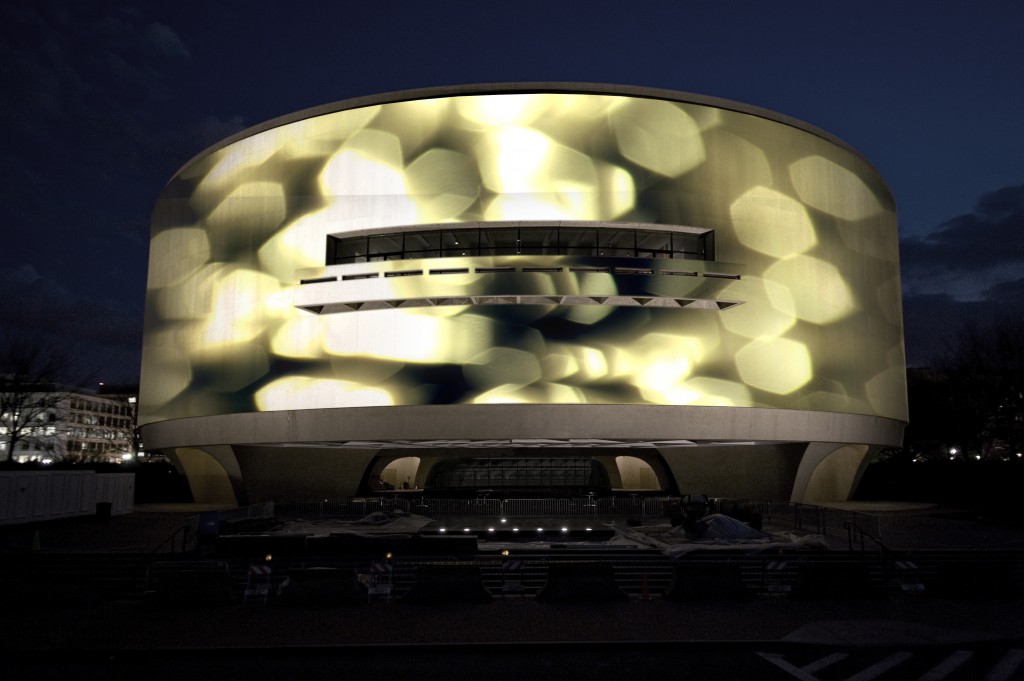
hirshhorn-song-1-1024x681I actually have no article to post here about telecommuting, but his Holiness is visiting DC and, even though I am writing this Monday evening, I feel confident saying that traffic will indeed by horrible and snarling today (Wednesday). A lot of folks are telecommuting and, really, I’m hoping I will be allowed to, as well, though it’s hard to say and my office doesn’t really have a policy on this.

Hume and Buddhism. Actually, I think this kind of link can be a little tendentious, especially trying to show that Hume was actually influenced by Buddhism. But, whatever. Hume is really cool, regardless.

You will be missed, C.K. Williams.

A nice, balanced article about the new head of my favorite museum in DC, the Hirshhorn.


What Do You Really Think Of Me?


I’m not really asking. I don’t think. I probably don’t want to know, do I? Not really. Or it might be like tearing off a band aid. But I’ve never believed in that either. They’re lying when they say it’s better to get it over with.

You have no idea what I really think of you, because I’m an excellent liar. Always have been. Not that my guard doesn’t sometimes slip, but I am good at being unknowable to all but my very closest friends and family and even then, many of them know far less than I think. Maybe, to steal from Sokrates, the ones who know me best know that they could very well not know me at all.

But that could easily be everybody. I think I’m special, of course. I think that I have reasons for thinking so. But I am almost entirely sure that people I don’t think are special at all are convinced beyond all doubt that they are special and have valid reasons for their conviction. Justified true belief. Or warranted true belief (hat tip to Alvin Plantinga). Take your pick.

There are people who I think like me. There are people who I think like who I don’t like in turn. There are people who I think like me who I don’t like in turn and who I think don’t know that I don’t like them.

But what do people really think of me? Surely, even in the most perceptive person, that’s the greatest blind spot. We think we are generally good and likable people, so naturally we believe that people like us as the good people we are. But these people who I don’t like and who I don’t believe know that I don’t like them – I believe that many of them like me. But what if I’m not special and perceptive or only ordinarily so and my specialness, such as it is, is limited to my vast delusions of likability and opaqueness?

‘Heir Of Sea And Fire’ By Patricia McKillip


I’d read a couple of books by McKillip in my teenage years, namely the first book in the trilogy of which Heir of Sea and Fire is the second, and a book called The Forgotten Beasts of Eld. She’s very much a fantasy writer in the vein of Ursula LeGuin, but without LeGuin’s interest in colonialism (or rather, anti-imperialism and post-colonialism); less political and more elegiac and definitely more influenced by Tolkien (not so much Lord of the Rings; check out a short novel of his called The Smith of Wooton Major).

But anyway… In most ways, it’s not as good as The Riddle-Master of Hed, having the ‘middle book syndrome’ or being most dedicated towards getting to place where the third volume embark on its conclusion.

In another sense, though, it has something more important than its predecessor: it is about a woman’s journey. Granted, she’s looking a guy, but still, she (Raederle is her name, by the way) gets her own book with her own arc and self discoveries. But it’s not as good as the first book. Her journey still isn’t as interesting as Morgon’s in the first book (and it doesn’t have the magic of my old memories of The Forgotten Beasts of Eld). I was also hampered by having waited too long between books and being a little unsure of the characters.

Weekend Reading: Grillo


The Colonial Market & Fair at Mount Vernon is nice excuse to visit a very nice that happens to be very close by. Not ‘let’s jump on the Metro’ close, but definitely ‘it’s a short and fairly pleasant drive, much of along the river’ close.

It’s cool that people are supporting lit mags, but I’m not sure if this is a sustainable model. Also, stop throwing the word ‘avant-garde’ around so much. It doesn’t mean what you think it means.

Now I want to get this new translation of Mallarme.

The Gypsy Baron


A friend and I went to a small theater in Rockville to see the Victorian Lyric Opera Company (specializing, as you might expect, in nineteenth century opera) perform Richard Strauss’ The Gypsy Baron.

The plot is suitably preposterous and if all you know of this particular Strauss is the music used in 2001: A Space Odyssey, you’ll be very surprised if you see any of his light opera or operettas. The performers and the orchestra (which was live) were amateur, but the music is so fun, it carries you along. The libretto was translated in English in (more or less) rhymed couplets. This made it rather like a traditional musical, only instead of the music being written by an irritating Andrew Lloyd Webber wannabe (or, even worse, actually trying to remake an opera), it’s by Richard Strauss.

It’s not the same as seeing a professionally produced and well-budgeted opera at the Kennedy Center, but it was fun and it scratched my itch for opera.

‘Salad Anniversary’ By Machi Tawara


Salad AnniversaryI saw this collection on the shelf at a bookstore and while I didn’t get it at the time, for some reason it gnawed me. I did some googling and read about the book and the author and, somewhat trepidatiously, finally sat down to read it.

Machi Tawara is not Yeats nor Dante nor Milton nor Eliot nor Ashberry – at least not in translation (I know that I am missing a ton of information and shading, not in the least because they are all written in tanka form and Japan’s specialized poetry forms don’t really translate directly to English without losing their form). They’re a little sappy, more than a little youthful, a bit twee, and they should be trite, but, instead, they are delightful. I can see why the book became a bestseller in Japan.

Mostly about falling in love, losing love, being in love (and a bit about being a teacher and living alone), there is nothing groundbreaking about any of it, but as soon as I had finished, I wanted to go back and read it again.

The individual tanka are translated here as three line verses (in Japanese, they would be a single, vertical line). Each one makes for self contained poem, while simultaneously making for a continuous narrative.

From a poetic sequence entitled Hashimoto High School (where the then twenty-something Tawara taught):

Girls in middy blouses
scurry through the streets
as if keeping someone waiting

Writing the character for “youth”
somehow I’m struck
by all those horizontal lines

Besides that first tanka‘s echoes of Pound’s metro station, each tanka works perfectly as a self-contained poem, but also lends itself to a clear, more or less linear sequence.

Midweek Staff Meeting: Vinteuil


According this fellow, the Saint-Saens sonata above if the little piece by ‘Vinteuil’ that so inspired Swann and Odette. I’d read it was something by Franck, but this a nice piece… so whatever.

Make yourself feel bad with personality tests.

Fredric Jameson has really gotten into the philosophy of SF lately.

I feel like album covers, maybe, used to be cooler.

‘They Pretend To Be Us While Pretending We Don’t Exist’


The Michael Derrick Hudson debacle has been embarrassing. I love poetry and advocate for it to my friends and co-workers, but when this sort of garbage is what gets it into the news… well, it ain’t good.

I’ve been reading Jenny Zhang’s poetry collection, Dear Jenny, We Are All Find, so I perked up when I saw she’d responded to the poetry s–tstorm on BuzzFeed in an essay entitled, They Pretend To Be Us While Pretending We Don’t Exist.

Nicely puts to bed the lie of some kind of supposed advantage that poets of color have in getting published and respected. Shouldn’t need to be said, because it doesn’t take much looking to figure out that published poets in America are largely white and male.

At Stanford, a white girl (well-meaning, of course) wrote a story about a Chinese American woman living in modern-day San Francisco (this was the early 2000s) who wanted to marry a white guy but was forced into an arranged marriage with a Chinese man and it was called The Dim Sum of All Things. (Laugh now, cry later!) I don’t think I’m being unreasonable when I say the reality of that story was fucked and so was the fantasy. She got into a highly coveted advanced fiction writing class taught by a famous writer and I didn’t. The story I submitted was also about Chinese Americans living in modern-day America, but it didn’t involve arranged marriage or dim sum or sensuous descriptions of chopsticks. This didn’t mean the teacher made a wrong choice. He made a subjective choice.


Favorite Bookstores: The Clearance Shelves At Politics & Prose


If, when you walk into Politics & Prose, you take the stairs down and then take a left and walk along the wall of the stairs, you will find shelves of various things, including drama and, most importantly, poetry.

Lots of poetry. Good poetry. Inexepensively priced poetry. Hardback copies for $7.99. Paperbacks for $6.99, $5.99, $4.99, $3.99.

I’ve bought books by Christian Wiman, Rita Dove, Franz Wright, Anne Carson, and Liu Xiaobo. I’ve passed by, because my arms were already full and my small budget already busted, books by John Ashberry, Frederick Seidel, and Augsut Kleinzahler.

Check it out. It never disappoints.