Ostensibly, I bought this because my better half enjoys cider. But really, I bought it because of Kenneth Branagh.
For people of a certain age and certain bent, Kenneth Branagh’s Henry V was one of those things that changed the way you saw the world could be. Shakespeare was exciting. It was sexy and a little bit dangerous.
And, in case you’re not making the connection, the climax of the play/movie is just before the Battle of Agincourt, when King Henry delivers the famed ‘Crispin’s Day Speech.’
Ever since I saw the documentary, Best of Enemies, at the E Street Cinema (I can’t recommend the documentary, nor that movie theater, highly enough), I’ve felt the urge to get to know Gore Vidal’s oeuvre better. Over a decade ago, I saw him at a West Hollywood book fair (he signed my copy of The Judgment of Paris).
My initial thoughts are that he repeats himself a lot in these essays. Phrases and anecdotes do double or triple duty throughout, which brings up the question of whether it would have been better to be more selective or else if it’s better to be comprehensive, repetition, be damned.
I also hadn’t realized how much Christopher Hitchens writes like Vidal, particularly on politics. The name dropping, of course (though you read Vidal, at least, in part to be taken under his gossipy wing, so name dropping is part of the point), but also the anger at certain figures, verging on falling into conspiracy-mongering (in Vidal’s case, Truman comes in for a lot of grief; if I’m honest, I’m not well-read enough on the haberdasher’s presidency to judge how fair Vidal is to him).
“Our new government is founded upon exactly the opposite idea; its foundations are laid, its cornerstone rests, upon the great truth that the negro is not equal to the white man; that slavery subordination to the superior race is his natural and normal condition. This, our new government, is the first, in the history of the world, based upon this great physical, philosophical, and moral truth.” – Alexander H. Stephens, Vice President, the Confederate States of America
I first read about the Kreeger in an article about dubious private museums. Two DC area institutions were mentioned: the Kreeger Museum in DC proper and the Glenstone Museum in Potomac, Maryland (which, if you only from the Real Housewives ofPotomac, you will not realize is actually rich, white, and equestrian). The dubiousness came from the possibility that the museums mainly existed as vehicles for tax mitigation.
Naturally, I had to visit them. Eventually.
Several years after reading the article, we finally made it to the Kreeger, in the Palisades neighborhood of DC. A low slung building of elegant, off white stone, the museum itself was designed by my favorite architect, Philip Johnson. It rather resembles a building wide expansion of the wing he designed for another DC museum, Dumbarton Oaks, to hold its Pre-Columbian collection.
The Kreeger, despite some excellent Southeast Asian sculptures, is primarily about pre-WWII European art. But darn, if it doesn’t have some great pieces.
Seven or eight Picassos. One from the sixties, but the rest from his early days through his peak in the thirties. Seven or eight Monets (a mixture of Giverny landscapes and marine paintings). Two Van Goghs. A Chagall. Two Gorkys. Some excellent, small Rodins. A couple of Miros. A Kandinsky. A Pissaro. There were even two very early Mondrians, which were deeply confusing because they were fairly straightforward, representationalist pieces.
All of them, really excellent.
The outside of building, once you got beyond a terrace filled with at least one Jean Arp and other pieces that looked relatively contemporary to him (they were poorly identified, if I have a criticism of the museum), with the rest of the grounds scattered with contemporary pieces.
It’s shameless, rich man exceptionalism at its worst. But well worth seeing.
The nearest one is called “Quill” and is part of a whole courtyard devoted to DC artist, John DreyfussMonet, of courseMonet
Rather creepy, but coolWhat a great Picasso, right?Rainer Lagemann’s “Sean, Sara, Jess”A Kandinsky, believe it or not, partly done with sand!
Funny thing. You see, it’s wildly overrated, especially in non-presidential election cycles. The GOP has never had a much of a positive vision over the last couple of decades and they have done just fine, running against Democratic presidents, with just a frisson triggered by Newt’s inane contracts or Ryan’s incoherent mimicry of a low rent kind of DC-specific wonkishness.
The folks who talk about the Democratic Party’s need to craft a proactive vision are generally selling something. What they hope to get paid in is usually leadership within the party (often of an informal kind) for politicians, intellectual respect (and a book deal) for columnists, and paying clients for consultants.
Though none of the federal races have tipped all the way over, we have seen that running against Trump and the GOP works quite well.
And opposing these things implies a certain positive message. Running against Trumpcare/Ryancare/McConnelcare implies that people deserve healthcare, which is a positive message. Running against cutting healthcare for old people, sick people, veterans, and poor people (often overlapping groups) implies a stance against inequality and favoring the rich over everyone else.
Democrats can run quite handily without the vision of the sort that pols, writers, and consultants have been saying is absolutely essential. Which should be taken to mean that invidious candidates don’t need a message and that they don’t need to be disciplined about staying on message, but that’s just electoral politics 101z
My own two cents (and if anyone wants to anoint me a leader, give me a byline in a magazine, or hire to share my wisdom with your organization, feel free) is that Democrats just need good candidates for the districts and states in question. They need to be able to raise money (being right can’t substitute for totally inadequate resources), but also to be a cultural fit for the area. But maybe you shouldn’t reward me for saying this, because, actually, most of the folks who actually know what they’re doing have already said it, only they are less strident than the vision-mongers because they have less of an angle.
‘Independent’ is almost always misleading. People may call themselves independent, politically speaking but the vast majority of the time, that person actually has a marked political preference in his or her voting habits.
When a president is particularly unpopular, the number of independents will rise because voters of the president’s party feel a little embarrassed from the association and claim to be independent, but the basic leanings are not changed for most.
In this case, a NPR/Marist poll showing a seventeen percent drop in Trump’s approval rating is probably showing a segment of formerly GOP identifying voters now identifying as independent, with a significant, if not a majority, of those folks actually turning against the president. It probably also shows some Dem leaning folks who aren’t convinced that party has their act together, so while they are likely Democratic in their voting, won’t yet identify with the party.
This is terrible news for Trump and his party, but the real turning point won’t be until more people start identifying as Democratic.
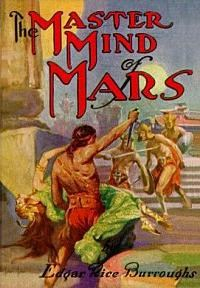
This seventh of Edgar Rice Burroughs’ Mars novels was probably my least favorite so far. What does it mean to be disappointed in a book in a series of books that, we can all surely acknowledge, aren’t actually that good, at their best?
Mastermind reads like ERB fan fiction. By the way, did you know that some fans of the work of Edgar Rice Burroughs will call him ‘ERB?’
It’s ironic that it reads that way, because the main character, Ulysses, is a fan of the earlier stories (you see, John Carter would sometimes return to Earth and tell his tales of Martian adventures to ERB, who then published them. Well, Ulysses is a fan and when things go badly for him WWI, he… wills himself to travel to Mars (known to the inhabitants as Barsoom). There, he learns how to transplant brains into new bodies, marries a princess and all the usual derring do, but he seems to lake the verve of John Carter and the heroes of the first six books. But I will keep on reading them, gosh darn it!
This brief book is an interesting, but ultimately disappointing ‘biography’ of Confucius. I say ‘biography’ because, as the author admits, it is almost impossible to put together an accurate bio of the man, because so much of what is known is not able to be disentangled from myth. While he admits the problem, it’s not clear from the book itself how he went about it. How much can we trust the incidents described? I certainly don’t know. And the ending is downright confusing, because it’s a series of short narratives about the spread and influence of Confucianism outside of China (Vietnam, Korea, etc). Interesting, but felt like filler because… wasn’t this a bio of the man? And if you were going to do more, why not actually talk more about the philosophy cum religion called Confucianism? There’s a little, but honestly, if I hadn’t read Fung’s A Short History of Chinese Philosophy (also disappointing), I wouldn’t really have known what he was talking about when he says things like ‘Neo-Confucianism.’ Perhaps my main takeaway from this book is that it’s past time for me to read the Analects.
Trump has been successful in recruiting politicians like Pence, whose career had plateaued and was suffering from low approval ratings (see also, Nikki Haley) or were already termed out of office with no obvious place to go (Sonny Perdue) and also the already super wealthy (Tillerson and Mnuchin).
But there is a second strata of positions below the level of Cabinet Secretary and related positions. At that level, the level of the real subject matter experts, he has struggled to find people for roles like solicitor general or deputy cabinet members specializing in a policy area. Why? Because that class of people still have something to lose. And they believe that they will end up losing by joining his administration. Those who ask themselves, what kind of job will I be able to get after I serve Trump are implicitly answering that too many potential clients won’t want to hire someone tainted by association with Trump.
 Ostensibly, I bought this because my better half enjoys cider. But really, I bought it because of Kenneth Branagh.









 the coffee philosopher