The Dying of Christopher Hitchens


I don’t know what I think about Christopher Hitchens. And I suspect that a lot of young, left-leaning intellectuals feel that way.

He still sometimes describes  himself as a “soixante-huitard” and life a revolutionary-cum-public intellectual is one any would be poet worth his or her salt aspires.

But…

The whole Iraq war thing.

And it is clear that he welcomes my feelings of discomfort – which are mixture of disgust, a sense of betrayal, and raw envy. This is also compounded by my own Catholic faith and his own (and my once) strongly felt atheism.

I also wonder if Hitchens is not the Arthur Koestler of the those generations who came of age after Stalin? Will Hitchens, like Koestler, fade into a sort of gentle obscurity as the wars he gave his life over to cease to have meaning? Not just the Iraq war, but his polemics on such ultimately ephemeral figures as Mother Theresa and and President Bill Clinton. Which of his writings will survive?

My Aunt Millie gave me a copy of Letters to a Young Contrarian one Christmas. This seems to me to be the most likely to survive, though I could not take much of his advice. And perhaps, because I could not, it is not just envy and betrayal, but also shame he inspires.

But don’t we also want him to feel ashamed, too?

Anyway.

He is dying. His rakish hair is gone, but he still has the insouciance of a classic bad boy intellectual.

I don’t know how I should feel. In a strange way, I am reminded of the way I did not know what to feel when Hunter S. Thompson died. He was a larger than life figure from my adolescence I had outgrown by the time of his death.

That’s all. Except that maybe I’ll re-read Hitchens’ Letters.

Pulp Sci Fi: None But Man


On Saturday on I purchased and by Sunday I had finished reading Gordon Dickson’s None But Man, a science fiction novel from 1969 – towards the tale end of the silver age of pulp sci fi.

I had wandered into Capitol Hill Books‘ basement specifically looking for a good novel from the genre – preferably one from the late golden or silver ages of the pulps (roughly 1940-1970). I was inspired to dive into this preferred genre of my misspent youth by The Onion’s running feature, Box of Paperbacks, wherein Keith Phipps reads through a collection of 75 odd old science fiction novels.

While browsing at the bookstore, I was lucky enough to find None But Man, which had been recently featured in that very series.

When you pick up a book like this, you generally know what you are getting. Yes, writers like Ursula Le Guin have risen above the supposed limitations of genre to write Literature with a capital “L,” but even widely read and admired writers like Isaac Asimov (a clear influence on None But Man) are not, we should admit, ever likely to be confused with Leo Tolstoy.

But that’s not the point.

Taken for what it is, slipping into the pages of None But Man was like sliding into a warm bath for someone raised on used paperbacks from the period (though Keith Phipps was somewhat harder on the novel – dragged down by the sheer weight of reading some many similar novels).

The book itself is heavily influenced (I felt) by Isaac Asmiov – particularly Foundation. There is something of Asimov’s “psychohistory” in the way that the main character manipulates and manages the actions of large populations.

I also liked the way the author was clearly aware of some of the ways that the tropes of science fiction do not always line up with science. For example, the main character (Cully When) points out how fortunate they are, when hijacking an alien ship, that the aliens’ sensory range is roughly the same as their own, i.e., that they see roughly the same spectrum of colors. This would have been a problem if an important flashing light were only visible to a creature who could see in the infrared spectrum.

Giving the aliens (called the Moldaug) the same vision as us was a necessary part of keeping the novel flowing so as not to get bogged down in details, but the fact that Dickson addressed it suggests that he is aware that it is, in truth, unlikely to that the sensory capabilities of an alien species would be identical or even similar to our own senses.

He even has the plot of the novel revolve around the fact that he moral code of the aliens is radically different from our own (though not so different as Dickson suggests – I actually think he fails here to create a truly alien moral code).

Anyway… I’m looking forward to going back to Capitol Hill Books and picking up another bit ‘o pulp read later this week.

Soft Surrealism


Some of my favorite poets traffic in surrealism.

I have already mentioned my personal love and affection for Ted Joans (I have smuggled a copy of his chapbook/selected poems – WOW – into the office and am sneaking little hits of his jazzy lyrics when I can spare a moment), who André Breton called the only “afroamerican surrealist” he had ever met, and also my beloved anthology, Surrealist Love Poems.

Perhaps I have not yet noted the special place that Paul Eluard’s Capital of Pain and Love, Poetry have in my heart, as well as, to a lesser extent, The Smoke That Carried Us: Selected Poems of René Char.

But I am not ignorant of the fact that surrealism has also spawned some of the most pernicious imitators – wild, sloppy writing for which surrealism is just an excuse.

The term “soft surrealism” seems to have been coined for just such a reason. It encapsulates the laziness and weakness of failed, contemporary attempts at surrealism.

But I also know that Eluard and others have deeply tinged my work. Are my own poems “soft surrealism?” Is is possible to pen a truly great surrealist poem so far from the literary moment that spawned the movement?

I don’t have the answer to that question.

Places That Made Me Want to Write


Certain places just make you feel like pulling out a pen, laptop, or even a manual typewriter (assuming no one objects to the noise) and taking a wild, boyish stab at writing, as  Paul Varjack, from the movie version of Breakfast at Tiffany’s might say.

For me, those spots included the Gulfport, Florida coffeehouse Kool Beanz. Sort of the beating heart of the Gulfport Arts Village, it was exactly what a coffeehouse in a beach town ought to be.

Skylight Books in the Los Feliz neighborhood of Los Angeles, California is another place. Though it doesn’t serve coffee and its resident cat sadly passed away, not many other bookstores were as committed to the idea and production of literature – amply shown by their stunning selection of and support for small press books, hand printed ‘zines, and other literary labors of love.

Revelations Cafe and Book Store in the quirky, artsy town of Fairfield, Iowa. I picked up a used copy of A Sourcebook in Indian Philosophy here, as well as cassette tape (for my car stereo) copy of the Violent Femmes self-titled first album. Also, they have very good pizzas. Just saying.

The West Gallery of the National Gallery of Art in Washington, DC has two wonderful little courtyards that are perfect for sitting down with a notebook or a newspaper and indulging in some quiet literary introspection.

Also, perhaps I should put in a little something for those places we have lost – in my past, I remember C.A.M.S. (Consortium for Art and Media Studies), a coffeehouse/performance space in Pinellas Park managed by Billie Noakes, Mother’s Milk coffeehouse in Clearwater, and – the grand daddy of all Tampa Bay venues – Beaux Arts on Central Avenue in St. Petersburg and the irreplaceable and irascible Tom Reese. To my great loss, I did not know him well nor take sufficient advantage of Beaux Arts.

Online Submissions


I submitted some poems to Saw Palm, the lit mag of the University of South Florida, the other day.

Over the last few years, as I have dutifully picked up my annual copy of the Poet’s Market, I have watched as publications, big and small, started accepting electronic submissions. Then more and more started indicating that they preferred email to hard copies or, at least, that they made no distinction.

Saw Palm has gone one step further and uses a content management system from Submishmash to handle submissions.

It makes perfect sense and I’m sure if I drilled down far enough, I’d see a lot more publications using this or similar systems.

I can now log onto Saw Palm watch the water boil, which is to say, obsessively check and see if my work has been accepted or not (I’ve got no reason to think I’ll get any sort of answer in less than two months, but that hasn’t stopped me from checking once today already).

As a writer, I am deeply tied to the paper and to the work’s appearance on paper (this blog notwithstanding), but I am very happy to have this new way to send in my work. The last four poems that were accepted for publication were all submitted electronically and my day job basically consists of sitting at  a computer all day (with brief interludes on the phone and the infrequent road trip), so I am no luddite – my occasional anachronisms notwithstanding.

Frankly, it makes it easier for me to send my stuff out to do it this way (and I can do it from the office). Certainly, if the good folks at Saw Palm give me the slightest encouragement, I’ll be sure to send them new material next year.

Science Fiction: A Personal Archaeology


Not unusually for a (dare I say?) precociously intelligent young, American boy, I devoured science fiction and fantasy novels, gathered up from a dozen used bookstores and often dating from the golden age of science fiction (roughly th 1940s through the 1960s).

Then, as Paul told the Corinthians, “When I was a child, I spake as a child, I understood as a child, I thought as a child: but when I became a man, I put away childish things.”

Whether because I won’t grow up or for some other reason, part of what I call my personal archaeology, I have been filled with a great desire to revisit these novels.

Some time ago, I picked up Fredric Jameson’s magisterial study of utopian (and dystopian) literature, Archaeologies of the Future, and it has given me some ammunition in my quest to justify spending time reading pulp sci fi.

I followed it up with both volumes of A.E. Vogt’s Weapon Shop novels, The Weapon Shops of Isher and The Weapon Makers. Not great stuff, but reaussuringly familiar to a lover of the pulps.

Now, I am almost halfway through with Gene Wolf’s Book of the New Sun.

Damn does it feel good.

The Challenge of Language Poetry


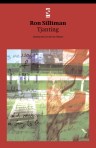
I just got my copy of Tjanting in the mail yesterday from Salt Publishing. Already,  I am wondering if attempting to read Pound’s Cantos, Ron Silliman’s Tjanting, and Anne Carson’s Nox all during the same week (though I do not expect to finish them in a week – this is an exercise in personal edification and pleasure, not a book report) is not a bridge too far. Especially with the Byron’s far less demanding (though no less satisfying) Childe Harold beckoning.

Silliman’s prose poem style takes some getting used to. I got a taste of it when I read My Life by Lyn Hejinian a few years ago (I picked it up in a bookstore in Seattle – the name now escapes me).

No doubt Silliman himself would castigate me as an enabler of the “School of Quietude” and it is never fun for a one time rebellious youth to look in the mirror at his mid-thirties self and see someone who does not properly appreciate the avant garde.

I am, beyond a doubt, a creature of the “line” in poetry. I love prose poems, but typically shorter ones, that don’t go on for more than a page and a half. At that length, they still feel tied to the idea of “line” to me. But perhaps that is part of Silliman’s project in these dense structures?

He has written about the “New Sentence” and one is necessarily reminded of Ludwig Wittgenstein’s Tractatus Logico-Philosophicus and the argument that the sentence is the most basic, atomic (in the Greek sense) part of language. But, of course, I never properly understood Wittgenstein.

All I can say is that I hope I have the patience to build a greater appreciation for Silliman and for Language Poetry in general. I learned a lot from poets who altered and reformulated how the “line” is used poetry. Perhaps it’s time I learned something from someone who has done away with it altogether.

The Cantos


A local bookstore was going out of business and what with prices being slashed on everything, I took the opportunity to pick up a copy of Ezra Pound’s Cantos (also Anne Carson’s Nox).

I mentioned Pound during my review of cummings – though I failed to write how deeply (yet also superficially) Pound influenced me and my writing.

Deeply in that reading Pound for the first time as a teenager was like a bag of bricks falling from the clear blue sky and cracking me on head – staggering me and forcing me to look up and ask the question, “Where the hell did that come from?”

And where did it come from? Well, as Hamlet said, “There are more things on heaven and earth than are dreamt of in your philosophy, Horatio.” My literary world was mostly bounded by Poe and by a large collection of pulpy science fiction and fantasy writers (not dismiss those – I am currently going through a big of personal archaeology as I actively work to rediscover those writers). Pound opened my eyes and showed me the way to this stunning, erudite place – also known as High Modernism – that is still one of my favorite temples.

But my appreciation was also superficial. It was actually his earlier, Imagist poems that had so struck me. But his magisterial work – The Cantos – was still mostly unknown to me. In truth, only now, for the first time, am I systematically reading through this massive poem. Before, I was, as much as anything, struck by the idea of Ezra Pound.

And certainly, my idea of Pound glosses over his the reactionary, right-wing political sentiments that caused him to side with the Fascists in World War II. In that vein, let me admit openly, I do not know what one should do about his politics – his odious, anti-Semitic remarks – anymore than I know how exactly to read Martin Heidegger.

Right now, I am only some 20 pages into the poem. There’s a lot more to go. All I can say, besides commenting on how delicious the language sounds and feels, is that Tiresias (the blind, prophet who lived both as a man and – for seven years – as a woman), who featured so prominently in the heavily edited by Pound final draft of The Wasteland) does not appear in nearly enough contemporary poetry (paging Anne Carson!).

Just One (More) Book


Salt Publishing came up with a brilliant campaign to keep their struggling publishing company afloat last year – the “Just One Book” campaign.

Essentially, it was an effort to make us all feel guilty for not actually stepping forward and putting a little money down to support contemporary literature from smaller presses.

And it worked. “Just One Book” became a minor cause celebre (I myself bought Mark Salerno’s Odalisque – a collection of sonnet-like poems celebrating a noirish image of Los Angeles; as a poet who once lived in that great city, myself, I rejoiced to see Salerno so wonderfully capture part of that place’s magic).

Now it is back with “Just One (More) Book.

They make it clear that this is not just a shameless plug by their marketing folks, but a true cri de coeur by a lit lover who fears that this tragic wreck of economy (thanks a lot, George W. Bush! no – don’t worry, we’ll clean up the mess for me) will crush a small shop like Salt.

The phrases they rattle off sound pretty dire: “sales are now 60% down on last year” and “wiped out our grant and our cash reserves” and – worst of all – “we’ve less than one week’s cash left.”

I went for Ron Silliman‘s Tjanting (ironically, inspired by Seth Abramson’s smackdown of Silliman’s painfully tendentious “School of Quietude”). I constantly read Silliman’s blog, but my shelves are painfully bare of any of his books. But not anymore – or at least not anymore in a couple of weeks, what with shipping times and all.

Please consider making July “Poetry Month” and supporting Salt Publishing.

Anthologies


Do you know that I have never read The New American Poetry, 1945-1960? It seems almost impossible.

I’m not a philistine. Nor am I a traditionalist or a formalist, who has avoided this foundational document for aesthetic reasons. In fact, I am a great admirer and have been more than a little influenced by the Black Mountain and New York Schools (my father was good friends with Fielding Dawson, a writer who studied at Black Mountain) and by the San Francisco Renaissance (especially Kenneth Rexroth, who did not actually have a poem included in the collection).

The simple truth is, I have just not gotten around to it. It’s on my list though.

Another truth is that I don’t buy a lot of anthologies. Though I do make a point of picking up lit mags, when it comes to book buying, I am mistrustful of collections of different writers. After all, if I like a particularly poet – shouldn’t I just get an entire book by that poet?

The same sort of morality is at play in the classic admonition not to buy the single, but buy the entire album. If a band or musician is any good, the theory goes, then you should experience the entire work, not just the fragment of it represented by the single (not sure how that ethos is managing in the age of iTunes).

I did pick up a copy of Surrealist Love Poems, but that’s a relative exception. And picking a collection of poems by artists who have been dead long enough to be considered classics is not quite the same as picking up a collection of something more contemporary.

As a result, other anthologies which have sparked a certain interest in the poetry community – I am thinking of much talked about collections like American Hybrid – are also absent from my shelves.

Am I simply ignoring a key means of disseminating modern poetry?

Certainly, collections like The New American Poetry and the 1931 Objectivist issue of Poetry were vital stepping stones (or were they just markers?) in the evolution of English language poetry.

What am I missing by avoiding anthologies?