Ezra Pound: Canto III


The Third Canto consists of the first person musings about the fall of “Myo Cid” (or “Mio Cid” – literally, My Lord; refers to the great Spanish hero of the Reconquista, El Cid).

Though writing about a Spaniard, the person musing is clearly in Italy. To me, this Canto reads as if it has moved away from the distancing mythologizing of the first two. I was struck by the strong impression that the “I” was truly Ezra Pound himself and that Myo Cid was a personal metaphor for some hero of his that suffered an undeserved fall from grace.

The Washington Post Devotes Some Space to Reviewing Poetry


Ok, so it was on a Wednesday and not in the Sunday paper. And one of the books was by Billy Collins, which barely counts. But they basically set aside a whole column inside of the Style section to review five books of poetry.

After having repeatedly complained that the New York Times was not giving much love to poetry, I felt like I should recognize the WaPo for giving up some real estate to the art form.

They even included a review of a relatively new poet – writing about The Needle, only the second book of poetry by Jennifer Grotz.

New York Times‘ poetry editor, David Orr: are you listening?

Ezra Pound: Canto II


Much like the First Canto, the Second Canto reads like an section of a narrative poem (though, as befitting the Second Canto, it reads as if a little further along into the story than the First). But it does not necessarily read as a continuation of the “narrative” implied in the First Canto.

The Second is also, dare I say, more character driven. It is also more explicitly about a journey of some sort. To my eyes, it reads more like an Odyssean tale – someone returning after years away from home, both older and wiser than when he left.

Formally, Pound has yet to do anything particularly innovative or experimental and his references are primarily to that birthplace of Western culture, Ancient Greece. Challenging to read? Yes. But not yet beyond the pale.

Ezra Pound: Canto I


You would hardly expect what will follow based on reading the First Canto. Drawing on Greek mythology (including the two-sexed Tiresias who so prominently featured in T.S. Eliot’s The Wasteland). Based on the First Canto, you would think that the Cantos were an epic, mythologized narrative. Specifically, the story of a journey, such as those taken by Odysseus, Jason, Aeneas, and Orpheus. But the Cantos, as you probably know, are anything but a narrative.

The Year of Ezra Pound


Lately, I have come to the conclusion that I am not reading enough. There are so many distractions and I am simply not immune to them – television, video games, and the very computer on which I now find myself.

In terms of getting actual work done, I have taken to bringing my laptop to Port City Java and nursing a small coffee while using their internet. This works because the power of shame keeps me from looking at youtube videos of kittens doing things in a place where other people can see me, so I am forced to actually focus on useful things.

But that doesn’t help me get some reading done.

Recently, during one of my numerically inadequate moments of reading, I was reading The Dragon and the Unicorn, a long poem by one of my favorite poets, Kenneth Rexroth. It definitely seems to be an attempt to pen a west coast answer to such lengthy works as Charles Olson’s Maximus Poems or Ezra Pounds’ Cantos or Louis Zukofsky’s A.

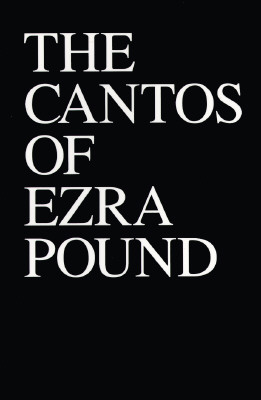
Then I got to thinking about Pound. I bought his Cantos a while back and have intermittently and unsystematically read from it. But that’s not the same as really sitting down and reading it.  Thoroughly and systematically, page by page.

So, I am going to read three to five pages a day, every day, and then I am going to write about what I read here (though the latter may not occur on a strictly daily basis).

Assuming that I take the occasional vacation from Pound and also assuming that, you know, stuff happens, this will take 6-12 months.

Shakespeare’s Birthday Bash Disappoints


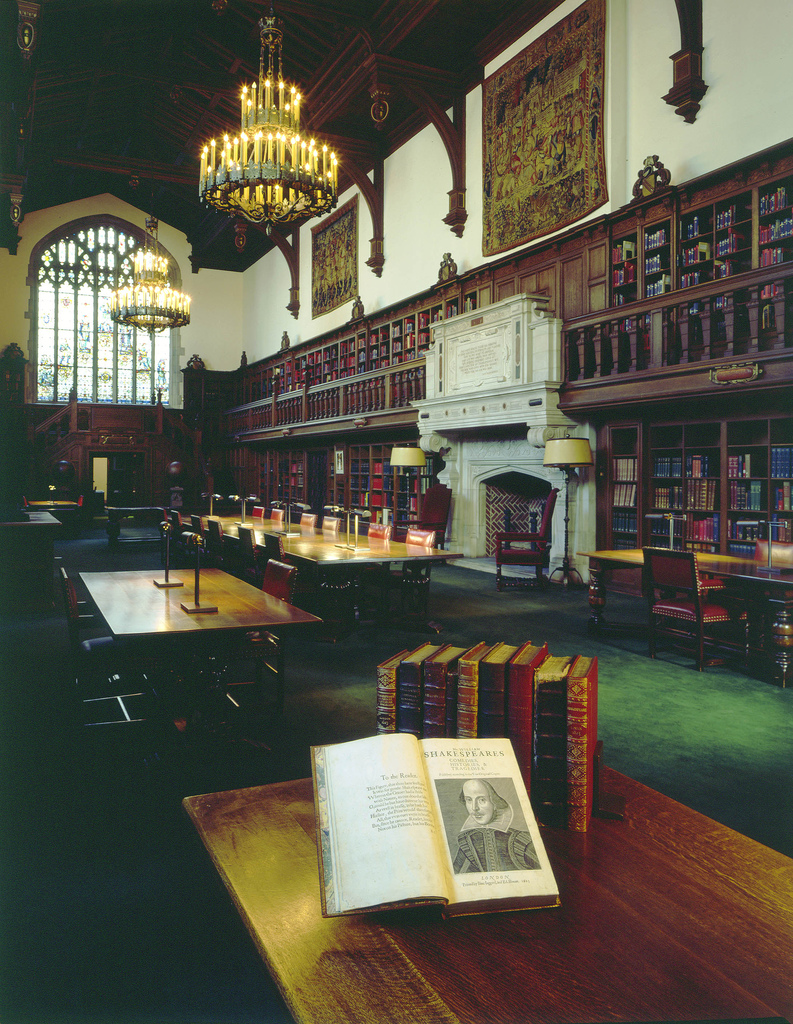
Today was the Shakespeare Birthday Bash at the Folger Shakespeare Library, honoring the Bard’s 447th birthday (I’m looking forward to all the events that will accompany his 450th in a few years). This is the fourth consecutive year I have attended and I’m sorry to say that it was the least enjoyable.

For the past three years, a brass quartet played music in the reading room, but this year, a string quartet was invited. On one level, I would generally much rather listen to classical music played on strings than brass, but the old musicians were led by a wonderfully ebullient and charismatic trombonist, whereas as this new group was notably muted and did little besides keep their head and play. Arguably, that was all they were paid to do, but I got so much more from the earlier experiences.

The back room (which, like the reading room, is not usually open to the general public), seemed cunningly arranged for the day to deny me some particular joys I look forward to in the days leading up to the event. For me, the highlight is a nearly unbroken line of paintings (mostly from the nineteenth century) on the walls, featuring scenes from Shakespeare’s plays and portraits of once famous Shakespearean actors. On this day, tables and other blockades were expertly placed to deny my a close and leisurely appreciation of these paintings. Also, they used to leave out the current editions of the various scholarly journals to which the library subscribes. Today, the only sign that they had been there were a series of labeled stickers indicating which academic periodical normally sat in a particular spot.

How Borders Lost Me


One of the pitfalls of not having much work and living with a woman who has her own business is that one is necessarily drafted into her operation.

Today that meant setting up with her at an open air market in Silver Spring, Maryland (one of Washington’s inner suburbs) while a storm system that had slain a dozen people in the states of the former Confederacy was swirling around. Fortunately, instead of forty-odd mile an hour gusts and intermittent tornadoes, we merely suffered some stiff breezes, a cold rain, and no customers. Also, a kind of hippie bluegrass featuring a female guitarist improbably wearing purple Josie and the Pussycats ears, lending an aura of Hanna-Barbera bubble gum pop to their bluegrass jam.

Inevitably, I made my way over to the Borders across the street. I had a 40% off coupon in my pocket (actually, it was on my phone, but the phone was in my pocket, so I’ll stand by the statement) that only excluded games, toys, and puzzles.

I was determined to buy a science fiction magazine as a gesture of support for the institutions that provide an outlet for writers. I settled on a copy of Asimov’s Science Fiction, based on a combination of nostalgia (Isaac Asimov was one of the first science fiction writers who I read extensively, following the lead of my mother, who rarely read science fiction but devoured Asimov and Ray Bradbury) and price (it was only $4.99).

After I placed the magazine in front of the cashier, I was told that my coupon also excluded magazines. Feeling obstinate, I pointed to the large print that clearly listed exclusions not including magazines. The cashier then pointed to the microscopically small print, which added magazines to that list.

Needless to say, I was pissed.

Had I known, I might still have bought Asimov’s. Even with 40% off, it was still cheaper than most any book I would want to buy. But I had walked in expecting to get 40% of my choice of periodical. And it seems to me that “magazines” is a pretty big thing to leave off. They mention “puzzles” in big print, but forget to add “magazines” or “periodicals?”

I have tried to stand by Borders. I loved having the one on Sunset and Vine, close enough to my old apartment that I could walk to it whenever I felt like browsing. I also mourn the possible loss of any such major outlet for traditional print books.

But this pissed me off. I’m about to give up on Borders and give them the metaphorical finger.

Nonetheless, mainly for lack of much else to do, I ambled over to their café for a small coffee.

Within a few moments, I found my faith in our future both reaffirmed and challenged.

While pouring skim milk into my coffee, I saw that the young, studious looking man next to me had just purchased a book by Nobel Prize winning Egyptian writer, Naguib Mahfouz.

It’s always nice to see a young person reading canonical works of literature. Maybe it was just a for a class, I don’t know. But I can only be happy to see a member of the younger generation choosing great books, rather than something of passing popularity and limited value (who knows – perhaps he would actually have looked down on me for my choice of purchase).

When I sat down at a longish communal table to peruse my magazine and drink my coffee, a middle aged, Southeast Asian (I guessed Indian) woman sat down catty corner from me with a thick paperback copy Dianetics and slimmer, oversized, periodical looking volume that also read Dianetics on the spine.

While I don’t wish to disrespect anyone’s religion (I did plenty of that when I was a young and angry atheist), I must admit that I consider Scientology to be more pop psychology than religion. Having grown up outside of Clearwater, Florida, I am also disturbed the many accusations of impropriety leveled at that church – especially the Lisa McPherson case.

Because I am trying to cut back on my book buying, I fear that Borders has taken itself out of contention to collect any more of my scarce, book buying dollars for the forseeable future. I’ll pray for you, but I won’t pay you.
A Post Script About Me


When I said I was going to (try to) stop so much about myself, I was referring to some of the most shamelessly self-indulgent (and usually boring and poorly written) stuff I have occasionally thrown up onto this blog.

I still see the world through me eyes. I am still affected by my experiences and personal ideologies. My posts will still be about books I have read, thoughts I have experienced, and events I have attended.

In general, things that have, in some way, happened to me.

And I will still try and note how these things might or might not affect my view of a subject.

For example, when I write about Haley Barbour, I usually make note of the fact that in 2003, my candidate lost an election to him.

But unless I can directly connect it to a larger world – to people, places, and things beyond myself.

At least, that’s what I’m going to try to do.

About Me


Actually, this post is about the need to stop writing about me. I’m getting in the way of my own writing. Several times, I have written about my recent illness and subsequent recovery. Or about my faith. And generally speaking, when I have written about these things, it has been sentimental crap. Or least not up to the level of writing quality I expect from myself (though who knows, maybe you the reader think everything I’ve put down here is crap).

It extends to my other writings as well. More and more, the poems I write that use the word “I” are failed attempts.

Time to get away from solipsism and into the world.

But enough about me.

Post Offices & Coffeehouses


Did you know that first post office in New York City was established inside of a coffeehouse in 1642? The first post office in South Carolina was also established inside of a coffeehouse.

This is all just a way to restart the discussion of the role the coffeehouse plays in society (and, to be fair, the very first post office in America was actually in a bar, back in 1639, but that information does nothing to help me progress my point). Is it a place for debate and discourse or a place where I pick up a cappuccino for no other reason than that the overpriced, piece of garbage machine I have at home couldn’t brew raw sewage, much less a decent espresso? (Here’s a tip: that $75-$200 machine you have at home is actually physically incapable of brewing a real cup of espresso; all it can do is brew a crappy, bitter cup of coffee which, granted, is all many people think an espresso is, but the truth is, you need an industrial machine that costs a couple thousand dollars if you want to make an actual, real, no kidding cup of espresso).

Coffeehouses, even within my memory, didn’t used to be limited to the partially soul-less spaces of Starbucks and Caribou Coffee. They used to be places to read, to perform, to speak with strangers and play chess. Maybe they weren’t like Cafe Central in Vienna, where Freud and Trotsky took their brew or Deux Magots in Paris where Sartre held court, but I remember they used to be something!

I almost wonder if free wireless is part of the problem. We (and yes, I do this, too) bring our laptops with us and work and write and surf the web instead of interacting and performing and talking anarchism and socialism with strangers.