Writing Long Hand


Just a fun little article arguing for doing one’s creative writing the old fashioned way – with paper and pen.

I do like to write long hand. Though I probably also qualify as one of the notebook fetishists mentioned. I have a large collection of notebooks and I almost exclusively write in them with a fountain pen (which is currently giving me trouble; I would have expected such an expensive pen [I don’t skimp when it comes to this particular fetish] to not be leaking after only a year).

Despite the article’s title, Why creative writing is better with a pen, it’s not really an empirical argument so much as subjective bit of nostalgia.

This article, Take Care of Your Little Notebook, makes a similar point.

The Republican Healthcare Plan


As someone who had a kidney transplant, my ears perked up when I read a story about Congressman Paul Ryan basically lying to a man with end stage renal disease.


Contrary to the impression he left at the town hall, Ryan knows full well that his budget plan does nothing for the uninsured. …

Much as he wants to pretend otherwise, Ryan has a health-care plan. It’s to repeal the Affordable Care Act and let the uninsured fend for themselves.

James Fenton and Mark Kraushaar


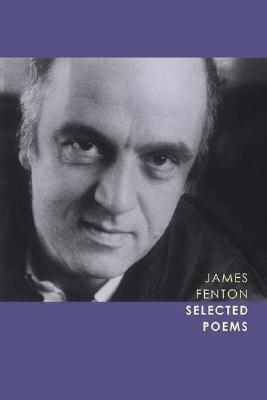
The Folger Shakespeare Library‘s most recent poetry reading featured the 2011 Anthony Hecht Poetry Prize winner, Mark Kraushaar, who won for his second book, The Uncertainty Principle, and British poet James Fenton. Fenton was also the final judge of this Hecht Prize this year and selected Kraushaar for the honor.

Kraushaar was a somewhat awkward reader and his poetry not completely to my taste. I know that The Uncertainty Principle has wound up on several “best of” lists and I won’t deny its quality. It is just not my cup of tea.

His poems are very prosy and narrative with colloquial language. When introducing him, Fenton noted that his poems are indubitably “about something.”

Fenton suggested that too many poems are inscrutable for the sake of being inscrutable, or rather because of a vicious loop in the MFA community (there’s a lot of discussion about MFAs and their effect on poetry lately). He held Kraushaar as a counterweight to that.

Naturally, I am little unsure about that dynamic. I don’t mind – and frequently enjoy – poems that resist easy interpretation. “This poem is about X.”

However, when Fenton himself read, I was blown away.

Some years ago, in Alabama, I think, I bought a book of his poems. I don’t know why. I think that I barely touched them.

But listening to him read from his Selected Poems… intricate and compelling rhyme schemes, a fierce political ethic, and a willingness to put himself in the shoes of people far different from himself (a child soldier in Cambodia in the seventies, for example). Fantastic stuff.

Naturally, I bought his book and asked him to sign it.

Holy C–p!


Once you get through the first thirty or forty seconds, you can see Walsh start to scream at his constituents, getting into some poor woman’s face.

And in case you forgot, Congressman Joe Walsh is that upstanding guy who is refusing to pay more than $100,000 in child support for his two children.


Albert Camus


It seems a rather tenditious argument – Camus’ philosophical relationship to Judaism (other intellectual currents far better explain his ideas) – but I’ll read anything about Camus.

Hopefully, you will too – so here is an article I came across.

Hixon Park


Hixon Park in downtown Tampa gets a little love as one of the country’s best new parks.

As did DC.

Why Poets Should Be Part Of Civic Discourse


I’ll let David Biespiel explain why poets should be involved in national conversations.

And a special shout out to all the poets involved in the Occupy movement.

Floridians Love Libraries


This article gives you numbers on how very beloved they are.

While growing up in Dunedin, my mother and I went to the library all the time. In high school, it was a place to read and relax. In college, it was where I hid away and did my reading.

My roommate and I always walked up the Gulfport Public Library to read periodicals and check on local events posted on the bulletin board.

Here in DC, there’s a library just across from Eastern Market where I will browse (I indulged big time at their last book sale).

In short, huzzah for libraries.

Alan Grayson


Alan Grayson was probably never going to win re-election in 2010. It just wasn’t the year for it. His opponent was a long time political institution (even if he’d been out of politics for a while), not visibly toxic, and with deep fundraising ties. In other words, an acceptable, well funded Republican in a swing district in a Republican wave election.

But, let’s be honest. It didn’t have to be as bad a defeat as it was.

Grayson simply refused to run a campaign suited for central Florida.

No one is saying he should have given up his principles or ceased to be a fiery advocate.

But some of his issues were more in tune with the district than others. Somehow, those issues (his Ron Paul-like mistrust of the Fed, I suspect, would have played surprisingly well) never got aired but those were not so in tune with the district (constant criticism of military actions in Afghanistan in a heavily military district, for example; while supporting a draw down from Afghanistan might have polled well, nothing that sounds even remotely like criticism of the military would) were a lot more visible.

At present, Grayson is angling to run for what will presumably be a new, swing district in central Florida (probably with a large Puerto Rican population).

He doesn’t appear to have learned any lessons.

In my inbox are appeals on his behalf from – get this – Ralph Nader.

Not only will this kind of effort not win friends from swing voters, a lot of dyed in the wool Florida Democrats are still a little miffed at Nader about 2000. This is the kind of campaign that could cause a former Congressman, with strong ties to the  base Democratic vote to actually lose a primary, nevermind a general election.

I liked Grayson’s voice in the House. He didn’t win a lot of issues, but he never let up on reminding Congress of its obligations to fairness and justice. We need voices like that. But unless something changes, that voice isn’t going to his.

Nietzsche In America


Well, there’s a new book out about Nietzsche and the history in Nietzsche in America (intellectually, of course, not physically; he never visited America). The book is called American Nietzsche.

I didn’t know this, though I’m glad to read it, but Nietzsche was, apparently, much influenced and inspired by Ralph Waldo Emerson. I bought his collected essays when I lived in Atlanta. Reading it, I was much surprised by the influence of Kant on Emerson. I lost that particular copy during one of my many moves, but luckily now have a nice, leatherbound edition that I picked up at a used bookstore (though it looks nearly new).

Nietzsche is one of those authors who is everything to everyone. I, of course, am a liberal (with a lot of caveats) and I love Nietzsche. But his influence on right wing politicians, fascism, and nazism is well known.

It would be easy to blame the affection of Hitler for Nietzsche on misunderstanding (and he was deeply misunderstood by Hitler, which was partly Nietzsche’s sister’s fault; I’m not going to explain this, if you want to know more, just google it), but it would also be simplistic. Nietzsche, let us say, is not bereft of intellectual and spiritual violence within his oeuvre.

If you’ve took any philosophy courses in college or hung out with anyone who took a philosophy course in college, you probably had a love affair with Nietzsche.

He was one of those writers whose books were hidden in our backpacks at high school, nestled next to Marx and Ginsberg. Like Marx and Ginsberg, he was also deeply misunderstood by us, but what the heck, we were sixteen. We mostly just quoted from the aphorisms you find in the middle of Beyond Good and Evil (“That which does not kill me, makes me stronger,” anyone?).

In college, we started to understand him. But then later, you get a little embarrassed by him. He’s not a rigorous, systematic thinker. And you know that he’s the favored philosopher of pretentious college students who don’t read any other philosophers. So you put him down for fear of being mistaken for them.

Then you pick him up again. And you read him again, and you get a new appreciation for him and the depth of his own learning and understanding. You don’t forget his limitations, but you see stuff you didn’t before. You take the time to read him more systematically and see he’s a little more of traditional philosopher (rather than just a reciter of pithy ideas) than you had thought. So maybe you don’t fall in love again (or maybe you do), but at least you fall in “like.”