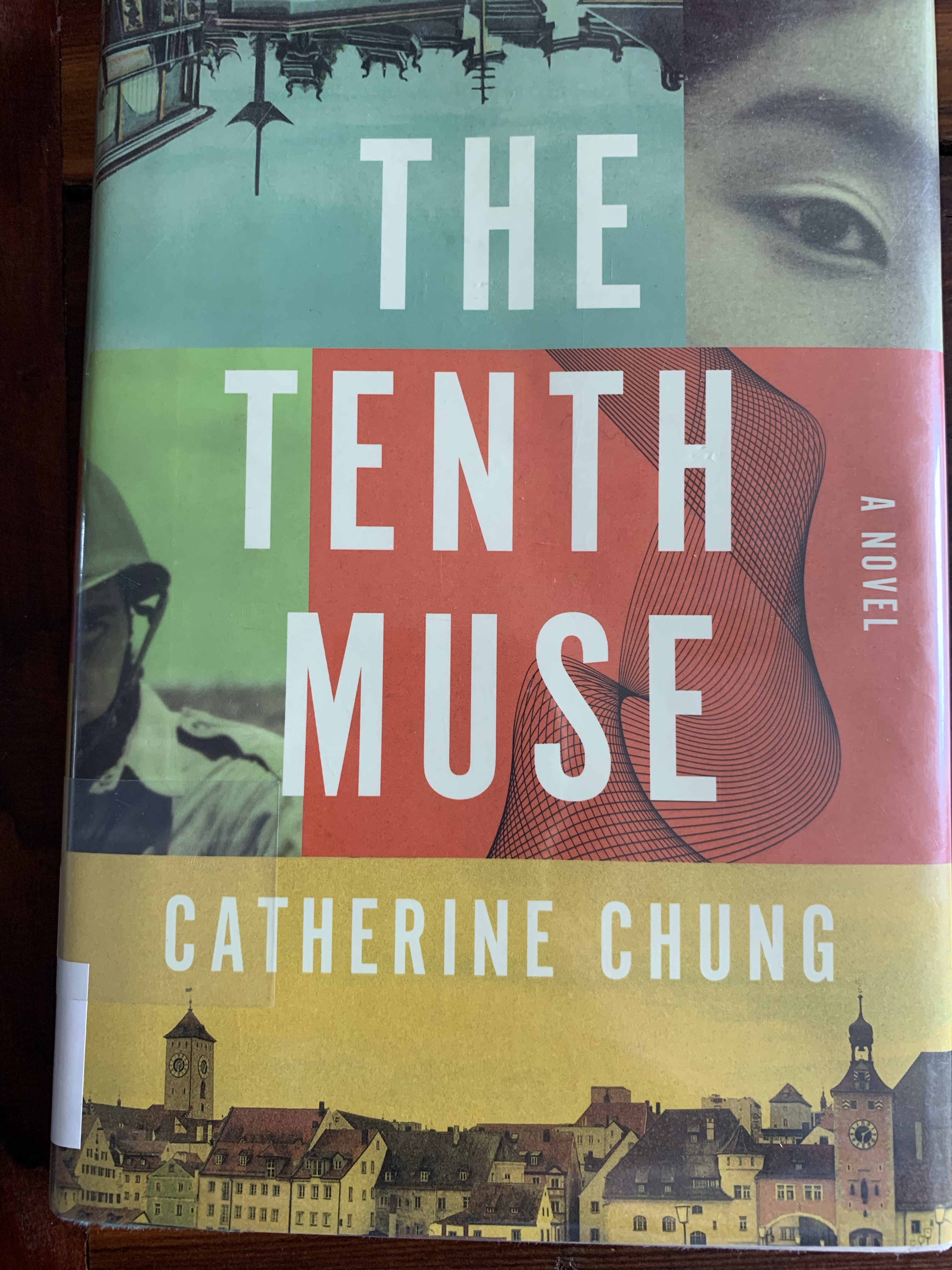
A beautiful novel that, once I started, I rushed through. As the father of a mixed race child, like the main character, Katherine, it also made me terrified of the challenges she will face (less now, because the novel takes place in the 1940s, 50s, and 60s; but as a white, heterosexual male, I am also poorly positioned to say with any certainty what obstacles Asian-American women have to overcome).
Like many novels, it seems, Chung doesn’t quite stick the landing. There is a big set up that doesn’t deliver (obviously, Karl his the notebook and we spend something like quarter or more of the book wondering how this will be revealed and what the consequences will be and when it happens, it’s an emotional letdown; I have no problem with that, in theory, but then the meaning of denouement should be that it was a letdown, but this one felt more ‘meh’).
But the writing and the knowledge that the ending must be at least a little sad still made for a beautiful read. And probably a necessary conversation of why it felt sad (a cultural assumption that a woman who has neither a partner nor child must be sad is a trap that I fear I fell into while reading this).
Don’t mean to keep harping on this, but like its predecessor, there really should be a colon in the title.
I liked the more urban intrigue of this one, but it missed out by not having one of the main characters of the earlier one. This one has one roguish character named Squire James, aka Jimmy the Hand. But it missed his former companion, the roguish and rakish Locklear. Basically, the other protagonists just didn’t hold my attention.
But, it came with a third book and I imagine I will read that one too. Hopefully Locklear comes back.
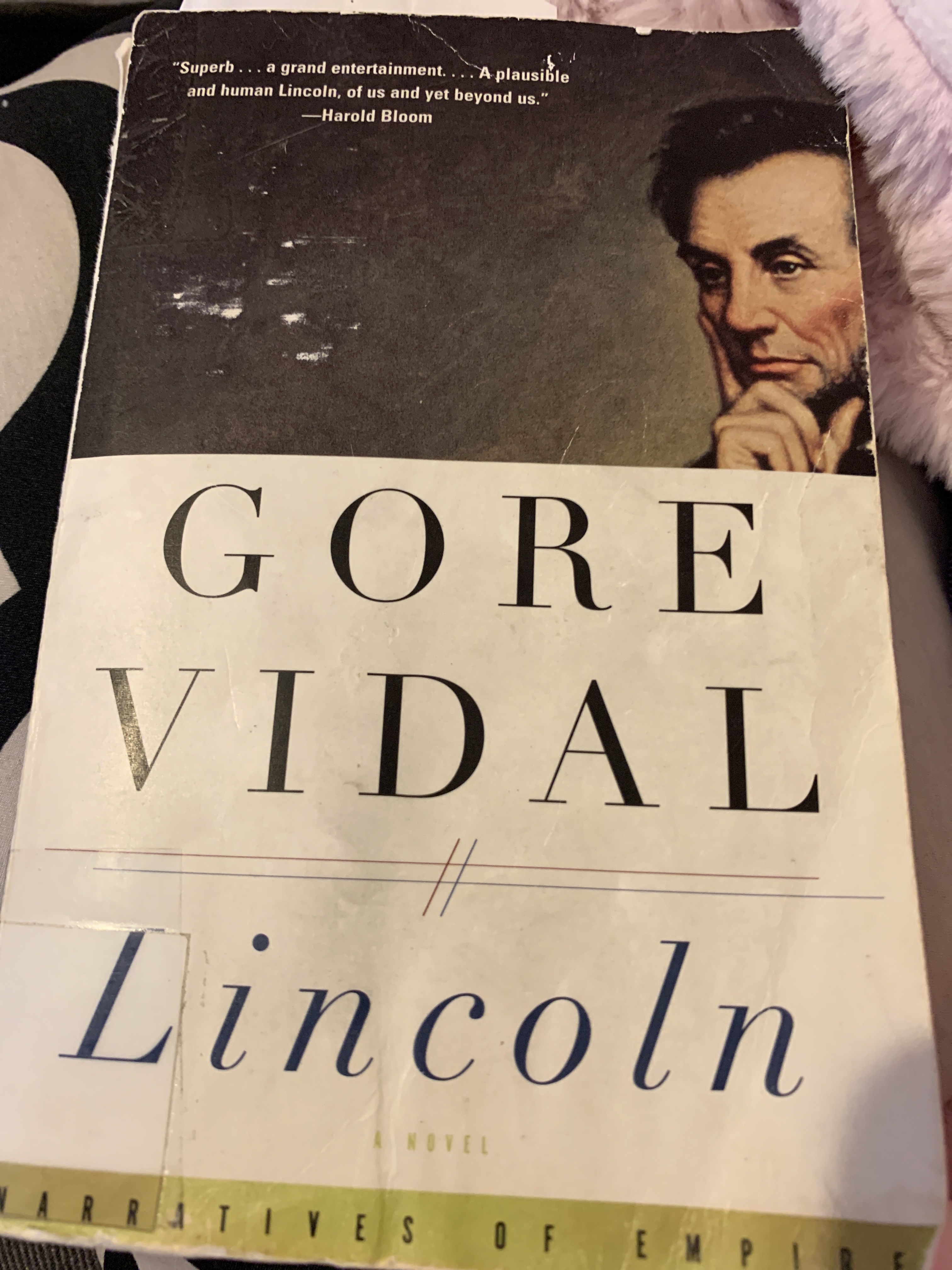
One of his most famous novels (second only, these days, perhaps, to Burr), but I was somewhat disappointed. The quality improves immensely towards the end, but I am trying not let the magnificent writing of the last quarter of the novel (and recency bias) to make me overlook the first seventy-five percent. Part of the improvement is that he mostly drops – until the very end – a subplot about one of Booth’s fellow conspirators: a callow fellow named David. The less of him the better!
His Abraham Lincoln is compelling but too distant. Aaron Burr loomed large and his young protege interested; and in my own favorite, Julian, the titular emperor and his two chroniclers are compelling, catty, and captivating. No one steps up so in the absence of Lincoln.
The writing is good, but not great. I believe that he understands the politics of the time pretty well and he is a good commentator on the realpolitik of eras predating ours. And his small details are wonderful. For example, we generally see General George McClellan as a ditherer, who let the war drag on. But Vidal portrays Washington society as worshipful of the man they called ‘Young Napoleon.’ I hadn’t realized he was so young, much less that he was ever compared to Napoleon, but I trust the author enough to believe it (though I will hold my fire on the venereal controversy).
But it is not enough. Perhaps one wishes that he had dived deeper into Lincoln’s psyche and written from his perspective.
To the reader, Lincoln sits opaquely, fascinatingly at the center, but for much of the book, the characters who orbit the man view him as a weak figure, easily stymied by his generals and hangers on and a man of wan, waffling convictions. I mention this because though I cannot for the life of me remember the title, I recently read a review of a newish history that suggests just that: Lincoln was actually rather weak and most of the credit for victory should go to the so-called Radical Republicans.
My mother read The Hobbit when I was seven (I think). A chapter a night, before bed. As soon as she was done, I took it and read it to myself. This began my lifelong love affair with the works of J.R.R. Tolkien (allow me to make a pitch for his wonderful, whimsical, non-Middle Earth story, Farmer Giles of Ham).
So it was one of the great joys of fatherhood when, after a few false starts, my daughter was finally ready for me to read The Hobbit to her before bed.
Because she naturally tended to drift off, some parts were lost on her, but things stayed with her. The deaths of Fili and Kili were hard for her and she still hopes that they will come back.
But anyway… I’m reading a new book to her. The Lion, The Witch, and The Wardrobe.
Alexander Philip was, apparently, a Scottish lawyer with a penchant for philosophizing and a minor fame incurred by his theories and advocacy of calendar reform.
At first I was surprised by his quotations from interesting but lesser French thinkers like Diderot and Taine, but it soon became he was the sort of nutty dilettante who would merge Kantian with Viennese thinkers like Mach, so why not treat Diderot as a leading epistemologist if you’ve decided to go that route.
I was actually okay with his incorporation of action into time as a way of understanding periodicity and his idea of physical engagement with experience/sensation replacing Kantian categories as a necessary mediator, but when he rambles about energy, it is clear he read an Edinburgh Review article about the new fangled physics and got way ahead of himself.
He also manages to set upon a theory of consciousness that smacks of a reductive materialism without giving up on a more religious/spiritual idea of consciousness, which is possible if you work hard to not think about it too much.
And he has a wonderfully anachronistic habit of capitalizing words that don’t need to be, like Energy and Presentment (which, in my head, I always pronounce as if it were French, which makes it seem hella cooler).
Also, have I read this before? If so, that’s the second time that has happened to me lately. I actually think that I read another philosophical tract of his (which he references, refuting, he thinks, some critiques of it), but I can’t be sure.
I read this before. Or most of it. I can’t remember when, but it must have been long enough to go that plenty was surprise to me, though not the broad strokes.
A young man is preternaturally talented with the sword. Or supernaturally talented. This fantasy world is mostly magic free after similarly talented swordsmen (whose talent was nearly or perhaps actively magical) rose against wizards.
The hero is reasonably charming, but a little vague in his depiction. The story is of the young man being guided into accidentally setting in place conditions for a coup, after which he must flee the are and the book ends. I gather there are sequels.
Anonymous is not an intellectual. S/he is not a member of the conservative intelligentsia. You may think that this is a good thing. A good advisor to the president need not be one, but it just seems to me that s/he wears their learning, such as it is, not so much lightly as shallowly. A few sprinkled quotes from the Founding Fathers and great leaders of the past (a bit of classical “learning” and the occasional snippet from the Gipper or, rather, his speechwriters) but their understanding of ethics, as a field of study is thinner than even that annoying Starbucks philosopher talking to loudly to his embarrassed girlfriend. They refer to classical thinkers because they both need to pad their moral case and because they want to show they know that stuff (I don’t think they really do; I don’t think they actually read Cicero’s De Officiis. I think they did more run just read a Wikipedia article, but something much less than actually reading him. Which, by the way, you should. He’s really good.
Anonymous could be seen as, despite their protests, another kind of emblem of Trump’s inability to attract the best, or even adequate, people. They seems like the kind of frat boy douchebag who was hoping for a Marco Rubio presidency. Someone shallow and shamelessly political, who has never had a real job, but who can do a passably tolerable impression of a man with some principles for the kind of reader who doesn’t read beyond the first two paragraphs of any newspaper not about a hockey fight or one of Marco’s Sunshine State compatriots doing something blissfully stupid involving alligators, the highway patrol, and a can of coffee that has been repurposed to hold his dope.
The anecdotes are frequently a mixture of the nonspecific and publicly known. You don’t need a senior administration official to tell you that John Kelly had a horrified look on his face when His Obesity defended the Nazis in Charlottesville.
There was one newish sounding nugget, though. When Trump is about to push a lawyer to do something patently illegal, he scans the room for people who might be taking notes and screams at them to stop.
Also, I think they are a man. But that’s neither here nor there and based on my own hidden prejudices, I suspect.
So why did I read another one of these Trump histories? I have sworn off them more times often than I have sworn to delete my Facebook account.
Well, the short version is that we were at the Northeastern Library (the little one was getting her first library card), which is an awesome library. Better, frankly, than the other two I visit regularly. The selection of books visible upon even a cursory examination were so exciting. Including this one. I should have known something was up when there wasn’t a waiting list, when it was just sitting there. Typically, these kinds of self flagellatory tomes have a longish waiting list of people ahead of you in the queue.
A sidebar or a point of personal privilege, perhaps. Anonymous gives us some classical tidbits. If you’ve ever seen the movie or the play The History Boys (and I highly recommend it), you might remember the term ‘gobbets.’ Little bits of poetry or seemingly irrelevant knowledge used to illustrate a point or just liven up the text. Anonymous does a lot of that.
Several of their ‘gobbets’ are about Athens. Going beyond the Athens of Socrates and Pericles, the city remained famous for centuries as the center of philosophy. Indeed, it sometimes seems as if it became a sort of university town in later antiquity. De Officiis is in the form of a letter to Cicero’s son (in fairness, they also knew this) who is studying in… Athens. Cicero slight laments that his son is studying under a Stoic teacher and asks him to look kindly upon the Skepticism of his own training. Gore Vidal writes, in Julian, about the titular emperor (in his pre-purple days) similarly going to Athens as a sort of intellectual finishing school.
Might not that Athens, the Athens long past its imperial glory and the days chronicled in Platonic dialogues, have also been wonderful? A place of nearly pure learning. To go as a young man and learn the arts of being virtuous or as an older man and bask in the golden light of a culture of philosophical inquiry? I say ‘man’ because I think it’s safe to say that it wouldn’t have been so nice to be a woman there, if better than many other places.
Oh, and someone, not me (I don’t write in books; not even my college textbooks), did a little freelance copyediting.
I previously only knew the late critic as a critic, but in the post mortems on his career, this novel was mentioned.
There’s a paterfamilias who raises his two daughters after his wife left him. He is the primary figure whose thoughts we hear, but Wood likes to unexpectedly switch to one of his two daughters.
The set up is father and sister visiting the oldest daughter because her boyfriend warned that she was struggling badly (a history of depression and anxiety).
Everyone is well drawn and pace is simultaneously brisk and leisurely. The mood is well reflected in the two main settings: fading, formerly industrial Northumberland and snowy, cold upstate New York.
 Don’t mean to keep harping on this, but like its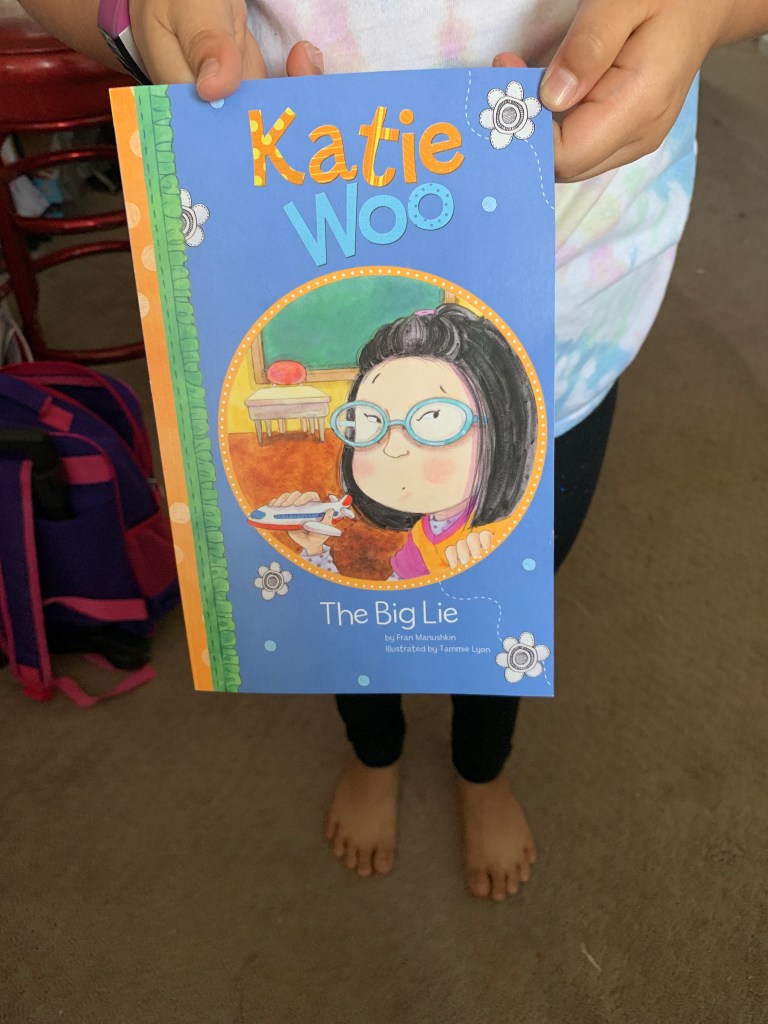
 One of his most famous novels (second only, these days, perhaps, to Burr), but I was somewhat disappointed. The quality improves immensely towards the end, but I am trying not let the magnificent writing of the last quarter of the novel (and recency bias) to make me overlook the first seventy-five percent. Part of the improvement is that he mostly drops – until the very end – a subplot about one of Booth’s fellow conspirators: a callow fellow named David. The less of him the better!
 I read this before. Or most of it. I can’t remember when, but it must have been long enough to go that plenty was surprise to me, though not the broad strokes.
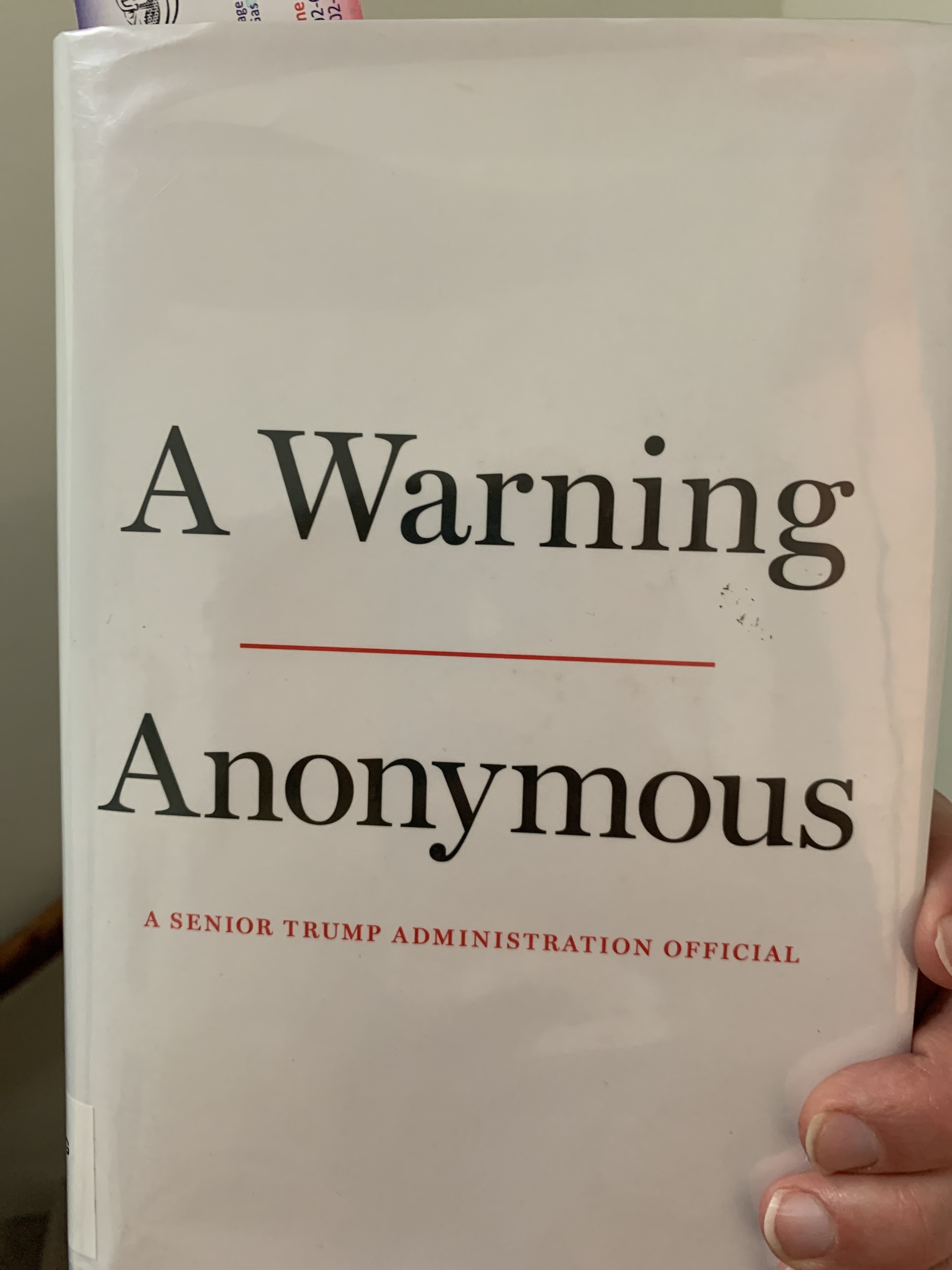 Anonymous is not an intellectual. S/he is not a member of the conservative intelligentsia. You may think that this is a good thing. A good advisor to the president need not be one, but it just seems to me that s/he wears their learning, such as it is, not so much lightly as shallowly. A few sprinkled quotes from the Founding Fathers and great leaders of the past (a bit of classical “learning” and the occasional snippet from the Gipper or, rather, his speechwriters) but their understanding of ethics, as a field of study is thinner than even that annoying Starbucks philosopher talking to loudly to his embarrassed girlfriend. They refer to classical thinkers because they both need to pad their moral case and because they want to show they know that stuff (I don’t think they really do; I don’t think they actually read Cicero’s De Officiis. I think they did more run just read a Wikipedia article, but something much less than actually reading him. Which, by the way, you should. He’s really good.
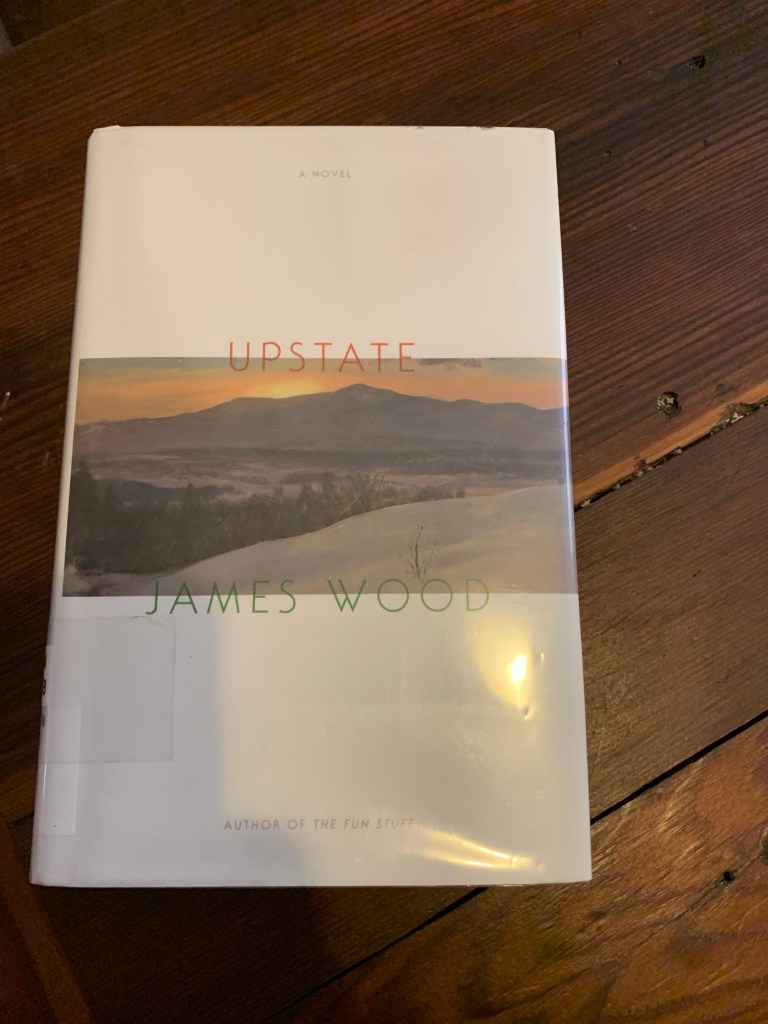 I previously only knew the late critic as a critic, but in the post mortems on his career, this novel was mentioned.
 the coffee philosopher