Ralph Waldo Emerson


On this day in 1841, Ralph Waldo Emerson published his first book of essays.

While I know that we read a poem of his and probably a brief essay in high school, that was the extent of my contact with him until I moved to Atlanta in 2001. At Chapter 11 Books, I picked up a copy of The Essential Writings of Ralph Waldo Emerson for several weeks, simply devoured it.

That copy got lost in one of my moves and I recently picked up a nice hardback edition of his collected essays from a used bookstore (I also picked up a collection of his early poems, but he’s not a great poet, to be honest).

One thing that very much struck me, once I actually got around to systematically reading him, was how sophisticated he was. I had read some Kant a few years previously (most of the first Critique and the entirety of the second) and was, like many readers of Emerson, very aware of the great debt he owed to Kant.

In school, he was presented as a sort of homespun caricature of American pragmatism, so to see him in such correspondence with (arguably) the greatest philosophical mind since Aristotle was a revelation.

Sigh. Another reminder of the inadequacies of the American system of education (and no, the fix does not include breaking teachers’ unions or giving out vouchers, but yes, it probably does involve paying and treating teachers like respected professionals and also less testing).

Tuesday Morning Staff Meeting – Ideologies


Dawkins style atheism as a cult.

I’m not so convinced this guy is actually up on contemporary philosophy.

Was Poe a bad writer?

Monday Morning Staff Meeting – Live Small


Teeny, tiny apartments (makes me think of the opening scene from An American in Paris).

‘Quants.’ Sounds like an insult, but actually it’s not.

The perils of hypergraphia.

Sunday Book Reviews


According to these folks, here are some of the best and brightest poets writing today.

The nominees for the Los Angeles Times Book Prizes.

Grieving poets.

The Offices


The Offices, as it is translated in my copy (more often translated as On Duties) is a pleasant enjoyable work.

Cicero was known as a great stylist as well as great orator and the translator has taken pains to try and convey a enjoyable and readable style.

Early on, the author identifies himself as a philosopher. The conceit is that Cicero is writing a letter to his son who is studying with a (then) famous Greek philosopher. While exhorting his son to not ignore the Roman style of philosophy while studying under a Greek, Cicero consistently refers to himself a prominent Roman philosopher.

This sparked in me the contrast between classical Roman philosophy and virtually ever other ‘philosophy.’

Though I have read deeply in philosophy for a dilettante, I am still a dilettante, so I will accept criticism from those who know more. But to me, Roman philosophy has always seemed more of belles lettres than true philosophy in the academic sense. I suppose I could also compare it to drugstore philosophy books that are more pseudo-spiritual self help than any real philosophy, but that would be unkind to a major and influential thinker.

That said, should we look at this particular work by Cicero more kindly? It is, after all, a not unrigorous book of practical ethics? But it’s not all that rigorous, though, is it? The ‘what one ought to do’ is well put, but the ‘why one ought to do it’ is a little more fuzzy, is it not? Or do I, as a contemporary man, simply fail to empathize with Cicero as a man of his times and my failing to respect appeals the gods is, in fact, a real failing on my part?


Weekend Reading – Get Some Good Goethe


Tablets do not promote good reading habits.

Save the metro section of your daily newspaper!

Why no love for Goethe (admission – I only recently got around to reading The Sufferings of Young Werther)

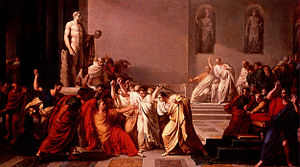
Happy Ides Of March!


Watch out for omens and portents. Just to be safe, consider adopting a lean and hungry look. It will make you appear more dangerous than you really are.

Thursday Staff Meeting – Please Don’t Kill The Library!


I always suspected that Elaine Pagels maybe wasn’t the best place to start learning about Gnosticism or the early church.

Unsurprisingly, the Vatican isn’t Facebook friends with her either.

A side effect of state and local budget cuts – as libraries are needed more and more, the money for them gets less and less.

Happy Birthday, Sylvia Beach


Sylvia Beach was born on this day in 1887.

Of course, I stayed in her namesake bookstore in Paris, Shakespeare & Company, and I’m a huge fan of Ulysses, which she published when no one else would. Also, she appeared prominently in Hemingway’s later career grudgefest, A Moveable Feast.

What I’m saying is that she is a major figure in twentieth century letters, so you should know more about her. In fact, I’m a little disappointed that you don’t and I think it speaks poorly to whatever schools you attended that you don’t already know this.

Unless you do, in which case, in the words of Obi Wan Kenobi, ‘move along.’

Oh, and last Christmas, I bought my father The Letters of Sylvia Beach. Your welcome.

Mid Week Staff Meeting – Walking In Los Angeles


No surprise to see that this is in LA’s Silver Lake neighborhood (Silver Lake is that town’s hipster central).

Now there’s an easier way to quantify genocide (which is a good thing but doesn’t make it any less depressing).

The Washington Times gives some love to DC poet, after which, the paper presumably returns to being poorly written mouthpiece for right wing cultists.