 Poetry reviews from the Los Angeles Review of Books.
Henry David Thoreau helps to analyze climate change.
If you were a Paris Review contributor, what would you read?
April is National Poetry Month! You may recognize this fact on account of Barnes & Noble moving some books of poetry (mostly anthologies and Billy Collins) closer to the front of the store.
But this is a time to try and proselytize on the value and joy of poetry, so I will be posting something everyday about poetry.
Stay tuned and, you know… consider reading some poetry
In the meantime, DC residents will find a number of poetry events through the Library of Congress and other folks may find something on the website of the Poetry Foundation.
I was living in a suburb of Minneapolis with my good friend Ryan.
Part of our relationship is based on shared appreciation for literature, science fiction, and philosophy, but also on our appreciation coming from different directions.
In short, I am am humanities geek and he’s a hard sciences geek.
During this time, I read a book in his collection called Neurophilosophy by Patricia Churchland.
Neurophilosophy indulges in a contemporary brand of scientific reductivism that I cannot accept on a very visceral level. On a more rational level, while I accept that we may one day understand all the problems of consciousness and free will within a scientific framework, I believe that the terms under which they are resolved and the extent to which science will have advance will have the effect of rendering all the claims of neurophilosophical reductivism as meaningless as Churchland finds most efforts by traditional philosophy to address these issues to be.
These memories were brought up when I read this essay debunking the claims and efforts of Churchland and her colleagues. Unfortunately, I can’t say I’m pleased to have the author on ‘my’ side, mainly because he’s tendetiously strident, without showing much in the way of rigor and spends most of the piece tearing straw men without bothering to address the very real issues brought up by applying modern neuroscience to the old questions of philosophy and religion.
I fully understand and participate in the subjective desire to believe in something transcendent – something inside us as conscious beings connected to art, beauty, creation, the divine. But, dude… not the way to make the argument! Thanks for setting us back.
I should also add the my friend’s views have softened and he is, dare I say, closer to ‘my’ side of the argument (‘our’ side?) than where his opinions used to fall. Getting soft in his old age?
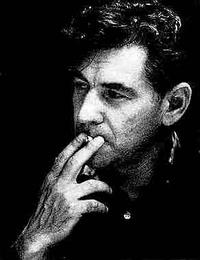 While cooking dinner the other evening, I put a Leonard Bernstein conducted performance of Mahler’s First Symphony onto the turntable.
I have always resisted listening to Bernstein’s interpretations of Ludwig von Beethoven. Even though Bernstein is famed for his performances of Beethoven’s symphonies, he is such an idiosyncratic presence in the works he conducts, but I don’t necessarily want that in my Beethoven.
But Mahler on the other hand is already such an idiosyncratic composer that Bernstein (who was a great promoter of the Austrian’s work) seems perfect for him.
Mahler is a kitchen sink kind of guy. He’s not a subtle composer. Everything is on the surface, but that surface changes so quickly and a single symphony will take in so many moods. Gustav Mahler is the composer of mood swings – the entire human experience in a single work. Take the First – you have country dances, bombastic bravado, and even a riff on the children’s song, Frère Jacques. Bernstein sounds just right.
Freddy Adu was the wunderkind of American soccer, but unlike fellow (one time) youthful superstar Landon Donovan, Adu has failed to really produce on the big stage (without getting into the question of Donovan’s failure to star in Europe – because his achievements in MLS, for the USMNT, and during his brief spells with Everton far outstrip what Adu has accomplished).
In truth, Adu looks like something closer to Clint Mathis. Mathis was an outrageously talented attacker whose attitude cost him the best years of his career.
He finally came through good when an injury to Real Salt Lake’s #10, Javier Morales, forced the coach to put Mathis in the game as their playmaker. Mathis played with heart and skill and Salt Lake won. He retired soon after.
But Mathis had the talent to break through with big European club and be a go to player for the national team, but he squandered both opportunities.
Adu seems aware of the risks to his career, but has also wasted many of the years when he might have been progressing or developing.
But I still remember watching him play for the national team during the last Gold Cup.
Since the retirement of Claudio Reyna, the national team has featured a midfield based around counterattacking wingers (Donovan, Shea, Dempsey) and athletic, muscular central midfielders. Most of our players attack by powerful surges towards the opposing goal. Not to say that they can’t be creative, but it’s about motion, speed, and drive.
What I saw Adu bring was patience. If a move started to break down, players could pass him the ball and he could hold it and keep possession while his teammates re-oriented themselves. He then had the vision and creativity to try and unlock the opposition and start another attack. Without him, the team is usually forced to bring the ball back deep before re-starting, whereas Adu seemed comfortable keeping the ball higher up the pitch.
More recently, he was practically the only player on the U.S. Olympic team that can hold his head up high after the team failed to qualify for the London Olympics. He delivered delicious balls to the attackers and virtually every move went through him.
Donovan and Dempsey both making slashing runs, cutting in from the wings using timing and quick first step to get into attacking positions, but neither is the sort of player who controls to tempo of a game.
Coach Jurgen Klinsmann has been trying to incorporate and more attacking, possession oriented style to the national team. Surely Adu has to be part of that now?
 I just wanted to encourage folks to read this post by Ron Silliman.
I don’t know Corina Copp, but Silliman is right in saying that the design Ugly Duckling Presse produced for her chapbook is amazing.
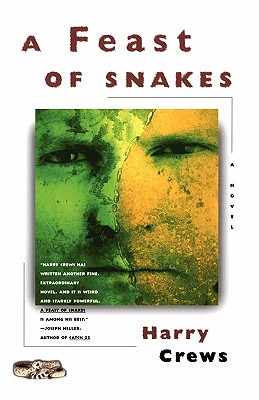 The Florida novelist Harry Crews died on Wednesday, March 28, 2012. I haven’t read his books since the nineties, but for a while, I was big fan, once upon a time.
He was the author of uniquely Florida form of Southern Gothic. Even though many of works took place outside of Florida, if you were a Floridian and knew something of the state besides the coasts and beaches, you recognized the landscape as part of your home. An impoverished southern landscape unleavened by false dreams of Gone with the Wind style genteelness. No Rhett Butler ever wooed a woman in the Sunshine State.
I actually first read him in a stolen Playboy when I was kid. It was an excerpt from Body, which I realized years later when I read that novel.
His finest work, in my opinion, was the despairing A Feast of Snakes.
Florida is not known literary novelists or poets. It’s shame to lose one.
She passed away at home on March 27. She was 82.
Her books, Dark Fields of the Republic and An Atlas of the Difficult World, influenced and affected me greatly during a hard time in my life. It’s hard to imagine she’s not still out there, even though I never met her.

 the coffee philosopher