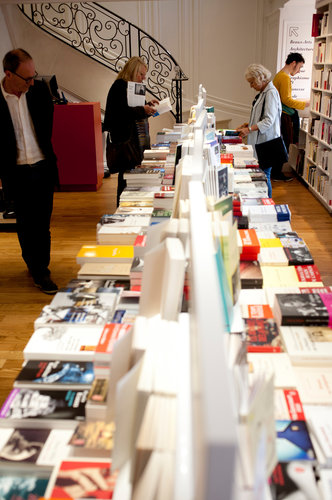
E-books cost money to make and don’t fool yourself into thinking otherwise.
When all else fails, count on the French to save literary culture (again).
Happy birthday to the great Chilean poet, Pablo Neruda, and also to semi-crazed genius, Buckminster Fuller.
I have noticed young people continue read Twenty Love Poems and a Song of Despair and continue to be somewhat crazed, so perhaps the influence of these two gentlemen will go on for a while yet.
 Teducation is an appropriate title for a selected works on Ted Joans. His 1993 semi-experimental novella/memoir Honey Spoon featured the neologism more than once, as I recall, and he even dropped the word into conversation once or twice.
His poetry, to be honest, is not the sort that I normally like, but when other poets claim to write ‘jazzy’ poetry or to incorporate jazz rhythms, they’re often just being sloppily colloquial. So called jazz-influenced poetry, frankly, tends to be an insult to jazz.
But Joans once roomed with Charlie Parker and I feel that you can actually hear the experimental beats of bebop in his poetry, which is more than can said of most other poetry that claims jazz as an influence.
One or two could dance though
Only during the full moon
After eight magnums finished
Helmeted heads danced
Midnight magic ’til mid day
Chronic choreographic fits
Often unfit for Harlem
That was from From Rhino to Riches, which I think has a good bit of that jazz synchopation (and is the rhino of the title a reference to the great music label, Rhino Records?)
He does also write some very angry poems about issues of race. How Do You Want Yours? is a relatively lengthy (somewhat less than four pages) and angry cri de couer that fantasizes about the death of white people and the death of what one might call black accomplices to white culture. It’s written all in capital letters (emphasizing the anger behind it) and in longish lines that tend to drop to down to the next line on the page with the second ‘line’ indented, in the fashion of Walt Whitman or Howl. While there is a strain of black separatism running through his work, this is one of the few in Teducation that’s truly violent. Which is not to demean the poem. The character of death runs through it and theme is less of violent racial uprising than of mosaic, retributive justice delivered not by the victims, but by an impartial and supernatural being (‘death’).
Anyway, there’s a picture on the back that matches how I remember him. Well dressed, with a sweater, bow tie and his constant beret (covering a bald pate). The thick beard more salt than pepper. And something mischievous (and probably sexual) about the escape from his glances or words.

If not, go back and read it and then we’ll start.
That essay is really about reading classics in adulthood, once one has finished with one’s schooling. The joys of a life lived with them and the pleasures of rediscovery.
For me, The Count of Monte Cristo is one that I go back to. In high school, I read it over and over again. In the days before Barnes and Noble and online ordering, it was harder to find what one was looking. I had read The Three Musketeers and loved and now was looking for a copy of The Count of Monte Cristo but all I could find in the mall bookstores were abridged editions. So I went I spoke to a manager and we found in their system what we hoped was an unabridged copy.
When it arrived, it was a great big hardback thing covered in fine blue fabric.
I read it over and over again through high school. Then I put it down for a while. Then I picked it up again.
I hadn’t noticed before that Edmond Dantès has his internal thoughts described only until he becomes the Count of Monte Cristo. We know it is him, but his thoughts and plans are inscrutable to us except from the outside, from what others view. Such a small thing, but brilliant. Even though no reader can unaware who the count is, Dumas still manages to put us in the same situation as those who do not know.
On a final note, that essay was written by the Cuban born, Italian writer, Italo Calvino. Read Invisible Cities. Amazing book.

 the coffee philosopher