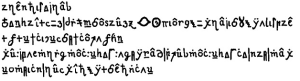
 The secret manuscript of the Oculists.
Was Keats writing politicized poetry?
I saw a cool device today: it lets you turn the warm, full sounds of vinyl into the narrower, tinny sounds of CDs.
God d–n it.
Oh. And there’s terrible inequality, too.
I am coming to terms that Seth Abramson is writing poetry reviews for one of the most widely disseminated outlets in the world (Huffington Post).
I am even coming to terms with his praiseful style of reviewing.
Don’t get me wrong. I wish he’d be a little more… critical, perhaps? That he’d insert himself into his reviews, by which I mean, Abramson, you, me… we all have styles and writers we particularly like and it’s okay to be out in front with that a little. You don’t want to say, ‘I don’t like rhyming poetry, so I hate this book.’ But you do want to own your likes, dislikes, influences, etc. Own your favoritism. Otherwise, your reviews tend to get a little too consistently, unabashedly full of voluptuous praise without the reader being able to a clear distinction between works. Because when I read a positive review by him, I still don’t have much idea if I’ll like the book, because I don’t have a clear idea of what the reviewer likes, because he seems to like everything (‘good poetry’ is not a helpful category, in this regard).
But, here are his November reviews (yes, I know it’s freaking December, get off my back) – November 2012 Contemporary Poetry Reviews
If you read ’em, you’ll see why I am coming to terms with his style, because he’s starting to do what I’ve been looking for.
His review of Eyelid Lick, despite being ostensibly positive, can’t really hide that fact that Abramson clearly just ain’t a fan. Nope.
And if Abramson’s review of The Talking Day had anymore backhanded compliments, it’d be playing professional tennis (get it – ‘backhanded compliments’ and ‘backhand’ is the swing you use in tennis when the ball is coming towards your off hand; whatever, it’s an awesome joke and you’re a jerk for not getting it right away).
So, wordpress let me know this blog got 500th like sometime today. Cool. Still. Doesn’t sound very popular, does it? My classic combination of disparate and random nerdoms is not really burning up the blogosphere, is it? Better not give up my day job.
I didn’t realize, but today (December 10th) is Emily Dickinson’s birthday!
Happy birthday, you strange, strange poet.

AT THE MOVIES (this section’s titled was not boldface type) mimics title cards (I’m sure they have other uses, but I think of them as the title cards showing dialogue in silent movies).
There are classical references to the myth of Orpheus, Eurydice, and their trip to the underworld and also to Jean Cocteau (there is a ‘character’ named Heurtebise, after a character in a Cocteau film, but like much of this, I don’t know what the references are supposed to accomplish).
Overall, it’s not bad. The problem is that Anne Carson has done it all and generally done it better.
In terms of integrating classical myths into contemporarily relevant poetry, read Autobiography of Red.
For this conceit of films and title cards? Carson did a series of poems called TV Men (I particularly remember her TV Men: Artaud, utilizing the brilliant, tragic, mad figure of Antonin Artaud).
There is a running theme about death and (lack of) existence. Conceptual poetry seems almost invariably to be ontological poetry (sometime epistemological, but more often ontological) and this does implicitly ask the implied questions in that model and does so in a fashion that is interesting and well done. But neither interesting nor well done enough, I fear.
Or, if you prefer, another sad stake in the dying corpse of print journalism. And don’t tell me some story about the rise of the internet. Still hasn’t replaced print journalism for the kind of discourse democracy requires.

 the coffee philosopher