A Second Look At ‘The Moviegoer’


Perhaps I was too hard on Binx Bolling, the titular moviegoer of Walker Percy’s Pulitzer Prize winner.

I initially saw a character ceding personal volition to fit into the image that others had of him.

What if the ending is, like the ending of Brideshead Revisted, inextricably tied to the author’s Catholicism? When you first read Brideshead Revisted (assuming you were young enough), I suspect that you were somewhat appalled by Julia’s decision that she could not divorce her (serially philandering) husband to marry Charles (who would subsequently divorce his unfaithful, estranged wife) because she believed that had to recommit to her Catholic faith. It’s still hard to read, but a little easier, particularly if you view the older Charles as having coming to the same conclusion, that older traditions are worth keeping to.

What if, what I interpreted as a depressing abdication of volition, should rather be taken as an expression of obedience? Handing one’s self over to a higher power, as it were? Now, I’m not saying that his aunt should be interpreted as speaking with the voice of the Holy Spirit, but rather that it could be read as symbolic of a spiritual acceptance of obedience.

Paul Bowles Mistunderstood


This fellow wrote little blog post about authors who wrote one book that was amazing, followed by a comparatively disappointing ‘rest of the ouevre.’

In that list, he includes Paul Bowles, suggesting that The Sheltering Sky was very, very good, but that his other books were really not up to snuff.

That’s completely bogus and I think the author might even agree had he thought about it more detail. Yes, Bowles wrote only one great novel, but that novel (yes, it’s The Sheltering Sky) wrote several amazing books. This is so because Bowles was one of the preeminent American short story writers of the twentieth century, so his best books were not his novels, but collections like The Delicate Prey and Other Stories or Pages from Cold Point and Other Stories.

This flaw peppers some of his other mentions, particularly F. Scott Fitzgerald whose short stories rival his greatest novels.

On Progress


I wanted to draw some attention to this George Scialabba essay, Progress and Prejudice.

It’s a discursive, elegiac (nostalgic, really, but ‘elegiac’ sounds better, and there is an unspoken mournfulness in his particular nostalgia, so we may call it a sort of elegy) and looks at what formed his own idea of progress and the writers of the past, mostly those who regretted it, but also some who… I don’t know? Accepted it without too many regrets.

He puts a significant portion of the words in talking about Arthur C. Clarke’s Childhood’s End, which I read not so long ago. Scialabba put his finger on several things that passed me by until he brought them up, including the theological aspect of the novel.

Education For Immigrants


Lost in time. Surrounded by evil. Low on gas.

That’s right. I’m making an elderly Thai couple here in this country on a tourist visa watch Evil Dead 3: Army of Darkness.

‘I Don’t Own It. It Owns Me.’


One year after his death, George Whitman’s last known interview.

How Awesome Is This?


One of Alex Wells' illustrations of the Folio Society edition of The Foundation by Isaac Asimov. Illustration: Alex Wells
One of Alex Wells’ illustrations of the Folio Society edition of The Foundation by Isaac Asimov. Illustration: Alex Wells

Oh. And Merry Christmas.

Anyway, important stuff. Paul Krugman goes into more detail about how Isaac Asimov has been his touchstone (he also mentions liking Robert Jordan’s epic fantasy cycle, The Wheel of Time; in other words, Krugman is a serious geek, down to the very fiber of his being).


Paul Krugman: Asimov’s Foundation novels grounded my economics: The fantastical tale offers a still-inspiring dream of a social science that could save civilisation


French For Frat Boys


Se faire chier comme un rat mort

Poetry Magazine, December 2012


Poetry is still decorating its covers with this ‘100 Years’ thing to celebrate their centenary. Though the cover art, which includes a picture of a pegasus, is by Art Chantry, it can’t help but draw one’s mind to Andy Warhol’s appropriation of the Mobil logo.

The issue is subtitled ‘The Q&A Issue.’

After every author’s poems, is a question and answer session, if you will.

I understand the conceit and the goal, but I don’t think it works very well. Poets have never seemed very good at explaining the meaning of their poems. In the Howl trial (memorialized in the movie of the same name), one of the defense witness says something to the effect that, you can’t put poetry into prose sentences; that’s why it’s poetry. Invariably, a good poem has an ineffable quality of transmitting something which could not have been transmitted any other way. That’s why you’ll see poets speak well about process or about other people’s poetry, but not so much about their own. Kind of how it is here.

The issue also has four poems by Mary Karr. When I saw Mary Karr read at the Folger Shakespeare Library, I found her a bit of an attention grabber, stealing the spotlight from the more interesting and better poet on stage with her. So… not a fan. Maybe if I could start afresh, but the very name puts a bad taste in my mouth. And, frankly, her bits in the Q&A suggest to me she wasn’t just having a megalomaniacal moment, but is actually that annoying all the time.

The highlights are a series of poems by Richard Kenney, a poet I was not familiar with. Included were a series of math and science inspired poems with short, abrupt lines and sometimes startling enjambments. At first glance, they can seem to be a driven by dream logic/surrealism, but actually are merely adopting the poetic forms associated with it to carry along a more traditionally logical progression. It also helps that this progression makes Kenney’s explications in the Q&A much more interesting than the rest.

Marilyn Chin’s excerpt from a long poem, a elegy to boyfriend who died too early, is not great. I don’t know whether it suffers from being taken out of the whole or what, but one feels bad not liking because of the sensitive, personal subject but… I’m sorry. I don’t think it’s very good.

Eliza Griswold’s poems were a bit of a revelation. They were in correspondence with the classical world (including a bit of the non-western world), with politics… great stuff. The style is flat and declarative, but still eminently poetic. I’m going to look her work up in the future, I’m sure.

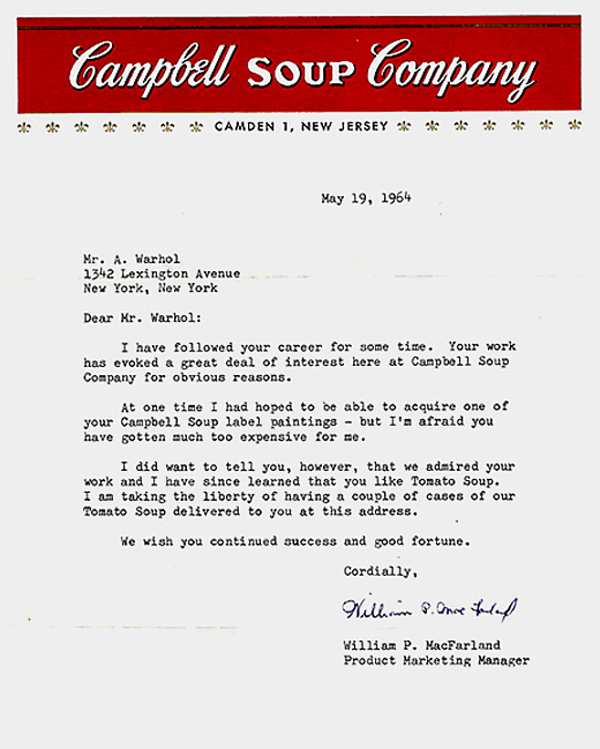
Andy, We Love Your Paintings


campbells

The Mighty Obamadon Is The Little, Bright Green Guy Looking On


USA-DINOSAUR-OBAMA_2425191b