Pricey Used Books


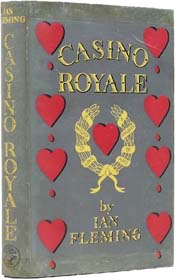
Casino-Royale-Ian-FlemingSo AbeBooks has released a list of the most expensive used books sold in 2012.

The first place this year is occupied by Johann Bayer’s 1603 celestial atlas, which sold for $47,729.

Number two was, apparently, an inscribed copy of Ian Fleming’s first Bond book, Casino Royale.

Old Magazine Articles


I’m just pitching this website, Old Magazine Articles, which collects (mostly PDFs) of old magazine articles.

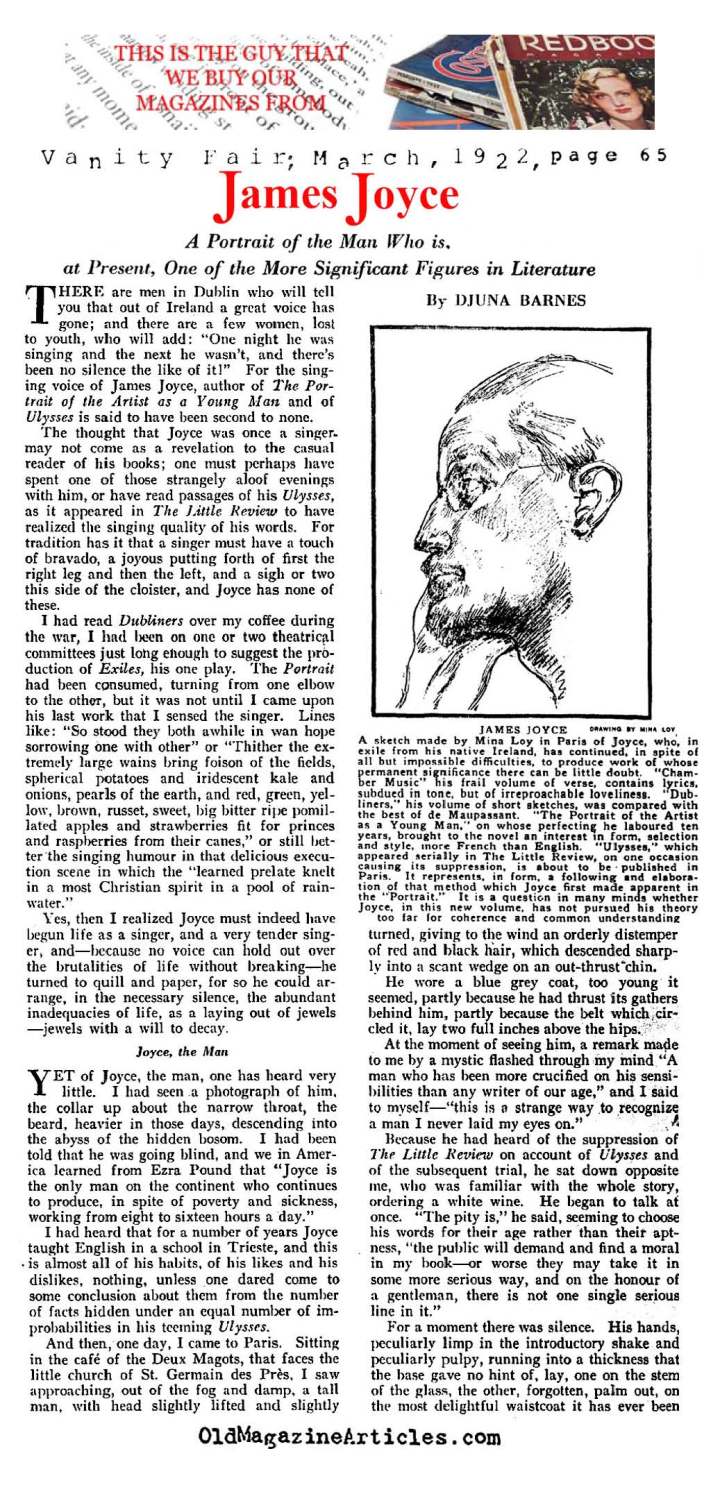
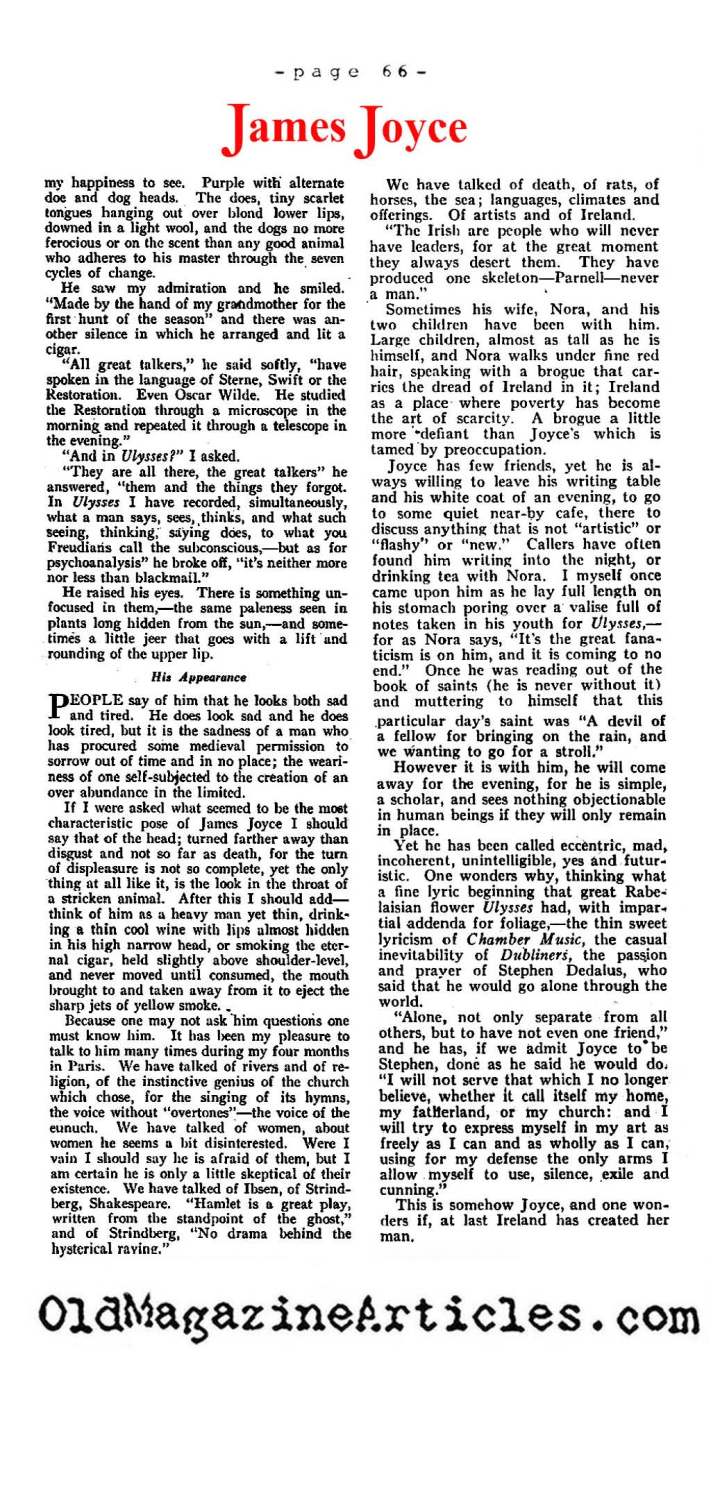
I came across via an article iy posted, a little character piece, but written by Djuna Barnes (of Nightwood fame) about James Joyce (of too much fame to mention).

This Vanity Fair article from 1915 on Marcel Duchamp in New York City or this 1935 article about the rise of secularism in America (not a new topic, as you can see)… so much to explore.


Mean Girls of Capitol Hill


Just a fun, d–n tumblr.


Mean Girls of Capitol Hill


Belated 121st Birthday, Professor Tolkien


I can’t believe I missed his b-day.

John-Ronald-Reuel-Tolkien

Weekend Reading – Selling Yourself


Selling your e-book in the brave new world.

Let’s hope not.

Kids don’t need to learn how to ‘read’ any more than they need to understand ‘critical thinking.’ Pfft. Silly whiny liberals, always wanting kids to ‘understand’ and ‘think’ and ‘explore the world of ideas.’

A museum of math.

The terrorist and the invented language.

Movies & Masterpieces


I was reading this article in The Nation about the movies and was struck by one line:

Since, moreover, the mass audience is so calculatingly considered in the actual making of film—and since any one film is put together by so large a number of people—the films reveal more about society as a whole than any other works of art except literary masterpieces.

The comparison of the anthropological aspects of the greatest works of literature to cinema. Specifically, to the mass (or, as Dwight McDonald might say, ‘masscult’) cinema, as opposed to the cinema of the auteur.

It rings true, doesn’t it? But what should we think of it? That it takes an army of producers, writers, and marketers, as well as a hundred million dollars, to reproduce the reproductive/reflective (see what I did there? ‘reproduce’ and ‘reproductive?’ I didn’t need to use ‘reproductive’ and ‘reflective’ but it just seemed too cool an alliteration/repitition to pass up) of a Roth or a Zola. One assumes that Ulysses or The Brothers Karamazov could only be matched by the complete and combined ouevres of Michael Bay and Steven Spielberg.

But still, we haven’t properly answered or addressed the question of what it means if popular and frequently mediocre constructs like the year end box office top ten can perform a major function (? ) of literary masterpieces?

2 To 1


I said earlier that Paul Ryan and Marco Rubio made very different bets on the (first; there will be more) fiscal cliff compromise.

Well, the third major contender (right now; don’t tell me things are in flux and it’s way too early – I know that, but that isn’t stopping Rubio from visiting Iowa and Christie from pushing his way into national television), Chris Christie, has taken that bet and is putting his chips on the same hand as the one Ryan assembled.

Christie is betting that competent, reality based and compromise-based governing will be a winner in 2016. I mean, it will almost certainly be winner in the general election (real compromise; not ‘moving a miniscule fraction over from from the most extreme right and calling that compromise’ compromise). What the bet consists of is the hope that primary voters will forgive such things in the hope of putting forward someone who could conceivably win a general election – which is not where the GOP is right now, but everyone pretty much agrees they need to inch over in that direction if they ever want to be more than a frighteningly angry mob shouting in a large room in front of C-SPAN cameras on the south side of the Capitol building.

We’ll see.

Two Bets


Two figures are currently the de facto frontrunners for the still non-existent 2016 GOP presidential nomination contest: Wisconsin wunderkind and math-challenged pseudo-intellectual, Paul Ryan; and the man constitutionally incapable of balancing his own checkbook, Florida’s favorite cipher, Marco Rubio.

Rubio made his career on the successful bet that, in a Republican primary, Tea Party dog whistles could derail one of Florida’s biggest political giants. As one of of only eight Senators to vote against the first step in averting the so-called fiscal cliff, Rubio doubled down on that bet.

Oddly, it was Ryan who went the other way. Ryan made his career by churning out factually suspect and arithmetically inaccurate reams of paper that purport to provide political heft to the economic and budgetary delusions of the far right. Yet… it was Ryan who made the daring bet that things would be different in 2016. That he could win his party’s presidential nomination and also cast votes based on some tenuous grasp of the fiscal situation at hand. It was a bold move, and I’m sure there was some behind the scenes wrangling with Boehner (maybe involving threats to Ryan’s continued chairmanship of the Budget Committee? I don’t know, I’m guessing), but it was still an interesting and bold gambit.

In short, Rubio bets that the GOP stays crazy for the forseeable future, while Ryan bets that (necessary) political evolution will speed up in time for his to make a play for the nod.

I never thought I’d say this, but I hope Ryan’s right.
Rejection


The great Ursula K. Le Guin saved this rejection letter (though when she made it public, to save the editor some embarrassment over having rejected the greatest science fiction of the second half of the twentieth century, she hid the editor’s name).

Dear Miss Kidd,

Ursula K. Le Guin writes extremely well, but I’m sorry to have to say that on the basis of that one highly distinguishing quality alone I cannot make you an offer for the novel. The book is so endlessly complicated by details of reference and information, the interim legends become so much of a nuisance despite their relevance, that the very action of the story seems to be to become hopelessly bogged down and the book, eventually, unreadable. The whole is so dry and airless, so lacking in pace, that whatever drama and excitement the novel might have had is entirely dissipated by what does seem, a great deal of the time, to be extraneous material. My thanks nonetheless for having thought of us. The manuscript of The Left Hand of Darkness is returned herewith. Yours sincerely,

The Editor

21 June, 1968

http://www.ursulakleguin.com/Reject.html

One Book


Resolved: to read one book (or lit mag) per week this year. I’ve got a chapbook called 31 Poems by a Dean Young, the latest edition of Pitchfork, Ohio, and the ninth book in The Wheel of Time series (the final book, A Memory of Light, comes out shortly).