Why The (Latest) Modern Trequartista Emerged


The newest iteration of the trequartista is not the fantasista of old.

Last season, when Kevin-Prince Boateng’s performances as an unorthodox #10 were garnering attention, it was sometimes called le plongeur. Yaya Toure at Manchester City has been playing this role for a couple of seasons now.

Rather than being known for their passing ability (though many who play this role are fine and usually underrated passers), they are used for their energy and drive.

The rise of this new trequartista is a direct response to another role which has had a rebirth: the regista.

The deep lying playmakers who sit in front of their own defense, but who don’t always specialize in tackles, they specialize in launching attacks. Through a combination of accurate long and medium passing (Pirlo being a perfect example) or an ability to quickly recycle possession (Busquets does this very well). And no team can rise to the heights, especially in the Champion’s League, without one anymore.

Manchester United has the controversial Michael Carrick; Manchester City has Gareth Barry and added Jack Rodwell and Javi Garcia; Real Madrid’s moves flow through Xabi Alonso; and Juventus lives by the ageless vision of Andrea Pirlo.

Thiago Motta, a traditional, hard tackling defensive midfielder by trade, was played by Italy as a #10 in the final of the Euros not because anyone thought him capable of subtly unlocking Spain’s defenses, but so that his hustle and defensive nous could deny time and space to Spain’s deep lying midfielders (of course, Spain, in that tournament, had three players able to play some version of that role – Xavi, Xabi Alonso, and Sergio Busquets – and Motta also got himself injured, so it didn’t work out so well).

Everton coach David Moyes moved his big, Belgian tackler, Marouane Fellaini behind the striker not only for his goal scoring prowess, but for real defensive, more than ever, starts at the front. His size and aggression puts pressure on opposing defenders and deep lying midfielders, thereby providing real defensive cover for his team, even when playing just outside the other team’s eighteen yard box. Everton has an attacking midfielder on their roster and on the field in Leon Osman, but Moyes knows that Osman can’t provide the same kind of disruptive role, so plays his traditional attacking midfielder behind behind a classic holding midfielder.


Well, It’s About Time


photo

Weekend Reading – Here To Stay


CE-books on the wane, printed books here to stay?

I’m more the traditional type.

Binary poetics.

The best bikes around (but why are they acting so surprised? DC the living city is different from DC the short hand for what’s wrong with Congress).

Le Poseur.

Favorite philosophers.

Do it like the French.

D–n It


Barnes and Noble, Union Station, DC

This sucks.

The Barnes & Noble inside Union Station is closing.

I know it’s not very big, but it actually had a very good magazine section with lots of interesting literary and academic journals and an underrated collection of science fiction.

And, it was only a mile way. I could walk to it quite easily.

Man this sucks.

The Intellectual Indiscretions Of Youth


Atlas Shrugged might have been a sin of youth, like Siddhartha and Thus Spake Zarathustra, except that Ryan never repented the sin.

That’s a quote from a Leon Wieseltier piece on Paul Ryan in The New Republic.

As someone who resides on the left, I have the some mixed feelings about that publication’s cheerleading of the Iraq War (and harsh admonition’s that the rest of the Left’s moral and factual doubts were immoral and counterfactual). But that line (which was not favorite line; there were a good many barbed witticisms like one that says that Bill Kristol once tried ‘establishing the definition of the intellectual as a person who knows how to talk to William Kristol’).


Having gone back over, not so long, another Herman Hesse book (I am not so foolish as to suspect that revisiting his Siddhartha would reveal anything more than a westerner’s self help guide, feel good vision of a complicated religion).

But the left does have its youthful extravagances, but they seem more easily outgrown. At the very least, the themes of both Siddhartha and Zarathustra involve throwing aside illusions. And the latter, certainly, can be an entré into much better, deeper works by Nietzsche.

School Book Fairs


work 2Do you remember school book fairs? Where you were left to wander an elementary school library with the tables stacked with copies of books whose information could be written on a card and then taken to a grown up for purchase?

At Larchmont Elementary School in Norfolk, Virginia, these events took place after school and with our parents.

Being a precocious little p—k, I passed by most of the tables of books as too far beneath me, but still being a creature of the id (monsters from the id! Forbidden Planet!), I did gravitate towards anything with monsters: dinosaurs, dragons, etc.

This resulted in some flops: especially some Hardy Boy’s book about a dragon (hint: it’s actually a freaking train). I never read the Hardy Boys before nor after that. Not my thing.

I also got Madeleine L’engle’s A Swiftly Tilting Planet. It had a youngish man riding a winged horse. But I was not ready for it, not in the least because, as it happens, it’s the third in a trilogy, beginning with the fantastic A Wrinkle in Time.

My mother was always very generous about letting me pick out a bunch. I’m not sure what my limit was nor whether it was based on volume of books or combined cost, but I always left with a selection of five or six books. But you didn’t get them right away – they always had to be ordered and were then delivered to the school. And while an adult my describe delaying gratification as delicious suffering, as an eight year old, I found it freaking irritating.

Midweek Staff Meeting – The Rumble In The Journal


5917-Books-WomenKuhn versus Popper.

The habits of the Victorian reader.

What is ‘Yellowism?’

The makings of a successful chapbook press.

Baldwin’s Book Barn


barnfront-good


Yes. It’s a bookstore.

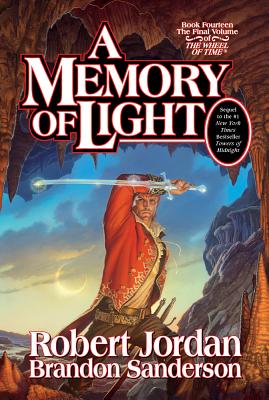
‘A Memory Of Light’ Arrives Today


9780765325952The wait is over. Kind of.

I mean, it’s over for other people, just not for me.

The final book in the Robert Jordan’s epic fantasy fourteenology (completed by Brandon Sanderson of Mistborn fame) came out today. I’m excited. I almost wish I were done with book thirteen instead of still buried in number nine so that I could participate in the festivities. And I’m not kidding, either. There’s even a big party in New York, but it would be wasted on me (and pricey, and I have family staying with me). This sort of thing may not come around again in my lifetime, at least not until George R.R. Martin finishes his Song of Fire and Ice.

On the plus side, by the time I reached A Memory of Light, it will be out as a $7.99 mass market paperback, same as all the other editions I’ve read.

Startide Rising (New Year’s Resolution, Book One)


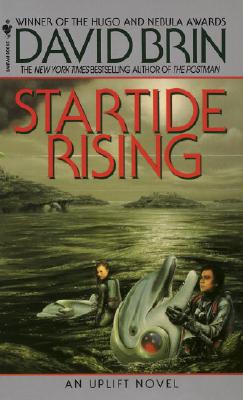
9780553274189Sundiver was an Asimov-style sci fi mystery, but it’s ‘sequel’ (it takes place in the same universe, so it’s a sequel in the same way that a book about the sixteen century is a sequel to one about the fifteenth century), Startide Rising is more like an old fashioned space opera (though definitely with deep roots in Asimov’s hard sci fi style).

I had trouble finding this one in bookstores, so I ordered this one from a bookstore (not Amazon! not Amazon!) and had it shipped to my office to hide my book buying habit from my best gal (Peg at the front desk was very understanding of this need).

Brin’s characterizations are good for genre writing (not great, but more than adequate), but sometimes his dedication to a carefully crafted, scientifically sound (he does have an advanced degree in applied physics) universe gets in the way of writing an exciting yarn.

But, he’s clearly head and shoulders above most sci fi out there.

Some of his most space opera-y moments come in brief, italicized chapters or interludes that capture a space battle going above the surface of watery, earth-like planet where a small group of intelligent, genetically modified dolphins (who make the bulk of the crew, including the captain), a few humans, and an intelligent, genetically modified chimpanzee scientist seek ways to: repair their crashed space ship; escape from the angry hordes of warring galactic fleets above them; and take back to Earth their scientific/archaeological discoveries (lost artifacts and space ships from the Progenitors, the first space faring race and the source of most of the universes’ scientific and engineering knowledge).

In those interludes, he quickly dives into a particular aliens’ ship and their efforts to win the battle for the planet on which the Earthlings are trapped so as to acquire whatever information the Earthlings have uncovered. Though short, they are a marvelous way to describe the space battle going on and also to give the reader a glimpse at various alien societies in Brin’s ‘Uplift Universe.’ It also provides the reader understanding that the battle is long and complicated, so that no one starts questioning how the stranded dolphins, chimps, and humans are able to hang out on the planet for weeks without being, you know, captured and killed.

When he drops some of the dedication to hard sci fi and starts in on some really fascinating fights and escapes in a metallic sea and between warring varieties and between warring allegiances of dolphins… well, things get good. His characterization may not be great (frankly, I couldn’t really distinguish the personalities of several of the dolphins ; generally, the ‘good’ dolphins were pretty similar to each other, and likewise the atavistic, ‘bad’ dolphins were sometimes hard to tell apart). He just needed to start that sooner. He’s not skilled enough at the building up process to wait two hundred pages (almost half the novel) to really kick into gear. By the end, it’s moving very, very quickly. Frankly, too quickly. It’s exciting and well done, but I can’t help but keep harping on the pacing issue.

Will I read the final novel in his first Uplift Trilogy, The Uplift War? Probably. Will I read his second Uplift Trilogy? Maybe, maybe not.