Three Philosophers: What To Drink During The SEC Championship Game


20131207-174350.jpg

Christmas At The Tampa Theater


20131205-204147.jpg

I’ll always have great memories of going to the Tampa Theater: Henry Vs, Easy Rider, Ulysses’ Gaze.

What a beautiful picture, eh?

Group. Of. Death.


blog-thaeger-sam-skull1

Weekend Reading – Naturally, Florida Gets Namechecked In Any Article About Terrible Trends


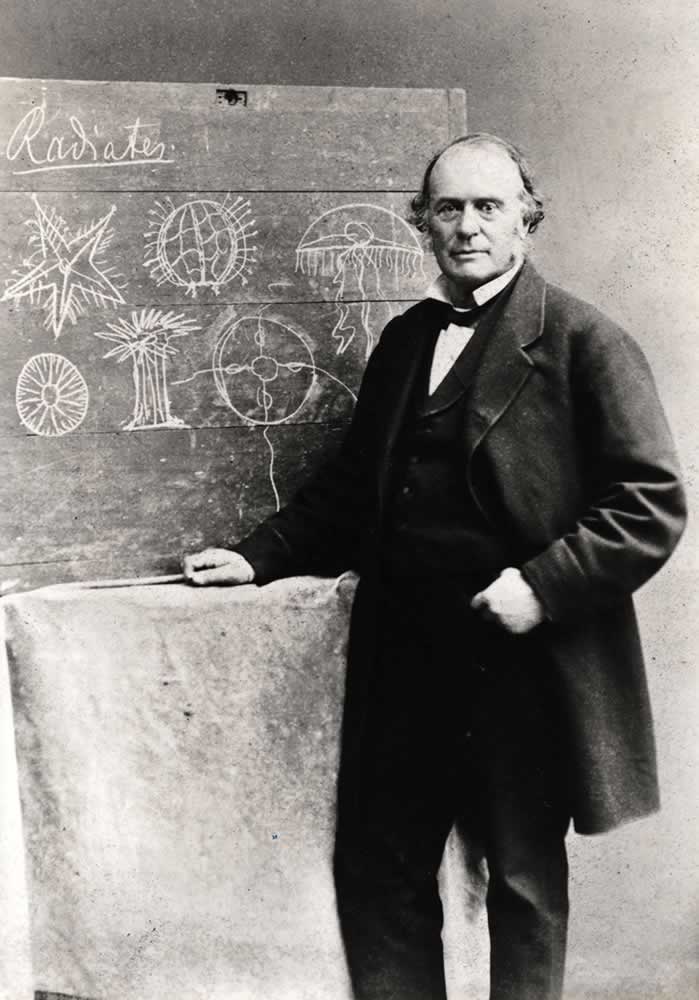
2013_1112_images_18_agassiz

The decline of the humanities. More specifically, government support for the humanities. Apparently, it’s not worth it anymore. Ugh. And naturally, Rick Scott, Florida’s favorite governor/unindicted co-conspirator in the largest Medicare fraud case in human history, gets name checked for being a huge a–hole.

It’s an art and an industry. The pun is deliberate.

The scientist as Emersonian scholar-poet.

Rising like the phoenix.

Gift Ideas


256131-two-books-wrapped-with-a-blue-ribbon-on-white-background

This is a nice call for folks to buy poetry as holiday gifts. The suggestions are a nice blend of the classic and the very contemporary. I’ll admit, I don’t know the contemporary poets name dropped (except for Hayes, but he is actually used as a third party validator for one of the suggestions).

As you might expect, I’ve done a good deal of poetry gift giving, though maybe not this year (for reasons unrelated to poetry).

But let me give a couple of ideas for folks looking for something poesy-like that might make a good gift.

Brian Turner has two books of poetry, Here, Bullet and Phantom Limb. He is a veteran and writes a great deal about war and veterans and homecoming and PTSD and the like. Political without being partisan. Got that relevant-y thing going on. Good poet.

Charles Simic is fun and amusing, while also being a little dark and is far more formally interesting than Billy Collins. A better poet, too. Something for the person you know who, among all the poets s/he might have encountered in the x years since being forced to read poetry in school, has only read Collins and needs to be carefully introduced to something better. Sort of like introducing a fish in a bag of water in its new aquarium. The World Doesn’t End is might favorite, but a book of just prose poems might be a bridge too far. Virtually anything else he’s published would work.

Charles Baudelaire. For the angry, sexually frustrated person in your life. Get a copy of Fleurs de mal that includes the poems that were not published in the original version because they were too crazy for the time. One of those poems is a not-nearly-as-metaphorical-as-you-would-think piece about having syphilis and then cutting his lover with a knife and having sex in the wound he just made so that he can inject syphilis in the wound when he ejaculates. Yeah. He goes there. He’s French, what can I say?

Wordsworth. He’s just relaxing. People who think they don’t like contemporary because it lacks the magic of the great masters, like Byron and Shelley, probably haven’t actually read Byron and Shelley and would be very disappointed and confused if they did. Those people would be better off reading Wordsworth. His poetry is amazing, I love it, but it can also be like a warm, comforting bath that takes you away to Lake Country, only with central heating. And no syphilis sex with fresh, bleeding wounds. At least, none in my interpretation of his poems.

You want edgy? You want queer? But you also want someone with real poetic skill, someone who learning and experience who knows how to write and also knows classic and contemporary canons? You want Eileen Myles. A real throwback to a mythological ‘New York in the Seventies.’ She writes poetry and also prose that is really poetry (Lyn Hejinian would be an apt comparison). Trust me on this one. Just trust me.

For someone who hates to read, you can go to the Pacifica Radio Archives and for just $17.95, plus shipping, they will make a CD of a 1956 recording of Allen Ginsberg reading his poetry on the radio, including Howl. What a present, huh?

‘The Secret History’ By Donna Tartt (New Year’s Resolution, Book Forty-One)


9781400031702As I noted, I’m not going to make it to fifty-two, but at least we’re officially over forty.

I have used my resolution to try and read some of those books that have been on my ‘to read’ list and Tartt’s The Secret History is one of them.

Ultimately, it was a beautiful disappointment.

If I were to take out excerpts of the writing, it wouldn’t read very lushly (except in the sense that the characters consume great volumes of liquor), but in the memory, it always remembered as being very lush. Baroque.

The comparison I would make is to the Lawrence Durrell’s Justine. Not so rococo in its construction (I already used ‘baroque’ and ‘byzantine’ felt too bureaucratic, so we’re going with ‘rococo’) nor so erotically elegant (the eroticism in The Secret History feels a little forced, to be honest), but so what? Surpassing Durrell in rococo eroticism is just too a high bar to ask anyone to hurdle. I was reminded of Justine in part by how initial impressions of character and motive are, at the end, shown to be false (the reveal of the relationship between Henry and Camilla, the latter being the primary object of the narrator’s erotic longings, is very Justine-like).

Some of the late characterizations do feel forced and unearned. Julian, the classics professor who teaches the small, insular band, is described, near the end, as being a sort of father figure to the narrator. Benevolent. All well and good, except, after his initial, early appearances, he hardly appears at all for enormous stretches. This paternal impression simply wasn’t earned by the preceding pages.

The looming figure of Henry is done better. His death was inevitable, in terms of literary construction. Not many other options would have felt true (though, I could see something similar to the ending of Josephine Hart’s Damage, where the narrator’s daughter-in-law/mistress/obsession is seen at an airport, from a distance, and he realizes that she has become ordinary and the strange, secret thing in her that drove him mad with desire is entirely gone; but actually, isn’t that a variation of Humbert Humbert’s last encounter with the older, less nymphetish Lolita?). But the reason for his suicide, protecting Camilla… I don’t know. His death should have been more dionysian.

But the book is good. It’s worth reading. Apparently, it even has a little cult and I understand why. But I won’t be reading it again. I can’t see myself getting much from a second reading. I might even trade it in for credit at the used bookstore. But I’m glad that I read it. Just wish I’d read it when I was twenty years younger (it came out in 1992).

‘Guinevere In Baltimore’ By Shelley Puhak (New Year’s Resolution, Book Forty)


9781904130574Finally hit number forty. I don’t see myself making it all the way to number fifty-two, though. Nope. Don’t see it. Which is more than a little disappointing. Certainly, there’s no one to blame but myself. I can make some excuses about work and stress, but, really, it just illustrates the point of how we have let ourselves get away from the critical business of expanding our mind and world and improving ourselves and making a better place by reading.

Anyway…

Puhak won the Anthony Hecht Award, which was judged this year by my beloved Charles Simic. Both poets read at the Folger earlier this month and it was very good. Simic is always great and I very much liked Guinevere in Baltimore – though I liked it better in print than I did in her readings from it. Her readings sounded more repetitive than they come across on the page; this is a book that is meant to be read, rather than listened to.

The conceit is re-imagining the story of Lancelot’s affair with Guinevere, queen of the Britons and wife of his best friend, King Arthur, as something modern, with Arthur as a bumbling CEO, Lancelot as an aging playboy, and Guinevere as a woman of forty – old enough to be very conscious of age and loss and the terrible, silly sadness of her love affair.

As the title suggests, this is Guinevere’s story, with Lancelot a close second and Arthur barely appearing, at least as a speaker.

I’m writing this without the book by my side, so I can’t properly do any excerpts for you, but I do want to credit Puhak for her amazing use of enjambment.

The whole mixing the mythic and mundane is pretty, well, mundane these days. It’s been done. Been there, done that. So making it new (tip of the hat to Pound) isn’t easy, but is critical.

She does a great job of creating these mid sentence enjambments, where the line above resonates with the old mythology and language of myth and ancient times, but then when it continues in the next line, after the enjambment, the sentence suddenly becomes something quite contemporary and sadly sordid. You’ll have to trust me. It’s really good.

The Sunday Paper – I Don’t Have To Prove Anything To You


Do not confuse utility with measurability. The usefulness of literature, of reading, is not measured in quantifiable results. Stop asking it to happen.

How to make it in publishing while trying very, very hard.

Florida Republicans are just tired of all these Floridians voting all the time.

Some Thoughts For Your Black Friday Shopping From Pope Francis


Taken from His Holiness’

APOSTOLIC EXHORTATION
EVANGELII GAUDIUM
OF THE HOLY FATHER

FRANCIS
TO THE BISHOPS, CLERGY,
CONSECRATED PERSONS
AND THE LAY FAITHFUL
ON THE PROCLAMATION OF THE GOSPEL
IN TODAY’S WORLD

(excerpts)

No to an economy of exclusion

53. Just as the commandment “Thou shalt not kill” sets a clear limit in order to safeguard the value of human life, today we also have to say “thou shalt not” to an economy of exclusion and inequality. Such an economy kills. How can it be that it is not a news item when an elderly homeless person dies of exposure, but it is news when the stock market loses two points? This is a case of exclusion. Can we continue to stand by when food is thrown away while people are starving? This is a case of inequality. Today everything comes under the laws of competition and the survival of the fittest, where the powerful feed upon the powerless. As a consequence, masses of people find themselves excluded and marginalized: without work, without possibilities, without any means of escape.

Human beings are themselves considered consumer goods to be used and then discarded. We have created a “disposable” culture which is now spreading. It is no longer simply about exploitation and oppression, but something new. Exclusion ultimately has to do with what it means to be a part of the society in which we live; those excluded are no longer society’s underside or its fringes or its disenfranchised – they are no longer even a part of it. The excluded are not the “exploited” but the outcast, the “leftovers”.

54. In this context, some people continue to defend trickle-down theories which assume that economic growth, encouraged by a free market, will inevitably succeed in bringing about greater justice and inclusiveness in the world. This opinion, which has never been confirmed by the facts, expresses a crude and naïve trust in the goodness of those wielding economic power and in the sacralized workings of the prevailing economic system. Meanwhile, the excluded are still waiting. To sustain a lifestyle which excludes others, or to sustain enthusiasm for that selfish ideal, a globalization of indifference has developed. Almost without being aware of it, we end up being incapable of feeling compassion at the outcry of the poor, weeping for other people’s pain, and feeling a need to help them, as though all this were someone else’s responsibility and not our own. The culture of prosperity deadens us; we are thrilled if the market offers us something new to purchase; and in the meantime all those lives stunted for lack of opportunity seem a mere spectacle; they fail to move us.

No to the new idolatry of money

55. One cause of this situation is found in our relationship with money, since we calmly accept its dominion over ourselves and our societies. The current financial crisis can make us overlook the fact that it originated in a profound human crisis: the denial of the primacy of the human person! We have created new idols. The worship of the ancient golden calf (cf. Ex 32:1-35) has returned in a new and ruthless guise in the idolatry of money and the dictatorship of an impersonal economy lacking a truly human purpose. The worldwide crisis affecting finance and the economy lays bare their imbalances and, above all, their lack of real concern for human beings; man is reduced to one of his needs alone: consumption.

56. While the earnings of a minority are growing exponentially, so too is the gap separating the majority from the prosperity enjoyed by those happy few. This imbalance is the result of ideologies which defend the absolute autonomy of the marketplace and financial speculation. Consequently, they reject the right of states, charged with vigilance for the common good, to exercise any form of control. A new tyranny is thus born, invisible and often virtual, which unilaterally and relentlessly imposes its own laws and rules. Debt and the accumulation of interest also make it difficult for countries to realize the potential of their own economies and keep citizens from enjoying their real purchasing power. To all this we can add widespread corruption and self-serving tax evasion, which have taken on worldwide dimensions. The thirst for power and possessions knows no limits. In this system, which tends to devour everything which stands in the way of increased profits, whatever is fragile, like the environment, is defenseless before the interests of a deified market, which become the only rule.

No to a financial system which rules rather than serves

57. Behind this attitude lurks a rejection of ethics and a rejection of God. Ethics has come to be viewed with a certain scornful derision. It is seen as counterproductive, too human, because it makes money and power relative. It is felt to be a threat, since it condemns the manipulation and debasement of the person. In effect, ethics leads to a God who calls for a committed response which is outside of the categories of the marketplace. When these latter are absolutized, God can only be seen as uncontrollable, unmanageable, even dangerous, since he calls human beings to their full realization and to freedom from all forms of enslavement. Ethics – a non-ideological ethics – would make it possible to bring about balance and a more humane social order. With this in mind, I encourage financial experts and political leaders to ponder the words of one of the sages of antiquity: “Not to share one’s wealth with the poor is to steal from them and to take away their livelihood. It is not our own goods which we hold, but theirs”.[55]

58. A financial reform open to such ethical considerations would require a vigorous change of approach on the part of political leaders. I urge them to face this challenge with determination and an eye to the future, while not ignoring, of course, the specifics of each case. Money must serve, not rule! The Pope loves everyone, rich and poor alike, but he is obliged in the name of Christ to remind all that the rich must help, respect and promote the poor. I exhort you to generous solidarity and a return of economics and finance to an ethical approach which favours human beings.

No to the inequality which spawns violence

59. Today in many places we hear a call for greater security. But until exclusion and inequality in society and between peoples is reversed, it will be impossible to eliminate violence. The poor and the poorer peoples are accused of violence, yet without equal opportunities the different forms of aggression and conflict will find a fertile terrain for growth and eventually explode. When a society – whether local, national or global – is willing to leave a part of itself on the fringes, no political programmes or resources spent on law enforcement or surveillance systems can indefinitely guarantee tranquility. This is not the case simply because inequality provokes a violent reaction from those excluded from the system, but because the socioeconomic system is unjust at its root. Just as goodness tends to spread, the toleration of evil, which is injustice, tends to expand its baneful influence and quietly to undermine any political and social system, no matter how solid it may appear. If every action has its consequences, an evil embedded in the structures of a society has a constant potential for disintegration and death. It is evil crystallized in unjust social structures, which cannot be the basis of hope for a better future. We are far from the so-called “end of history”, since the conditions for a sustainable and peaceful development have not yet been adequately articulated and realized.

60. Today’s economic mechanisms promote inordinate consumption, yet it is evident that unbridled consumerism combined with inequality proves doubly damaging to the social fabric. Inequality eventually engenders a violence which recourse to arms cannot and never will be able to resolve. This serves only to offer false hopes to those clamouring for heightened security, even though nowadays we know that weapons and violence, rather than providing solutions, create new and more serious conflicts. Some simply content themselves with blaming the poor and the poorer countries themselves for their troubles; indulging in unwarranted generalizations, they claim that the solution is an “education” that would tranquilize them, making them tame and harmless. All this becomes even more exasperating for the marginalized in the light of the widespread and deeply rooted corruption found in many countries – in their governments, businesses and institutions – whatever the political ideology of their leaders.


1472090_670113913009015_289274951_n