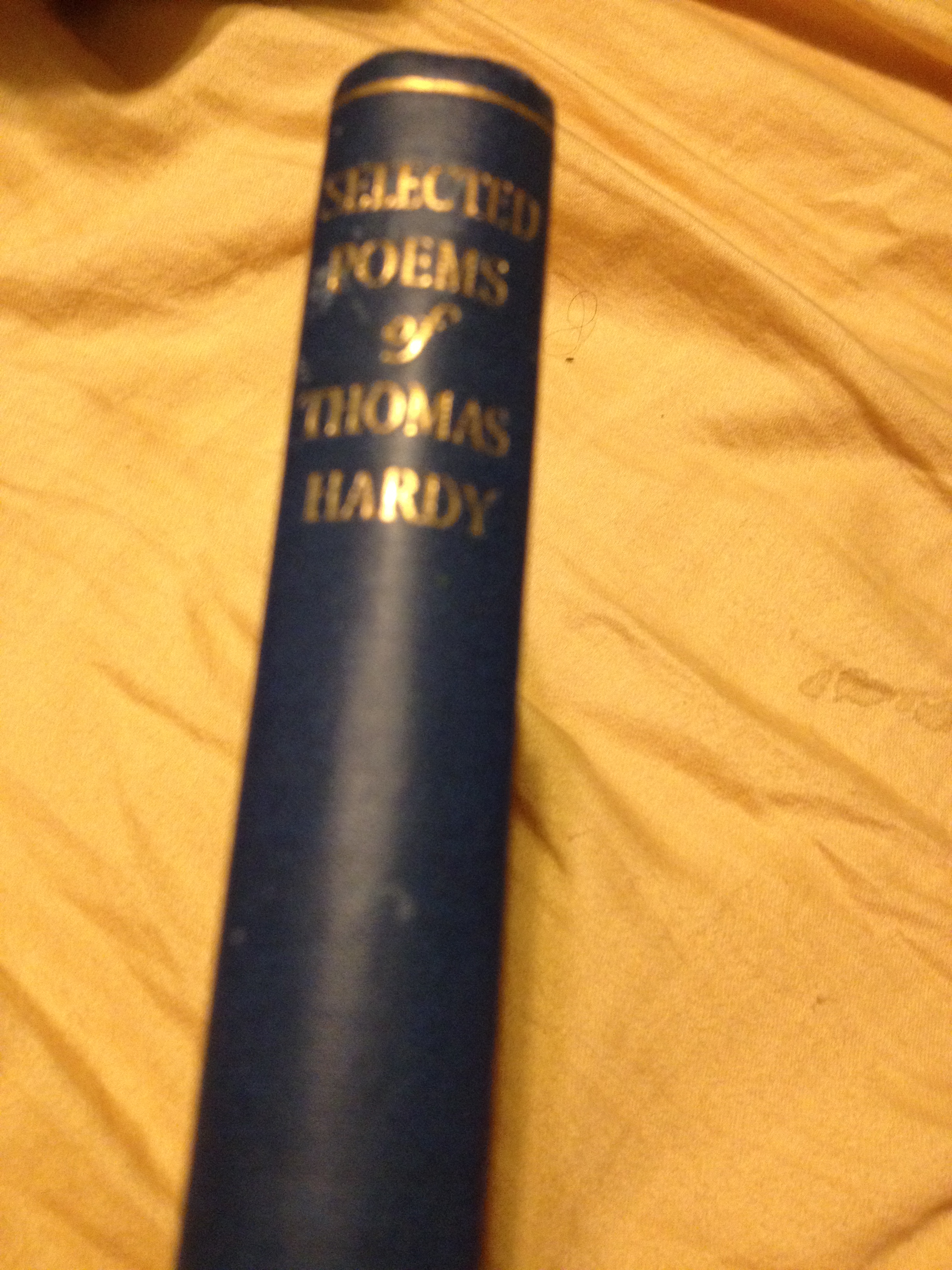
 For some reason, they made us read several books by Thomas Hardy when I was in high school. Jude the Obscure, The Mayor of Casterbridge, and Tess of the d’Urbervilles. The first was unrelentingly depressing. The second I can’t even remember (some dude some sells his wife and kid to some sailor who turns out to be a good guy; some dude feels bad, stops drinking, becomes upstanding citizen and titular mayor; wife and kids move to Casterbridge and hilarity ensues; did I say ‘hilarity?’ I’m sorry, I mean hundreds of pages of unrelentingly depressing prose). The third had one really good scene: when the whiny b—h Tess got herself hanged at the end. I liked that part, but the rest had a lot of depressing pages where you were in the presence of the supremely irritating Tess.
So, is it a wonder that I did not go out of my way to read anything that came out of the suicidally bleak and muddy  mind of Hardy?
Hell no. It’s a miracle that I’m still willing to read the English language after the kind of torture put together by whatever moron came up that high school English curriculum (I mean, folks, what about including some swashbucklers or romances instead, like the novels of Dumas or Austen? something that won’t encourage teenagers to put down books… forever).
But, I kept running into references to Hardy’s poetry.
So I finally bought some.
Like his prose, it’s muddy, mournful, and parochial, but the compact nature of a poem compared to a muddy doorstop of a book makes a huge difference. Formally, he is very old fashioned compared to what others poets were doing in the late nineteenth and early twentieth century, but even that reinforces his depictions of these rural communities, which are necessarily behind the times.
His focus (obsession) was the dirty, rural lower classes who failed to live up to supposed Victorian ideals. By which I mean a lot of unwed pregnancies and more than a few abortions (generally by use of folkloric abortifacients and rarely very successful). It’s all very slow and mournful. Elegiac, even. He is writing about a lost, or at least dying, culture. He doesn’t pretend it’s a great culture, only that, like anything that is passing, deserves remembrances. In later poems, you can feel Hardy, who still comes across as more of a nineteenth century writer, feel left behind by the approach of modernity and the very different ravages of the Great War.
 the coffee philosopher