What I Think About The GOP Field – Post Debate Thoughts


Thought #1:
Rick Perry is having to spend some of his impressive haul ($17 million in the last quarter, I believe) on paid media because his attempts to move up via earned media (interviews, debates, public events, etc) have seen him move in the opposite direction.

In one sense, it should be no surprise that debates seem to have been his downfall. While running for re-election in Texas, he explicitly refused to debate his Democratic opponent, calculating that no good could come of it. Well… apparently, he had a point. He’s just not very good at it.


Thought #2
Herman Cain is just the flavor of the month. Even if the conservative right/Tea Party coalesces around him, he just lacks the resources and the campaign nous to pull it off. He doesn’t have a staff and he isn’t ticking off the boxes in those early primary states (mainly Iowa and South Carolina; Romney appears to have New Hampshire locked up and Cain isn’t the right kind of candidate to knock him off, unless something very unexpected happens).

A campaign doesn’t just happen. A winning candidate doesn’t just happen. You still need a good team behind you and Cain doesn’t have that and isn’t moving to put that together. Even Ron Paul has a legitimate operation of some kind; it’s not the best in the biz, but it’s not nothing. Cain’s is very close to nothing.


Thought #3
Romney thinks he has this wrapped up.

How can you tell? Did you watch the debate?

Hedging his bets on the financial bailout, talking about his success in covering uninsured children? Those a general election points. He gave a general election debate appearance, not a primary election one.

At the immediate previous GOP debate, people cheered at the mention of a young man dying for lack of health insurance. Talking about one’s success at covering more children and criticizing an opponent (Perry) for having one million uninsured children in his state is not a talking point aimed at the crowd in the room. It was targeted at a general election audience.

You only do this when you think you have things locked and feel comfortable pivoting to the general election.

His biggest challenger, Perry, has seen his support collapse. And he knows as well as I do that Cain is not a serious threat. Heck, he wants Cain to do well. Cain isn’t a danger to Romney; his rising poll numbers are a buffer, sucking oxygen from the campaigns of people like Perry, who potentially could be (could have been?) a real challenge.
Tomas Transtromer


I have never read and know little about the latest Nobel recipient, but I liked what this person had to say about him. I like it because it seems close to what I am: the appreciations of an amateur who simply loves poetry.

Gertrude Stein’s (Fascist?) Politics


This article touches on an issue I’ve been grappling with for some time.

We are used to our towering cultural figures being a–holes (does anyone seriously think that being Beethoven’s girlfriend was anything less than a living hell, for example?).

But we still struggle with when these figures support morally repellent political views.

And it is true that many figures of early twentieth modernism were seduced by fascism and anti-semitism.

Pound, of course, I have spoken about a great deal.

Nobel Prize winner Knut Hamsun is another.

At the article above focuses on Gertrude Stein.

And no, I still don’t have a pat answer to the  dilemma.

Poetry Performances


Even if they don’t bother to review poetry anymore, at the New York Times occasionally deigns to write about it.

I Have Been Reading Some God Awful Stuff Lately


Using my Nook, so that no one will see what I am really reading, I just finished the second book in Edgar Rice Burroughs’ Pellucidar series, a Hollow Earth conceit featuring the usual tropes – dinosaurs, cave men, etc – and ‘Pellucidar’ being the name of that particularly world within our world.

I have no read At the Earth’s Core and it’s sequel, Pellucidar.

While reading the first volume, I came to realize that I had read it as a child. I devoured science fiction and fantasy from used bookstores and must have picked up At the Earth’s Core, perhaps recognizing the author’s name. I was aware of Burroughs – I remember a Tarzan book in the little room we used as a library at our home in Norfolk, Virginia, though I never read it.

In my defense, I will say that the Pellucidar novels are not infected by the racism which appears in most of Burrough’s work. Not that Burroughs wasn’t racist, just that since these stories did not take place in Africa, Asia, Central America nor among Native Americans, he had less opportunity to express those thoughts. But it’s not a very good defense, is it?

Robert Pinsky At The Folger


I’m late getting to this, but last Tuesday, former U.S. Poet Laureate Robert Pinsky read at the Folger Shakespeare Library.

As Poet Laureate, he was tireless in his promotion of poetry to the American people and, to my mind, no one has performed the role better. Poet
Laureate, really, has little to with the recipient’s poetry and everything to do with how well they raise the profile of poetry and literature in this country. Pinsky passed that test, unlike so many others – [cough, cough] Merwin [cough, cough] – who did little to promote the art.

I like, but do not love his poetry, but you don’t need to love his poetry to enjoy his reading. Pinsky is also a public poet or public intellectual and his readings are also conversations about poetry, culture, and politics and how they should, could, and do relate.

He also wonderfully encapsulates a particular image of what a poet should be. A face like some character actor you know that you’ve seen and liked but just can’t remember his name or where you saw him. Slightly mismatched, but expensive looking cloths (pin striped pants from a suit; blue crew neck pull over; stylish houndstooth jacket; and burgundy shoes with blue socks).

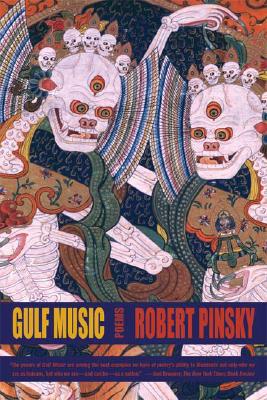
For this reading, I bought and had autographed a copy of Gulf Music.

I Live In Cities That Drink A Lot Of Coffee


The 10 American cities that spend the most on coffee.

I have lived in four of them: Minneapolis, Los Angeles, Washington, and Miami.

A coincidence?

Innovation and Science Fiction


This article by science fiction writer Neal Stephenson focuses on how science fiction has/can/should influence and drive innovation in America.

Stephenson is one of those science fiction writers who has been able to expand beyond just genre readers and become respected by what you might call the critical establishment. Caveat lector – he’s on my list, but I have never read him. But, it appears as if he’s on a level with a writer like China Miéville, though perhaps not up to Margaret Atwood heights.

Much of it is a cri de couer regarding the failure of the current age to follow up on the dreams of a previous age, but I mostly wanted to point how two ways, mentioned in the article, that sci fi can push scientific achievment.

1. The Inspiration Theory. SF inspires people to choose science and engineering as careers. This much is undoubtedly true, and somewhat obvious.

2. The Hieroglyph Theory. Good SF supplies a plausible, fully thought-out picture of an alternate reality in which some sort of compelling innovation has taken place. A good SF universe has a coherence and internal logic that makes sense to scientists and engineers. Examples include Isaac Asimov’s robots, Robert Heinlein’s rocket ships, and William Gibson’s cyberspace. As Jim Karkanias of Microsoft Research puts it, such icons serve as hieroglyphs—simple, recognizable symbols on whose significance everyone agrees.


The Tennis Court Oath


For my birthday, father bought me a copy of John Ashberry’s The Tennis Court Oath.

I had asked for that book because I was trying to get into Ashberry. I liked him, I’m influenced by him, but I also knew there was something that was missing.

The Tennis Court Oath was not his first book (I believe it was his second), but it was the one that exploded him onto the national poetic consciousness (whatever that is).

While it still has his trademark speed of thought, his fast directional changes, and intensely urban feel, it is also different from his later works.

Among other things, it is surprisingly romantic – something that he is not known for (though his most recent book of original poetry was praised for containing some rare love poems; but The Tennis Court Oath doesn’t contain ‘love poems,’ but is merely touched by romantic love) – as well as political, again not what you expect from Ashberry.

And yes, you can see why he and the other New York School poets flipped things upside down when they broke out.

Great book.

For Fans Of ‘Choose Your Adventure’ Books


Zork: The Cavern of Doom