Ezra Pound: Canto LXII


This Canto returns to the western world. Specifically, Revolutionary America.

It begins as if by a (presumably) pro-British governor, but the ‘narrator’ seems to change. This can only be determined by subject matter as the voice does not change much (though it does get colloquial in its spelling in parts).
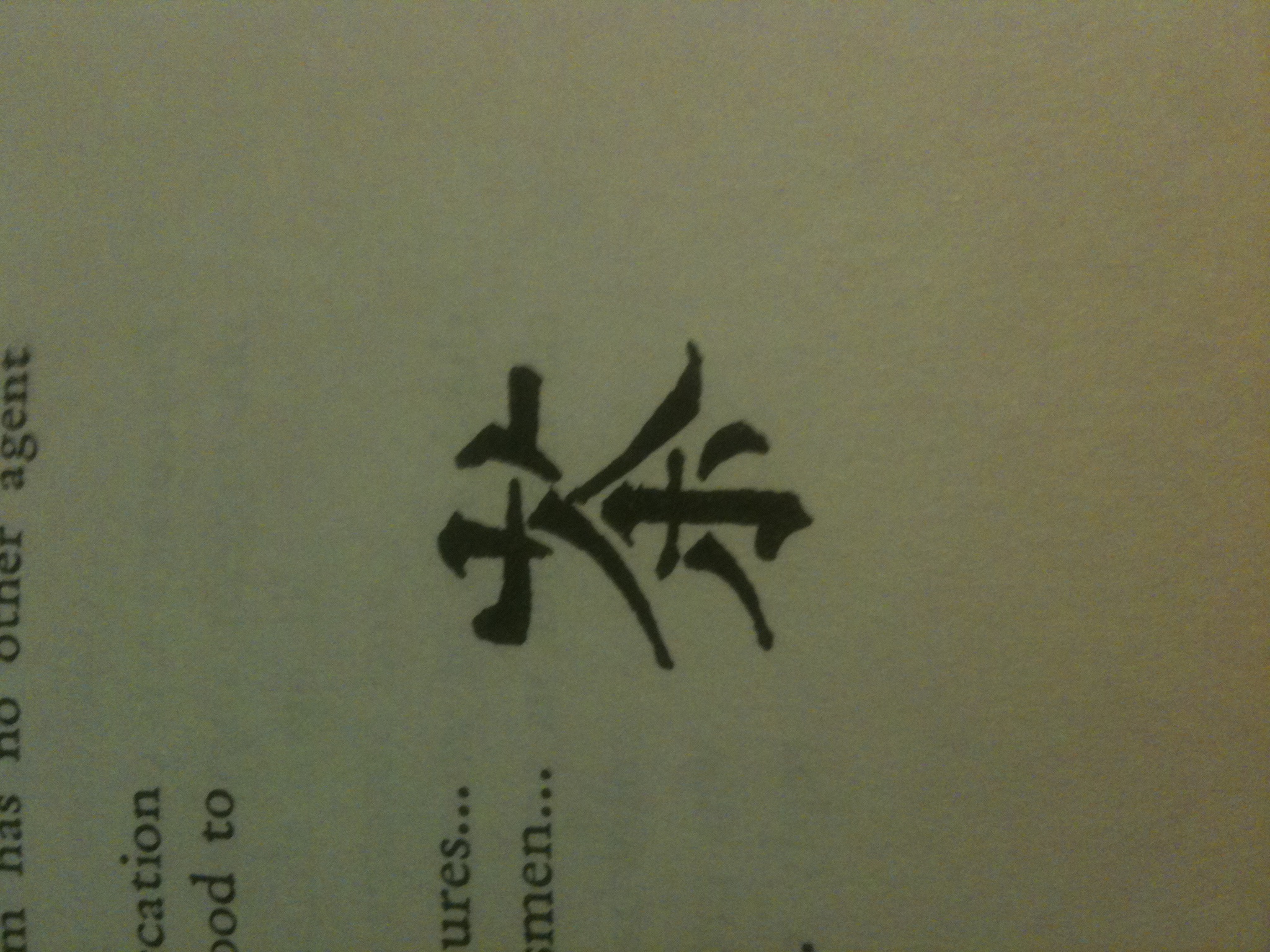
The subject matters moves to discussions of attempting to secure funding and support for the Revolution from various European powers, including the French and also Dutch banking houses. Surprisingly, he shows little venom towards those Amsterdam banks.

There is an odd lines: in consideration of endocrine human emotions

Correct me if I’m wrong, but I don’t think an 18th century speaker would even know of the endocrine system, much less of the affect of hormones and glands on human emotion.

An accident or a deliberate anachronism by Pound?

He also includes a Chinese character (see picture) near the beginning of this (fairly long) Canto. What does it mean? And what did Pound intend by including it, despite having left China, so to speak.

On Poetic Prose


Mucking Up the Landscape: Poetic Tendencies in Prose

Archimedes Manuscript Revealed


An ancient manuscript by the Greek mathematician Archimedes (the one who saw water spilling out of his bathtub and leaped out and ran naked through the streets, yelling eureka, having realized that he’d figured out that whole mass displacement thing) was decoded or deciphered or whatever you want to call it after years and years or work.

The original writing had been scraped off by a medieval monk who was short on paper, so the challenge was determining the writing beneath and generally putting together a jigsaw puzzle.

You can see it at the Walters Museum of Art in Baltimore.

Poetry Readings At Bridge Street Books


There will be poetry reading tomorrow night and another on next Thursday night at DC’s undoubted center for poetry, Bridge Street Books.

I won’t pretend to recognize the names of these poets, but I’m still going to try to make it to both readings because Bridge Street is good at bringing in innovative poets, as well as many local ones.

Even Patch Is Getting Into The Review Game


Those hyper local blogs called Patch (here’s the patch for the town where I grew up) are getting into the poetry reviewing game. Or at least this one is.

Ezra Pound: Canto LXI


This Canto contains a lot of talk about taxation, something the finance obsessed Pound often harps on.

But a little more interesting to me is something briefly touched on in the last couple of Cantos – what one might call the ‘Christian problem’ (though Pound consistently spells it ‘Xtian’ in this Chinese themed sections).

‘You Christers wanna have foot on two boats
                 and when them boats pull apart
you will d/n well git a wettin’ ‘ said a court mandarin
tellin’ ’em.

How The Trojan War Explains Occupy Wall Street


Philosopher Paul Woodruff explains the Occupy movement in terms of the Trojan War and classical literature.

Ajax (described in the Iliad as ‘Ajax of the Seven Fold Shield,’ a reference to the size and thickness of his shield, having seven layers of leather or hide) and the cunning Odysseus performed two very different roles. Odysseus was cunning and sneaky, while Ajax was gigantic wall who physically held the invading Greeks together (at one point, near the beginning of the Iliad, the Trojans are driving the Greeks back into the water, with soldiers drowning and their ships on the verge of being burnt; eventually, Zeus decides to save the Greeks from total destruction, but before the god stepped in, it was Ajax who kept things together, physically pushing back several charges and rallying the troops into some kind of formation to hold the line).

Poor Ajax, the hard worker, was taken advantage and finally lost it and tried to throttle the Greek commanders. Meanwhile, Odysseus never failed to get rewarded for his work behind the scenes.

Hint: the CEOs getting billions on bonuses are Odysseus and the rest of us are Ajax.

Happy Lawrence Ferlinghetti Day!


Today is Lawrence Ferlinghetti Day in the city of Santa Cruz!

Hat tip to Mayor Ryan Coonerty and the Santa Cruz City Council for recognizing an American treasure.

Ezra Pound: Canto LX


The Sixtieth Canto continues with the theme of a cosmopolitan and worldly China, but from a first person perspective, as if by a Chinese official. Nonetheless, the language is very American colloquial. For example, the Dutch are described as ‘poifik tigurs‘ (“perfect tigers”).

Referencing the previous Canto, four Jesuit fathers are given credit for introducing Galileo to China (though that seems odd, since this is supposed to be the year 1693).

Ironically, the narrator ends by musing if China should not, in fact, begin to close itself off from the West.

Poet Laureate at the Library of Congress Tonight


Because of work, I suspect I won’t make it, but Philip Levine is reading at the Library of Congress at 7pm tonight. The AFL-CIO has been promoting this, so I would expect a good crowd.