Ezra Pound: Canto XI


The Eleventh Canto continues with the fragments of Renaissance history. The recurring character we encounter is “Sigismundo.” Pound reflects on his career as a condotierre (mercenary), working for the various city states (including the Papacy) that vied for ascendancy in Italy.

Though not here, in the previous Canto, he was portrayed as a touch irreligious, but in truth, his life’s work was the reconstruction of a church in the town in Rimini.

Pound’s focus on things like the numbers of soldiers and mounted calvary on the various sides of the conflicts in which Sigismundo participated gives a nice touch of the quotidian to the whole matter. Not the grand sweep of history, but the logistical issues of a minor figure trying to get by in a land filled with great men.

Parents CAN Rid Campuses of Communists


Los Angeles Times Book Prize


Congratulations to Maxine Kumin who won the Los Angeles Times prize for poetry for her most recent book, a collected poems entitled Where I Live.

Happy Birthday, Cavafy


Today is the birthday of the great muse of Alexandria, the Greek expatriate,Constantin Cavafy. He was born 148 years ago (he’s dead now, of course).

Like many folks, I discovered Cavafy while reading Lawrence Durrell’s Alexandria Quartet.

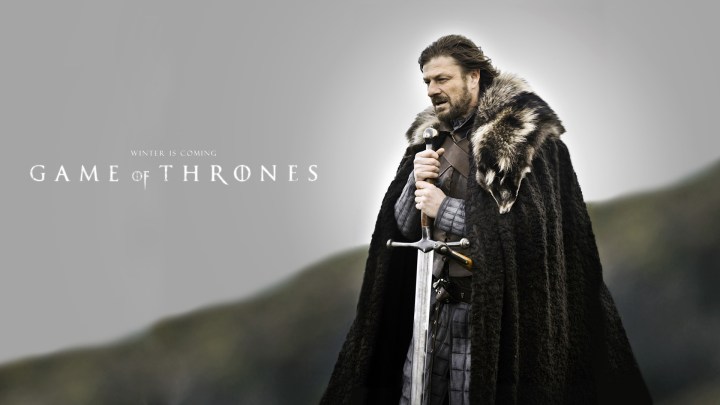
Game of Thrones


Even though I don’t get HBO, I’m very happy that Game of Thrones is being made into an extended series. I first discovered the George Martin’s Song of Fire and Ice series (of which Game of Thrones is the first volume) five or six years ago when I read a review of the then newly arrived fourth volume, A Feast For Crows, in the Los Angeles Times. I was inspired to read the first one and eventually all the volumes available.

Martin has been promising the fifth volume for years now. Once, when it was rumored that it would finally be released, I re-read the first four books so that I wouldn’t be completely lost when I read the new one (which is supposed to be titled A Dance of Dragons), on account of the series being notably complex in terms of plot and characters.

Part of the reason I’m excited about the series is that maybe Martin’s publisher will tie him down in front of his computer or typewriter or pen and paper until he finishes the damn fifth volume. Unless he speeds up, my grandchildren will have to read the projected final volume to my tombstone.

It is a very gritty series, with characters you love dying and characters you hate being revealed to be more three dimensional and harder to hate (you eventually get to see the good side of a character who in the first tome, pushes a child out of tower window to plunge to his – not death, but a long coma and paralysis from the waist down). The writing style is not necessarily notable, but it is efficient and enjoyable. Like much of the best sci-fi and fantasy writing, it stays out of the way and services the plot, setting, and characters.

Ezra Pound: Canto X


I didn’t really get the Tenth Canto. You see some forms repeated: the appearance of lines and stanzas that resemble fragments from letters explaining one’s progress on a project; abbreviations (“wd.” for “would”) derived from telegrams; a mixture of Renaissance Italy and hints of the modern world. There’s also a touch of irreligiosity:

Empty the fonts of the chiexa of holy water
And fill up the same full with ink

This also seems to suggest a stance of replacing traditional religion with the god of literature, does it not?

The Typewriter Lives!


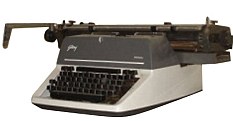
After the sad news about Godrej and Boyce closing down the last factory to manufacture new manual typewriters, I’m pleased to report that electric typewriters are definitely still being manufactured.

Of course, despite the impact of the IBM Selectric on businesses around the world, there is no question that the electric typewriter completely lacks the romanticism and drama of an old fashioned manual. Fortunately, there are rumors that a company in China continues to produce portable manual typewriters. No word on whether they produce any with English letters.

Ezra Pound: Canto IX


The Ninth Canto is an improvement over the Eighth Canto, but still lacks (in my mind) any of the transcendent passages we sometimes saw earlier.

What makes it interesting is the impressionistic and broken construction of, not first person, but third person narrations limited to a single person at a time. Also, he uses (and he has used this before, but not to this extent) these broken and incomplete quotes, most of which read like fragments of progress reports (some read more as oral reports, other as written reports).

As in the previous Canto, the “setting” is clearly Renaissance Italy.

Also, and purely as a bit of trivia, at seven and a half pages, it is the longest Canto thus far (most of the others were just two or three pages).

The Last Typewriter Factory Closes Its Doors


The last remaining manufacturing facility to continue to produce typewriters shuttered its doors with only a few hundred typewriters (mostly Arabic language machines – which makes me think of that wonderfully disturbing seduction from the movie Naked Lunch involving such a typewriter). The company was Godrej and Boyce.

The factory was located in Mumbia, India. It seems that typewriters were commonly used by government offices and businesses in India long after other countries had completely switched over to computers. But finally, even India succumbed.

The only typewriters that will remain are used models, like mine. Though I had expressly sought out an older, anachronistic machine, there is something very sad in the shuttering of the last factory to make new typewriters, even though I hadn’t known it existed before.

It’s only a matter of time before I won’t be able to find ribbon for my typewriter, or parts when it breaks down. But it still has something to offer.

The little girl who lives downstairs used it and ran down to tell her mother about this old-fashioned computer that printed every letter as you were punching the key. I was trying to use it to help with her spelling, encouraging to use the machine’s limitations as a means to focus on each and every letter, rather than rushing through like one would on a computer.

Ezra Pound: Canto VIII


The Eighth Canto is by far my least favorite of those I have read so far. The style is neither particularly interesting nor inventive and the content is 95% just some lazy recitations of incidents from the political and military history of the Italy during the Renaissance. Next, please.